
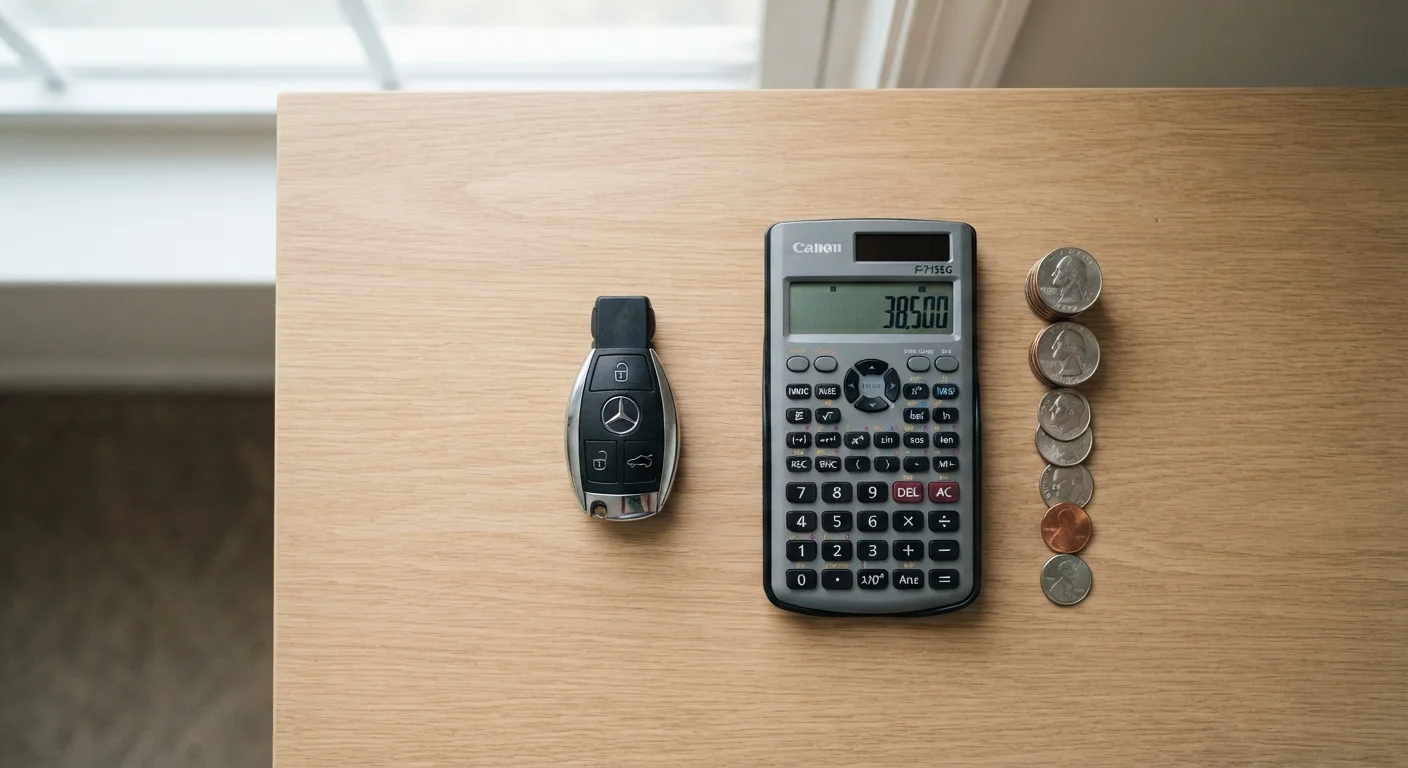
What a Down Payment Actually Changes
A down payment is the portion of a vehicle's purchase price you pay upfront, before financing begins. Its most direct effect is straightforward: it reduces the amount you borrow. Borrow less, and you pay interest on a smaller balance — which means lower total interest costs over the life of the loan, all else being equal.
What many buyers misread is the relationship between down payment size and the interest rate a lender assigns. Those are related but separate levers. Your rate reflects the lender's assessment of repayment risk — primarily your credit score, income stability, and debt-to-income ratio. The down payment influences risk too, but usually as a secondary factor. A borrower with a 780 credit score putting 5% down will often receive a better rate than a borrower with a 620 score putting 25% down.
For a fuller picture of how loan structure shapes what you ultimately pay, see our guide to how loan terms shape total cost.
Down Payment vs. Rate: Two Separate Levers
Buyers sometimes assume a larger down payment automatically yields a lower rate — but lenders set rates primarily based on credit profile, income, and debt obligations. The down payment influences loan-to-value ratio, which is one factor among several. Understanding this distinction helps you negotiate and compare financing offers more accurately.
Advantages of a Larger Down Payment
Putting more down produces tangible financial benefits that compound across the loan term.
Directly reduces total interest paid over the loan
Interest accrues on your outstanding principal balance. A smaller starting balance means less interest accumulates each month, which compounds into meaningful savings over a 48- to 72-month term.
Lowers monthly payment without extending the term
Reducing the amount financed shrinks the monthly obligation even when the rate and term stay constant — giving you breathing room in your budget without the risks of a longer loan.
Protects against negative equity early in the loan
New vehicles can depreciate 15–20% in the first year. A sufficient down payment offsets this drop, keeping your loan balance below the car's resale value and reducing financial exposure.
May modestly improve the rate a lender offers
A lower loan-to-value ratio signals reduced collateral risk to lenders, which can support a slightly better rate — particularly if your credit score sits near a pricing tier boundary.
One benefit that buyers often underestimate is equity protection. Vehicles depreciate quickly in their first year — sometimes 15–20%. If your loan balance exceeds the car's market value (a condition called being "underwater" or "upside down"), you face risk if the vehicle is totaled or you need to sell. A down payment of 10–20% can offset initial depreciation and keep your equity position positive from day one. Learn how a down payment reshapes your equity position throughout the loan.
Disadvantages and Trade-Offs to Consider
A larger down payment is not universally the right move. It comes with real costs and trade-offs worth evaluating honestly.
Ties up liquid cash in a depreciating asset
Once paid, a down payment cannot be recovered without selling or refinancing. That cash is committed to an asset that loses value over time, reducing your financial flexibility.
Rate improvement is often smaller than expected
Lenders weight credit score and income stability more heavily than down payment size. A larger down payment alone rarely moves your rate by a significant margin.
May deplete emergency savings below a safe threshold
Financial stability generally requires maintaining accessible reserves. Draining savings to maximize a down payment can leave you vulnerable to unexpected expenses with no buffer.
Cash could earn returns if deployed elsewhere
Depending on the loan rate and your alternative uses for the funds, the opportunity cost of a large down payment may exceed the interest savings it generates — a trade-off worth calculating.
The core tension is liquidity versus interest savings. Locking a large sum into a depreciating asset means that cash cannot serve as an emergency fund, earn returns elsewhere, or cover other pressing financial needs. For many households, maintaining three to six months of expenses in accessible savings is more financially protective than minimizing auto loan interest. This is general financial information — consult a qualified financial adviser about what makes sense for your specific situation.
For a broader look at how down payment strategy fits into smart financing approaches, including trade-in timing and loan decisions, our financing strategies hub covers the full picture.
The Rate Connection: What Lenders Actually Weigh
It's worth being precise about how down payments affect the rate a lender quotes you — because the connection is real but often overstated in financing conversations.
15–20%
Typical first-year vehicle depreciation
Industry data consistently shows new vehicles lose a significant share of value in the first 12 months, underscoring the equity risk of a low or no down payment.
10–20%
Commonly suggested minimum down payment range
Many personal finance sources and auto lending educators cite 10–20% as a threshold that helps buyers stay ahead of initial depreciation on new vehicles.
Lenders use the loan-to-value ratio (LTV) as one input in rate pricing. A lower LTV — meaning you're borrowing a smaller share of the vehicle's value — reduces the lender's collateral risk. If you default, they can recover more of the loan balance through repossession and resale. This can translate into a modestly lower rate, particularly for borrowers near a credit tier boundary.
However, the rate improvement from a larger down payment is rarely dramatic on its own. Worked examples show what even a half-percent rate difference is actually worth in dollars — which helps you assess whether a rate improvement from a larger down payment justifies the cash outlay. The core concepts behind auto loan pricing explain how lenders evaluate borrowers more broadly.
The most reliable way to improve your rate is to improve your credit profile — paying down existing debt, correcting errors on your credit report, and avoiding new credit inquiries before applying. A down payment supports the case, but it rarely carries the loan on its own.
This article provides general financial information for educational purposes only and does not constitute personalized financial or lending advice. Loan terms, rates, and eligibility vary by lender and individual circumstances. Consult a qualified financial professional before making borrowing decisions.