
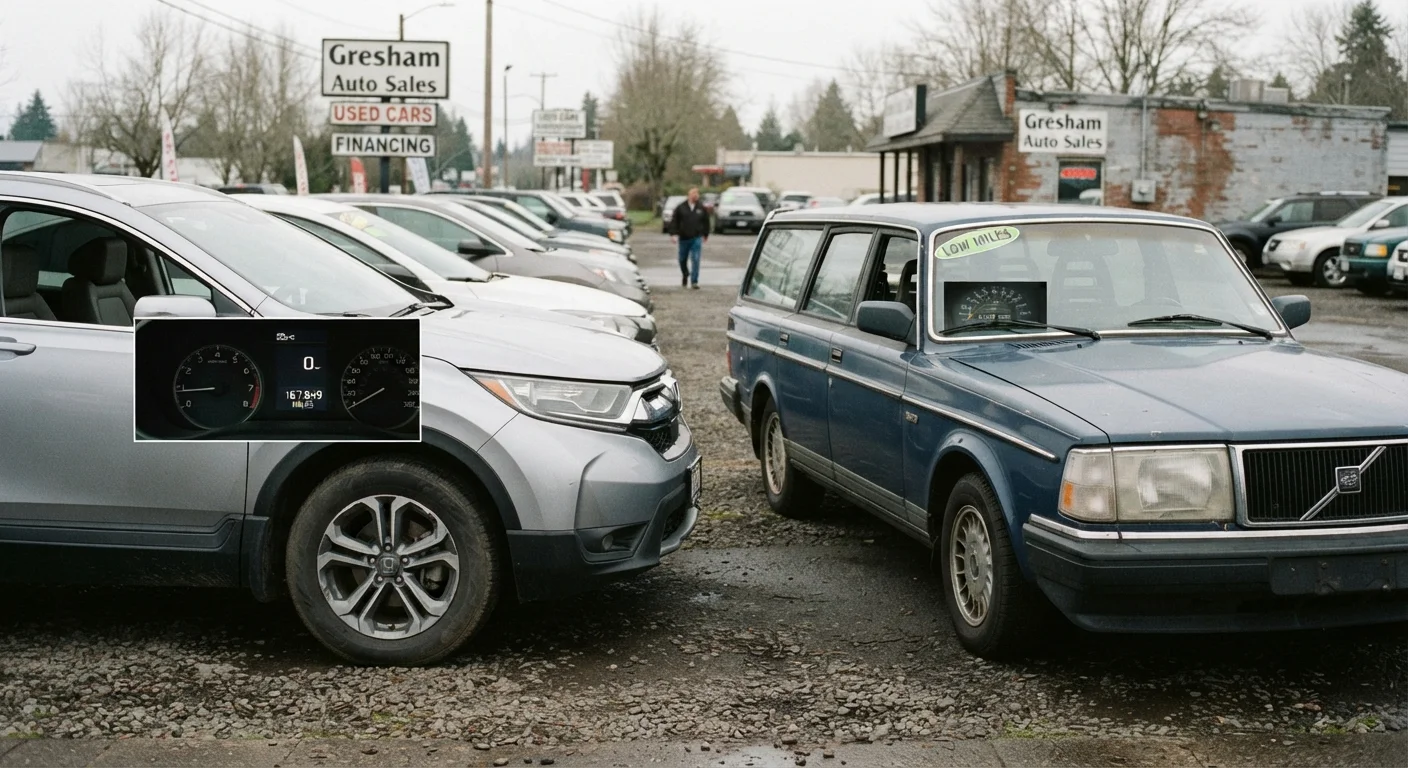
Why the Age vs. Mileage Question Matters
When you're evaluating a used car listing, two numbers dominate the conversation: model year and odometer reading. Buyers often instinctively favor one over the other — treating a low-mileage car as automatically safer or a newer car as automatically more reliable. Neither assumption holds universally.
A five-year-old vehicle with 120,000 miles and a ten-year-old vehicle with 60,000 miles represent genuinely different risk profiles. Understanding how they differ — and why that matters for your ownership costs — is what separates a confident purchase from a costly mistake. As explored in our guide on reading a used car listing, mileage is one of the most visible figures in any ad, but it's far from self-explanatory.
| Criterion | Vehicle Age | Mileage |
|---|---|---|
| Primary wear type | Rubber, seals, plastics, electronics | Engine, drivetrain, brakes |
| Wear driver | Calendar time | Mechanical usage |
| Impact on depreciation | Moderate — older models lose value steadily | High — odometer strongly affects resale price |
| Safety technology | Older cars may lack modern ADAS features | Not directly related to feature availability |
| Maintenance schedule type | Calendar-based (fluids, belts, seals) | Mileage-based (oil, brakes, tires) |
| Inspection priority | Rubber components, corrosion, electronics | Engine compression, transmission, brake wear |
What Age Does to a Car (Beyond the Obvious)
Time is not neutral. Even a car parked in a climate-controlled garage accumulates age-related wear. Rubber components — seals, gaskets, hoses, and belts — dry out and crack over years, not miles. Brake fluid absorbs moisture over time, reducing its boiling point. Plastic clips and interior trim become brittle. Electrical connectors corrode.
Older vehicles may also lack modern safety technology — features like automatic emergency braking, blind-spot monitoring, and lane-departure warning — that have become standard in newer models. If a 10-year-old car has never had its coolant or transmission fluid flushed, those fluids are a decade old regardless of odometer readings.
Sitting Idle Is Not the Same as Being Preserved
A common misconception is that low mileage means low wear. In reality, vehicles that sit unused for long periods develop their own problems: fuel degrades, brake rotors rust, tires develop flat spots, and lubricants settle. A car driven gently but regularly is often in better condition than one stored with minimal use. Always factor in whether a low-mileage car has been driven consistently or simply left dormant.
The practical implication: when evaluating an older, low-mileage car, factor in likely preventive maintenance costs — timing belt replacement, fluid flushes, rubber seal inspection — that are due on a calendar schedule, not a mileage schedule.
What Mileage Actually Signals About Mechanical Health
Mileage is the most direct measure of mechanical workload. Pistons, cylinders, camshafts, transmission gears, and brake components all wear in proportion to how often they move. A 120,000-mile car has genuinely worked harder than a 40,000-mile car of the same model.
But not all miles are equal. Highway driving — steady speeds, light braking, consistent engine temperature — is significantly gentler than stop-and-go city driving. A car with 100,000 predominantly highway miles may be in better mechanical shape than one with 70,000 hard urban miles. Our deeper look at how mileage affects long-term reliability walks through how to interpret odometer readings in this context.
High-mileage vehicles also typically depreciate more steeply, which can represent value — provided the service record is verifiable and a pre-purchase inspection confirms mechanical integrity. For a structured approach to assessing that history, see our guide on evaluating a used car's maintenance history.
~15,000
Average annual miles driven per US driver
The Federal Highway Administration estimates US drivers average roughly 15,000 miles per year, making this a useful benchmark for assessing whether a car's mileage is above or below typical use.
200,000+
Miles modern engines can achieve with proper maintenance
Automotive engineers and consumer vehicle data increasingly suggest that well-maintained modern engines can exceed 200,000 miles, meaning high mileage alone does not signal end of life.
Making a Decision: Use Both Lenses Together
The most useful framework is not to choose age over mileage or vice versa, but to use both as filters — and then validate with evidence. A car that is neither old nor high-mileage still needs a credible service record and a professional inspection. A car that is both older and high-mileage needs significant scrutiny before any commitment.
The sweet spot for many buyers is a vehicle that is relatively recent in age, has average or slightly above-average mileage, and carries a documented service history. That combination generally balances depreciation savings against remaining service life. If you're comparing a newer high-mileage option against an older low-mileage one, our article on high-mileage vs. older vehicle trade-offs explores that specific tension in detail.
Whatever combination you're evaluating, always budget for an independent pre-purchase inspection by a qualified mechanic. No amount of favorable mileage or age data substitutes for eyes-on assessment of actual condition.
This article provides general educational information about used car evaluation factors. It is not a guarantee of vehicle performance, reliability, or value. Consult a qualified mechanic before any vehicle purchase.