
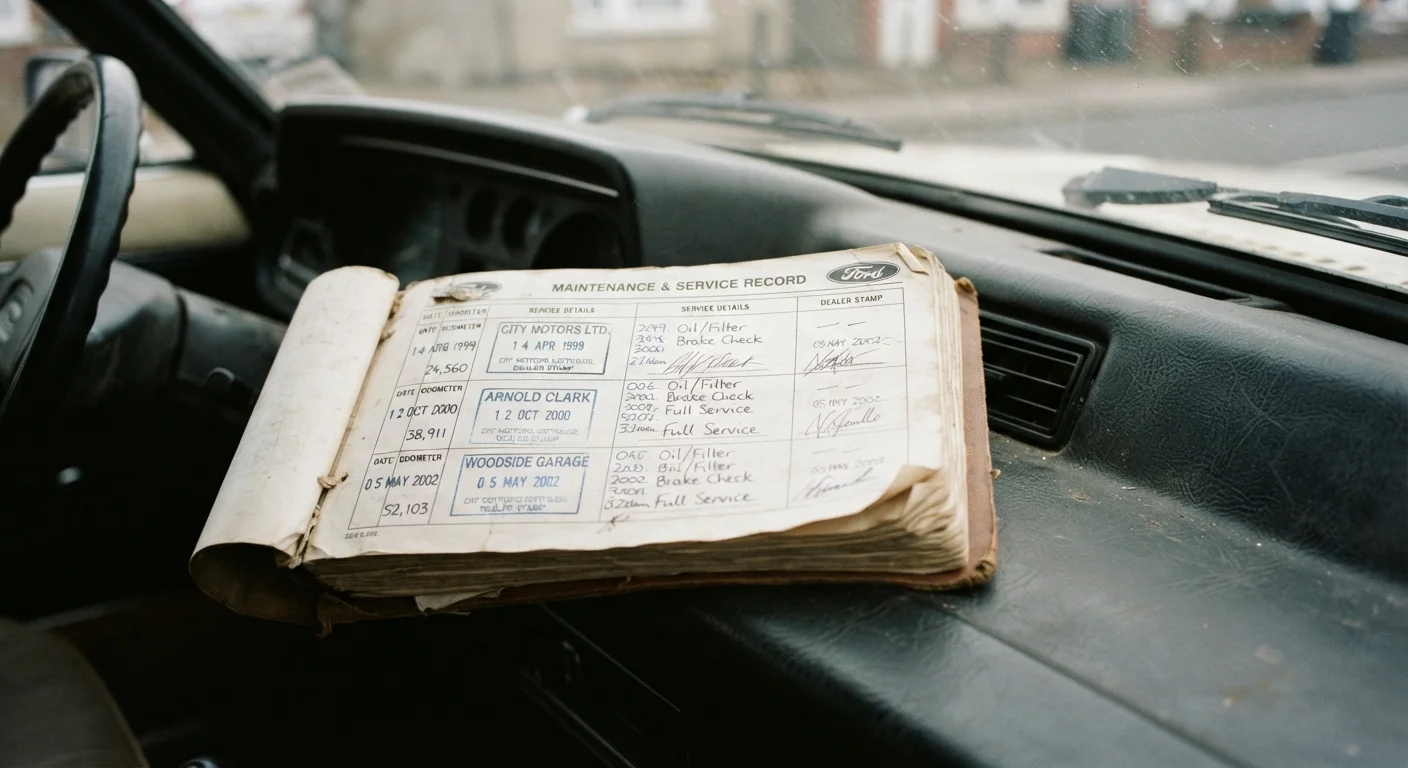
Why Maintenance History Outweighs Mileage Alone
Most buyers fixate on the odometer. In reality, how a car has been cared for across those miles tells you far more about what you're inheriting. A 90,000-mile vehicle with consistent, documented servicing will typically be in better mechanical shape than a 50,000-mile car whose owner skipped oil changes and deferred scheduled maintenance.
This is the core idea behind evaluating service records seriously — not as a formality, but as a genuine diagnostic tool. As our guide to mileage and long-term reliability explains, odometer readings only make sense alongside condition and care evidence. The steps below show you how to build that picture systematically.
What you will need
How to Evaluate a Used Car's Service Records
Work through these steps before committing to a viewing or making any offer. You can complete the early steps remotely; the later ones happen in person.
Pull a vehicle history report before the viewing
Run the car's registration through a reputable vehicle history service for your region. Note any recorded service events, ownership changes, mileage markers at MOT/inspection, and any flags for accidents or write-offs. This gives you a baseline to compare against the physical documents. Our article on what vehicle history reports reveal and where they fall short covers exactly what these reports can and cannot confirm.
Request the physical service book or digital receipts upfront
Ask the seller to confirm in advance whether there is a stamped service book, dealer service printouts, or garage receipts. If the answer is "no documents at all," decide before travelling whether that's a dealbreaker for you. When documents exist, ask that they be available at the viewing — not promised to be sent later.
Check oil change frequency and quality
Oil change intervals are the single most revealing data point in any service file. Look for changes every 12 months or within the manufacturer's recommended mileage interval — whichever comes first. Long gaps between oil changes accelerate engine wear in ways that don't always show up immediately. If the history shows irregular or infrequent oil servicing, mentally apply a risk premium to your offer price or walk away.
Verify timing belt or chain replacement
For vehicles with a rubber timing belt (as opposed to a metal chain), confirm whether the belt has been replaced at the manufacturer's recommended interval — typically between 40,000 and 80,000 miles or every 4–5 years, depending on the model. A failed timing belt can cause catastrophic engine damage. If replacement is due or overdue and there's no evidence it's been done, this is a significant negotiation point or a reason to walk. Chain-driven engines require less frequent attention but are not immune to wear — check for any recorded chain or tensioner work on higher-mileage vehicles.
Look for major scheduled services and recall completions
Most manufacturers schedule a major service at specific mileage milestones (commonly 30,000, 60,000, and 90,000 miles) involving more comprehensive checks and component replacements — brake fluid, spark plugs, air filters, coolant, and so on. Confirm these appear in the record at roughly the right intervals. Also check whether any manufacturer recalls affecting this model have been completed; these are typically logged by dealers and may also appear in history reports. Our decade-by-decade maintenance schedule gives useful context for what should appear at different mileage points.
Commission an independent pre-purchase inspection if records are thin
If the documentation leaves meaningful gaps — especially on a vehicle priced above a few thousand dollars — arrange for an independent mechanic to inspect the car before purchase. This typically costs between $100 and $200 and can identify mechanical evidence of deferred maintenance that no document review will catch: worn brakes, degraded fluids, suspension wear, and engine condition. Think of it as a proportionate due-diligence cost relative to the transaction size.
Once you own the vehicle, staying on top of future servicing becomes the next challenge. Our guide on keeping on top of car maintenance without automotive expertise is a practical starting point for new owners.
Compare Stamp Dates to MOT Mileage Records
MOT certificates (or equivalent annual inspection records in your region) log the odometer reading at the time of inspection. Comparing these against the mileage entries in the service book lets you sense-check whether service intervals actually line up — or whether the book has been selectively filled in. Mismatches between the two sources deserve a direct question.
What to Do When Records Are Incomplete
Incomplete history is common, especially on older vehicles or those with multiple previous owners. It doesn't automatically disqualify a car, but it does shift the burden of proof.
First, ask the seller to explain every gap specifically. Vague answers — "I think it was serviced, I just don't have the paperwork" — carry less weight than "I have receipts from my local garage, they just weren't stamped in the book." Unstamped but receipted work is verifiable; verbal assurances are not.
Second, cross-reference against a vehicle history report to see whether any digital service entries exist from franchised dealers or large chains. Bear in mind that independent garages and home servicing rarely appear in these databases — so absence of digital records isn't damning on its own.
Third, if the history genuinely cannot be reconstructed, factor a pre-purchase inspection into your decision. A qualified mechanic can often read the physical evidence of maintenance (fluid condition, wear patterns, component age) even when the paper trail is thin. For context on what future servicing might cost you, see our comparison of upkeep costs between older and newer cars.
Don't Accept "Full Service History" at Face Value
The phrase "full service history" in a listing is a selling point, not a verified fact. Always review the actual documents rather than relying on the seller's description. A single gap around a major service milestone — timing belt, 60,000-mile service — can negate an otherwise solid record. Check the evidence yourself before forming a view.