
Where the Real Costs Diverge
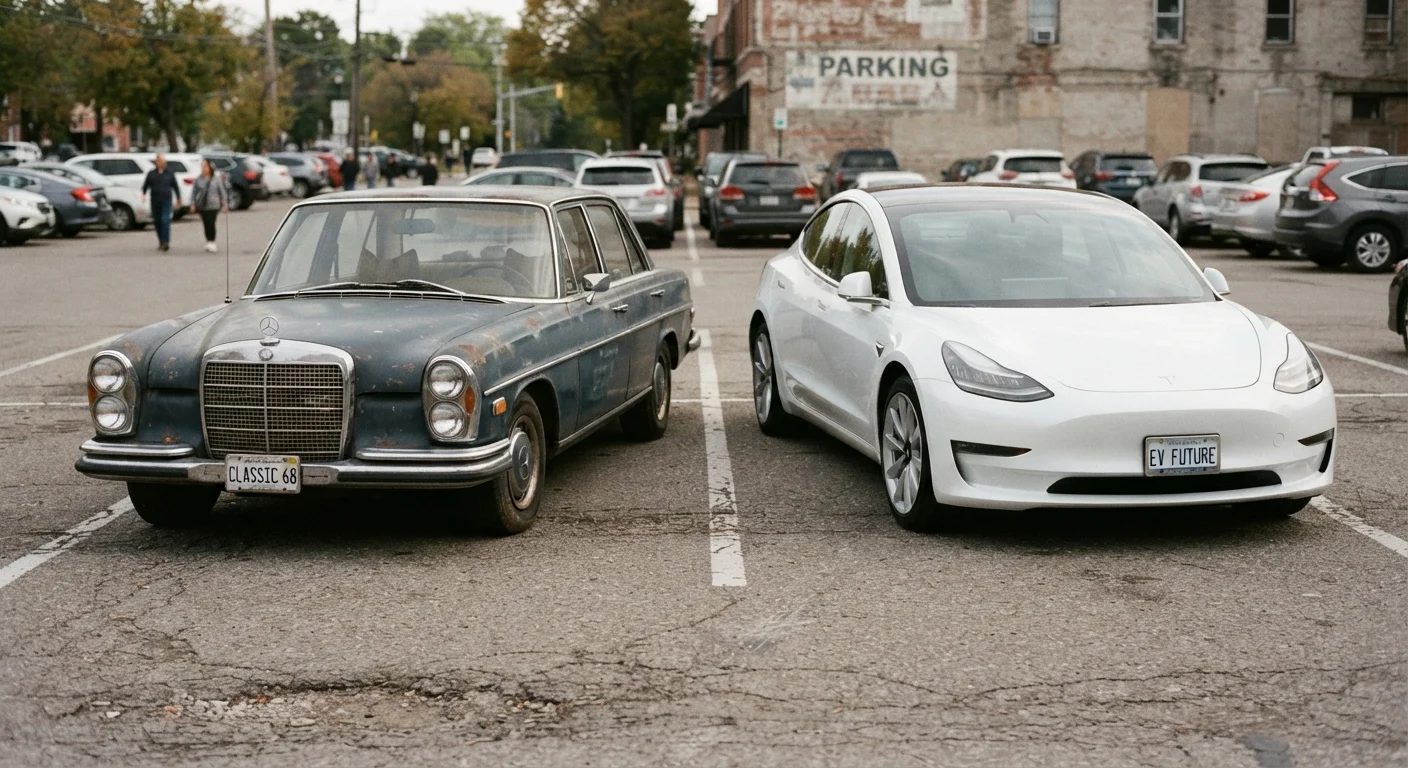
When comparing a well-worn older vehicle to a newer model, the sticker price is the least informative number you can look at. The true cost of upkeep plays out over years of depreciation, insurance premiums, and repair bills — and the pattern looks very different depending on where a vehicle sits in its lifecycle.
Newer cars front-load their financial hit through depreciation. A vehicle can lose a substantial portion of its value in the first few years of ownership — a reality covered in detail in our guide to how depreciation works. That loss is a real ownership cost even if you never see it as a bill. Older cars, having absorbed the steepest part of that curve, depreciate far more slowly — but they shift the financial exposure toward mechanical unpredictability.
Neither profile is inherently cheaper. The question is which cost structure fits your budget and risk tolerance.
| Criterion | Older Car (8+ Years) | Newer Car (0–4 Years) |
|---|---|---|
| Purchase Price | Generally lower | Higher upfront cost |
| Depreciation Rate | Slow — curve has flattened | Steep in first 1–3 years |
| Warranty Coverage | Typically expired | Factory warranty active |
| Unplanned Repair Risk | Higher — components age | Lower during warranty period |
| Insurance Premiums | Usually lower | Higher, especially if financed |
| Routine Maintenance Cost | Comparable to newer | Comparable to older |
| Parts Availability | Can be limited for some models | Readily available |
| Fuel Efficiency Technology | Older standards | More efficient systems typical |
Maintenance and Repair: The Age Factor
Routine maintenance — oil changes, brake pads, filters, tires — costs roughly the same regardless of a car's age. The divergence happens in unscheduled repairs. Older vehicles, especially those beyond 100,000 miles, are more likely to need work on suspension components, cooling systems, or drivetrain parts. Parts availability can also affect cost: for some older models, certain components become harder to source and more expensive to install.
Newer cars push most of that risk onto the manufacturer through warranty coverage. A powertrain warranty typically covers the engine and transmission for several years or a set mileage threshold. This doesn't mean new cars are problem-free — reliability depends on model, use, and maintenance history — but it does mean repair bills during the warranty window are largely absorbed upstream.
For older vehicles, maintenance history becomes the most critical variable. A well-maintained older car often outperforms a neglected newer one on repair frequency. Learning how to evaluate a used car's service records is worth the effort before committing to any older vehicle.
~47%
Average 5-year depreciation for new vehicles
Industry data consistently shows new vehicles lose roughly 40–50% of value within five years, with the steepest drop in year one.
$1,500+
Estimated annual unplanned repair cost for high-mileage vehicles
AAA research has found that older, high-mileage vehicles tend to carry significantly higher unscheduled repair costs than newer counterparts.
~20–30%
Typical insurance premium difference: new vs older vehicle
Premium estimates vary widely by insurer and driver profile, but actuarial data generally reflects the higher replacement cost of newer vehicles in pricing.
Insurance Costs: How Vehicle Age Changes the Equation
Insurance is one area where older cars often carry a clear cost advantage. Comprehensive and collision coverage — which pay out based on a vehicle's actual cash value — become less financially worthwhile as a car's value drops. Paying $900 a year in premiums to insure a car worth $4,000 is a math problem, not just a coverage question.
Newer vehicles, by contrast, typically require full coverage if they're financed — lenders mandate it to protect their collateral. That requirement, combined with the higher replacement cost insurers are underwriting, pushes premiums up significantly in the first few years. Our article on how vehicle age and value affect what coverage you should carry walks through the framework for evaluating coverage as a vehicle ages.
Insurance costs and coverage options vary significantly by state, driver profile, and insurer. This content is general educational information — consult a licensed insurance agent for guidance specific to your situation.
Mileage Isn't the Only Age Indicator
A 10-year-old car with 60,000 miles can be in better mechanical shape than a 6-year-old car with 140,000. Age and mileage interact differently depending on how and where a vehicle was driven. For a deeper look at this trade-off, see our comparison of high-mileage vs older vehicles.
Putting the Full Picture Together
The honest answer is that neither older nor newer cars are categorically cheaper to maintain — they carry different cost profiles. Newer cars hit harder early through depreciation and higher insurance premiums, then ease off as warranty coverage carries the repair risk. Older cars spare you the depreciation pain and lower your insurance outlay, but demand a repair reserve and a tolerance for unplanned expenses.
For a broader look at how these dynamics interact with purchase price and financing, see our financial comparison of new versus used cars. It's also worth noting that a used car isn't automatically the thrifty choice — certain scenarios can make used ownership more expensive when interest rates, missing warranties, and repair costs stack up.
Build your budget around total cost of ownership — not just the monthly payment — and you'll be in a far stronger position to make a decision you won't regret two years down the road.