
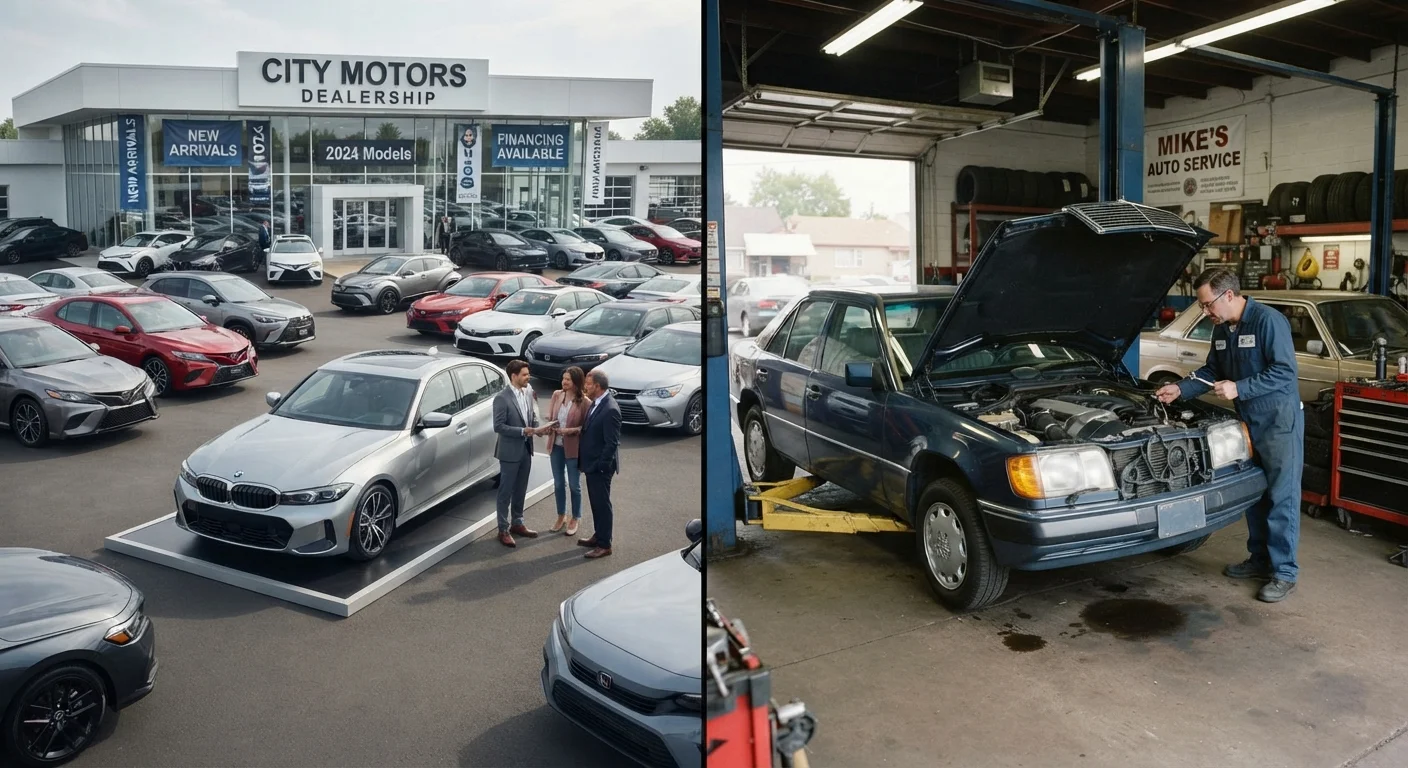
The Reliability Assumption That Drives Most Car Decisions
Ask most buyers why they're leaning toward new, and reliability comes up immediately. The logic seems airtight: fewer miles, no previous owner, full warranty coverage. How could a new car be anything but dependable?
The reality is more complicated. Reliability isn't a fixed property tied to a car's age — it's a product of engineering quality, build consistency, maintenance discipline, and plain statistical variance. Understanding these variables changes how you should weigh the new vs. used decision. The new vs. used comparison involves more trade-offs than most buyers initially expect.
Myth
New cars are essentially problem-free because nothing has worn out yet.
Fact
New cars can have factory defects, software bugs, and first-generation engineering issues that used vehicles on proven platforms don't carry.
Manufacturing tolerances aren't perfect, and early production runs of new models frequently show higher defect rates than later builds. Industry quality surveys regularly flag new vehicles in their first model year as having more owner-reported problems than the same model two or three years into its lifecycle, after manufacturers have identified and corrected issues.
Myth
A warranty means you won't have reliability problems — just repair bills.
Fact
A warranty covers the cost of covered repairs; it doesn't prevent breakdowns, downtime, or the inconvenience that comes with them.
Warranty coverage is a financial protection, not a mechanical guarantee. A car under warranty can still leave you stranded, require multiple dealer visits for the same issue, or have a persistent defect that proves difficult to diagnose. The coverage helps with costs — it doesn't eliminate the disruption that reliability failures create in daily life.
Myth
High-mileage used cars are inherently unreliable and risky to buy.
Fact
Mileage is one factor among several; a high-mileage car with full service records on a reliable platform is frequently less risky than a low-mileage car with unknown maintenance history.
Engines and transmissions built to modern standards can routinely reach 150,000–200,000 miles when properly maintained. The critical variables are the platform's engineering reputation and documented service compliance — not the odometer reading alone. A well-maintained 90,000-mile vehicle often has more predictable behavior than a 25,000-mile one that hasn't had oil changed on schedule.
Myth
Used cars always need more repairs than new ones over any given period.
Fact
Repair frequency depends heavily on vehicle age, model reliability history, and maintenance — not simply whether a car was bought new or used.
A certified pre-owned vehicle from a model with strong long-term reliability data may go years without a significant repair. Meanwhile, a new vehicle on a first-generation platform or with a history of known defects may see dealer visits within months of delivery. Treating all used vehicles as high-risk and all new vehicles as low-risk oversimplifies the actual reliability landscape significantly.
Myth
Newer always means more reliable — the latest model year is the safest bet.
Fact
The latest model year can be the riskiest if it represents a new generation or redesign with untested components.
Automotive engineers and enthusiast communities have long observed that redesigned vehicles and new powertrain introductions often carry higher early defect rates. Buyers purchasing a vehicle in its first year after a major redesign are, in effect, conducting real-world testing. The prior generation — now available used, with known reliability characteristics — is often the more predictable choice for reliability-conscious buyers.
What the Data Actually Shows About New Car Problems
Industry surveys consistently show that the first 90 days of ownership generate a disproportionate share of quality complaints for new vehicles. Infotainment glitches, software errors, and minor fit-and-finish defects cluster early, not later. These aren't catastrophic failures, but they do chip away at the "new equals perfect" assumption.
~30%
New vehicle quality complaints in first 90 days
Consumer automotive quality studies consistently show a disproportionate share of new-vehicle defect reports occur within the first three months of ownership.
150,000+
Miles achievable with proper maintenance
Most modern engines and transmissions are engineered to reach well over 150,000 miles when oil change intervals and scheduled service are followed consistently.
More significant are reliability differences across model lines. A three-year-old vehicle from a historically dependable platform — with full service records — will frequently show fewer mechanical problems than a brand-new model in its first generation on a new powertrain. First-generation vehicles carry inherent uncertainty that certified pre-owned examples of proven models simply don't.
For a deeper look at how mileage interacts with these patterns, the guide to mileage and long-term reliability explains how to read odometer readings in context.
Maintenance History: The Variable That Overrides Age
A car with 70,000 miles and complete service records will almost always outperform a same-age vehicle with 30,000 miles and no documented maintenance. Oil changes, fluid flushes, timing belt replacements — skipped intervals accumulate into costly failures regardless of how new the vehicle is.
Never Skip a Pre-Purchase Inspection on a Used Vehicle
Even a well-documented used car should be inspected by an independent, qualified mechanic before purchase — not the selling dealer's service department. A pre-purchase inspection typically costs $100–$200 and can surface issues that aren't visible in service records or apparent during a test drive. This step is especially important for vehicles approaching or past major service milestones such as timing belt or chain replacement intervals.
This is why evaluating a used car's maintenance history is non-negotiable before any purchase. Service records shift the reliability equation dramatically in favor of a well-kept older car over an unknown-history newer one.
New car buyers aren't immune to this either. Deferred maintenance under warranty still causes wear. The warranty covers defects — it doesn't cover damage from neglect, and those distinctions matter when claims arise.
Putting It Together: Making a Reliability-Informed Decision
Reliability should be assessed at the model level first, then at the individual vehicle level. Check long-term owner data for the specific model and generation you're considering. A used vehicle from a platform with a strong multi-year track record carries less uncertainty than a new vehicle on an unproven architecture.
Factor in total ownership costs honestly. New cars offer lower early repair risk but depreciate faster and carry higher insurance costs — factors explored in detail in our real cost of owning a new car over five years. Used cars may eventually need more repairs but often cost significantly less to own overall, as comparing the true cost of upkeep shows.
The myths around buying new article rounds out this picture if you're still weighing the new side of the equation. The bottom line: reliability is earned through design quality and maintenance discipline — not handed out at the dealership door.
This article provides general automotive information for educational purposes only. Vehicle reliability varies significantly by make, model, and individual maintenance history. Consult qualified professionals — including a licensed mechanic for pre-purchase inspections — before making any vehicle purchase decision.