
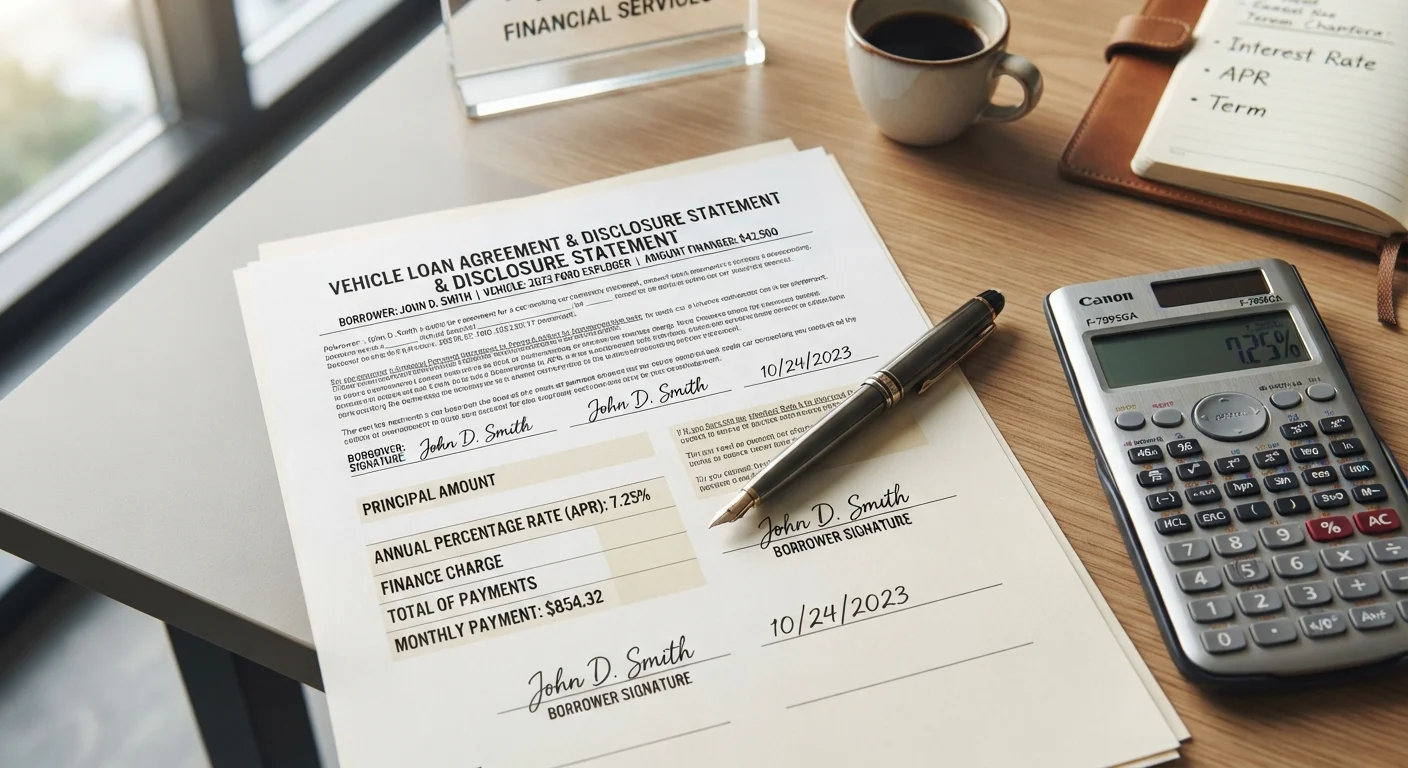
Two Numbers on Every Loan Offer — and Why They're Different
When you receive an auto loan quote, you'll typically see two percentage figures: the interest rate (sometimes called the nominal rate) and the APR, or Annual Percentage Rate. They look similar, but they measure different things — and confusing them can lead you to underestimate what a loan actually costs.
The interest rate is the annual cost of borrowing the loan principal. It's the percentage used to calculate how much interest accrues on your balance each period. The APR takes that rate and adds in most lender-imposed fees — things like origination fees or certain finance charges — then expresses the combined cost as a single annualized figure.
Because APR includes more costs, it is almost always equal to or slightly higher than the nominal interest rate. On a straightforward loan with no fees, the two numbers may be identical. On a loan with meaningful upfront fees, the gap widens.
| Criterion | Interest Rate | APR |
|---|---|---|
| What it measures | Cost of borrowing principal only | Principal cost plus lender fees |
| Includes lender fees | No | Yes (most required fees) |
| Used to calculate monthly payment | Yes | No |
| Best for comparing loan offers | Limited — misses fee differences | Yes — standardized by TILA |
| Relationship between the two | Always equal to or lower than APR | Always equal to or higher than rate |
| Mandated disclosure | Yes, under TILA | Yes, under TILA |
For a deeper look at how lenders set these rates based on your borrowing profile, see what your credit score does to your loan rate.
How to Use Each Figure When Evaluating a Loan
Knowing the difference matters most when you're comparing offers. Lenders are required under the federal Truth in Lending Act (TILA) to disclose APR on consumer loan offers — precisely because it's a more complete cost measure. Use it as your primary comparison tool when shopping.
That said, the nominal interest rate is still useful. Your actual monthly payment is calculated using the interest rate applied to your outstanding principal balance — not the APR. So if you're running payment estimates yourself, use the interest rate, not the APR, in your calculations. Using APR in a standard payment formula will overstate your monthly obligation.
When APR and Interest Rate Are the Same
On some auto loans — particularly those with no origination or finance fees — the APR and nominal interest rate will be identical. This is common with straightforward bank or credit union direct loans. If you see matching figures, it generally means no additional fees have been rolled into the financing cost, though you should still confirm this with the lender's loan disclosure.
One practical scenario: a lender offers 5.9% interest with a $500 origination fee, while another offers 6.2% interest with no fees. On a $25,000 loan over 60 months, the APR on the first offer will likely exceed the second once the fee is annualized — making the lower advertised rate the more expensive option in reality. Always request the APR on any offer before deciding.
For context on how rate structures vary between vehicle types, financing a new car vs. a used car covers how lender requirements and rates shift depending on the vehicle.
It's also worth understanding how interest is calculated on your balance over time. Simple vs. precomputed interest explains why the structure of interest calculation — not just the rate — affects your total cost. For a broader overview of how rates and payments work together, the end-to-end guide to auto loan rates and payments is a useful reference.
This article provides general financial education and is not personalized financial or lending advice. Loan terms, fees, and APR disclosures vary by lender. Consult a qualified financial professional for guidance specific to your situation.