
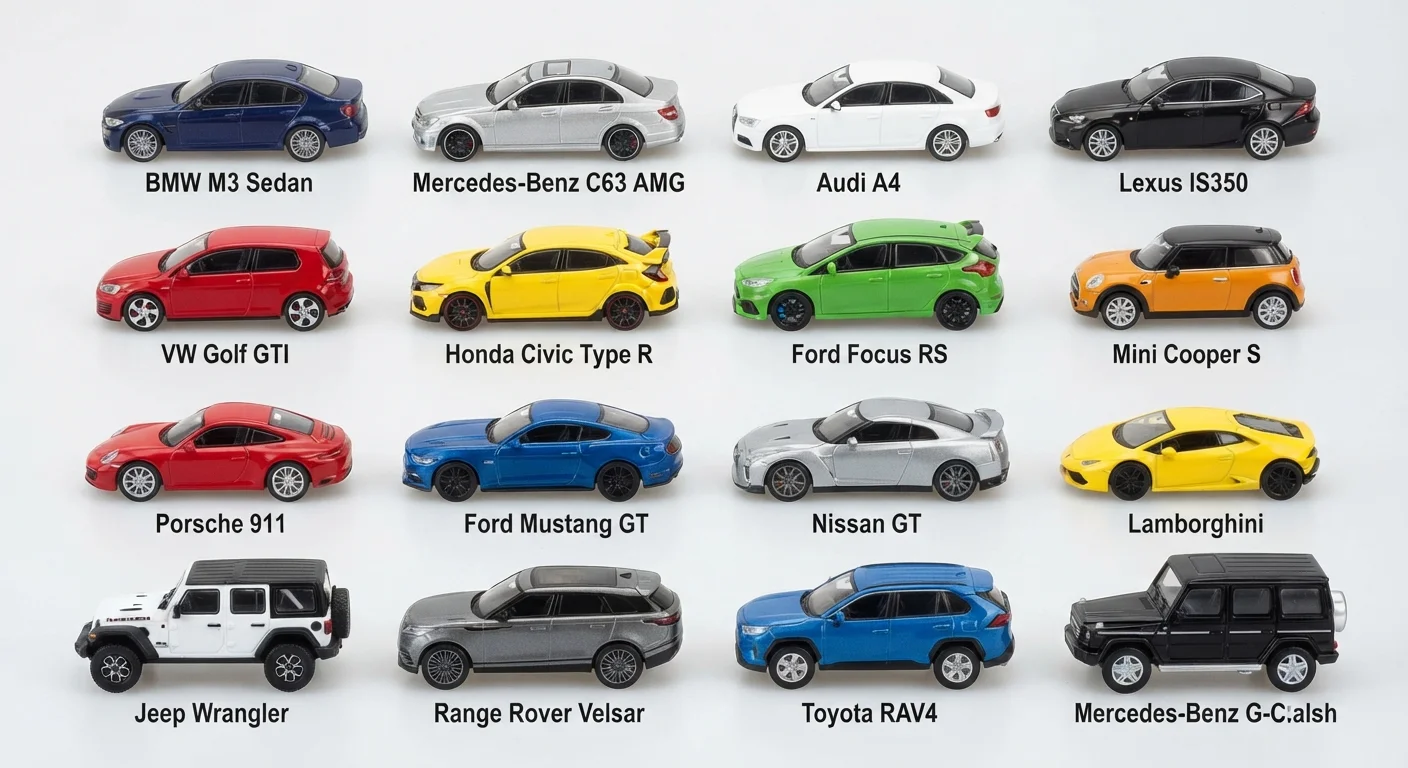
Why Body Style Terminology Matters to Buyers
Walk into any dealership or browse any automotive listing site and you'll encounter a barrage of descriptors: fastback, notchback, crossover, liftback. These aren't just marketing words — they describe real structural and functional differences that affect how a vehicle fits your daily life. Understanding them helps you filter options faster and ask better questions.
It's worth noting that body style is a separate concept from vehicle segment. A compact and a midsize are size classifications; a sedan and a hatchback are body styles. The two systems overlap but don't replace each other. For a fuller explanation of how they interact, see Segment vs. Body Style: Two Different Ways of Classifying Cars.
Notchback
A vehicle silhouette with three visually distinct sections: engine bay, passenger cabin, and trunk. The classic sedan shape in the U.S. market.
Fastback
A body style where the roofline sweeps in a continuous angle down to the rear of the vehicle. Associated with sporty aesthetics and improved aerodynamics.
Liftback
A fastback-style roofline where the rear glass and hatch panel open as one unit, combining a sleek profile with hatchback-style cargo access.
Unibody
A construction method where the body and chassis are a single integrated structure. Most modern passenger cars and crossovers use this approach, resulting in lighter weight and better handling.
B-pillar
The vertical structural post between a vehicle's front and rear doors. Hardtop designs traditionally eliminated the B-pillar to create a frameless window experience.
Crossover (CUV)
A vehicle that combines the elevated ride height and cargo versatility of an SUV with the car-based unibody platform of a passenger vehicle.
Shooting Brake
A two-door vehicle with a fastback roofline and extended cargo area, blending coupe aesthetics with wagon utility. Rare but occasionally seen in specialty models.
Cabriolet
Another term for convertible. Refers to any vehicle with a retractable roof, whether soft fabric or a rigid folding hardtop panel.
The Core Body Style Terms Defined
The terms below represent the most common body style vocabulary in the current U.S. market. Some refer to roofline shape, others to door configuration, and a few to structural distinctions that affect cargo access.
| Hatchback vs. Sedan trunk access | Hatchback opens full rear gate; sedan opens trunk lid only |
| Crossover platform type | Unibody (car-based) |
| Body-on-frame SUV platform | Separate chassis and body |
| Fastback defining feature | Continuous sloped roofline to rear |
| Liftback vs. Fastback difference | Liftback adds a top-hinged rear opening hatch |
| Hardtop (modern usage) | Fixed, non-retractable roof (not necessarily B-pillar-free) |
Roofline and Silhouette Terms
- Notchback: A classic three-box silhouette — engine, passenger cabin, and trunk as three distinct sections. The standard sedan shape.
- Fastback: A continuous slope from roofline to the rear of the vehicle, creating an aerodynamic, sporty profile. Common in coupes and performance-oriented sedans.
- Liftback: Similar roofline to a fastback, but the rear glass and hatch panel open together as a single unit, providing SUV-like cargo access in a car-like body.
- Shooting brake: A two-door wagon variant with a sloped fastback rear. Rare in the U.S. market but occasionally used for niche models.
Opening and Access Terms
- Hatchback: A body style where the rear cargo area is accessed through a top-hinged rear door that includes the rear window. Can be two-door or four-door.
- Hardtop: Originally described a body without a B-pillar, giving a frameless, open feel when windows are lowered. Today it often simply means a non-convertible fixed roof.
- Convertible/Cabriolet: A body with a retractable roof, either soft fabric or rigid folding panels.
Utility and Crossover Terms
- Crossover (CUV): Built on a car-based unibody platform rather than a traditional truck frame, offering SUV-like ride height and cargo space with improved fuel efficiency and handling.
- Body-on-frame SUV: Uses a separate chassis and body structure, traditionally associated with truck platforms. Tends to offer higher tow ratings and off-road capability.
For a broader look at how each of these styles translates to real driving life, The Major Vehicle Body Styles and What Sets Each One Apart covers the full picture.
Matching Body Style Language to Your Lifestyle
Knowing what a term means is only half the job — the other half is applying it to your situation.
Body Style Affects More Than Looks
A vehicle's body style influences practical factors like cargo volume, ease of loading, rear visibility, and even insurance classification. When comparing two vehicles that appear similar in photos, confirming the body style terminology can reveal meaningful real-world differences. For instance, a liftback and a notchback sedan may look alike from the side but offer very different trunk experiences.
- Need easy rear cargo access? Look for hatchback or liftback configurations. The full-opening rear gate makes loading groceries, strollers, or gear significantly easier than a traditional notchback trunk.
- Want a sporty roofline without sacrificing practicality? A fastback or liftback gives you the sleek silhouette with more usable cargo space than a standard coupe.
- Prioritizing towing or serious off-road use? Understand whether a vehicle is a crossover (unibody) or a body-on-frame SUV — the distinction directly affects tow ratings and durability under load.
- Considering a convertible? Factor in trunk space reduction when the roof is stowed, and evaluate whether a soft top or hardtop retractable better fits your climate and security needs.
Body style also has downstream effects on insurance premiums and financing terms, since vehicle type influences risk classification. For foundational information on how lenders approach vehicle purchases generally, Loan Basics is a useful starting point — though always consult a licensed financial professional for guidance specific to your situation.
If you want to understand how body styles fit within the broader market structure, the Vehicle Segments hub provides context on compact, midsize, and other size-based classifications.