
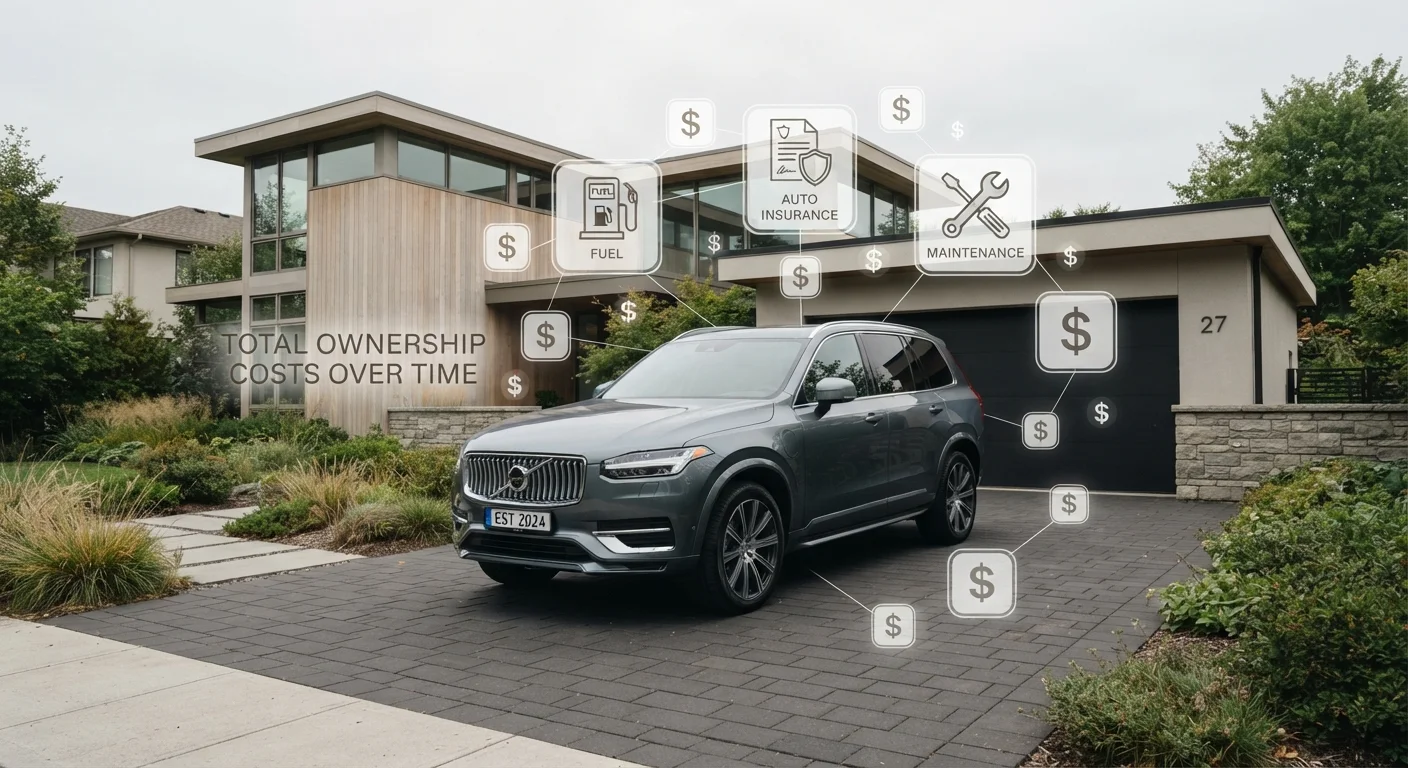
Why the Purchase Price Is Only Part of the Picture
When most buyers think about what a new car costs, they start — and often stop — at the sticker price. But the monthly loan payment covers only one slice of a much larger financial commitment. Over five years, the total cost of ownership typically runs significantly higher than the vehicle's purchase price alone.
Understanding where that money actually goes helps you budget accurately before you sign anything. The main cost categories to account for are: depreciation, financing charges, fuel, insurance, maintenance and repairs, and registration fees. Recurring fees, taxes, and insurance deserve particular attention because they compound quietly in the background every year you own the vehicle.
| Average Five-Year Ownership Cost (Midsize Sedan) | Approximately $35,000–$50,000+ (AAA Your Driving Costs study (figures vary by vehicle class and region)) |
| Depreciation Share of Total Ownership Cost | ~40% of total cost (AAA Your Driving Costs study) |
| Average Annual Insurance Cost (US) | ~$1,700–$2,400/year (National Association of Insurance Commissioners (NAIC) industry data) |
| Typical First-Year Value Loss | 15–25% of purchase price (General industry estimate; varies by make, model, and market conditions) |
| Average Fuel Cost Per Mile (Gas Vehicle) | ~$0.12–$0.18/mile (AAA Your Driving Costs; based on average US gas prices and fuel economy) |
| Typical Scheduled Maintenance Cost (5 years) | $1,500–$4,000+ (Varies significantly by manufacturer, vehicle type, and service location) |
The Five Major Cost Categories — Defined
Breaking down total ownership costs into discrete categories makes budgeting more manageable. Here is what each one means for a typical new car purchase in the US market.
Depreciation
The loss in a vehicle's market value over time. New cars typically lose 15–25% of their value in the first year and around 50% or more over five years, making it the single largest ownership cost for most buyers.
Total Cost of Ownership (TCO)
The full financial cost of owning a vehicle over a given period, including purchase price, financing, fuel, insurance, maintenance, taxes, and depreciation — not just the monthly payment.
APR (Annual Percentage Rate)
The yearly cost of borrowing money expressed as a percentage, including interest and any lender fees. On a five-year auto loan, even a modest APR difference can add or subtract hundreds of dollars in total interest paid.
Residual Value
The estimated market value of a vehicle at the end of a set period, often used in lease calculations. Higher residual value means slower depreciation and generally lower lease payments.
Scheduled Maintenance
Manufacturer-recommended service intervals (such as oil changes, filter replacements, and inspections) that keep a vehicle running properly and preserve warranty coverage.
Comprehensive Coverage
An auto insurance component that covers damage to your vehicle from non-collision events — theft, weather, falling objects — and is typically required by lenders on financed vehicles.
For a deeper look at ongoing expenses, the full picture of ongoing car ownership costs — including fuel, servicing, and tyres — is worth reviewing before you finalize your budget.
~40%
Share of TCO attributable to depreciation
According to AAA's Your Driving Costs research, depreciation consistently represents the largest single cost category for new car owners over a five-year period.
$1,700–$2,400
Average annual auto insurance cost (US)
National averages from NAIC industry data; individual premiums vary substantially based on driver profile, location, vehicle type, and coverage level.
50%+
Value loss over five years for most new vehicles
General industry estimates suggest many new vehicles retain less than half their original purchase price after five years, though this varies considerably by model and market.
New vs. Used: How These Costs Compare
New cars carry real advantages: full factory warranty coverage, the latest safety technology, and a known service history from day one. But they also carry the steepest depreciation curve, which tends to be most severe in years one through three. How age, mileage, and maintenance history shape real-world reliability is worth understanding because the reliability gap between new and late-model used vehicles is often smaller than buyers expect.
Buyers who choose a two- or three-year-old certified pre-owned vehicle can sidestep the sharpest depreciation drop while still enjoying remaining factory warranty coverage. The trade-off is a shorter remaining warranty window and less certainty about the vehicle's full history. Neither path is universally superior — the right choice depends on your driving habits, risk tolerance, and financing situation. If you are weighing the EV route, a separate breakdown covers what EV ownership actually costs over five years.
This article is for general informational and educational purposes only and does not constitute personalized financial advice. Actual ownership costs vary significantly based on vehicle type, location, driving habits, insurance profile, and financing terms. Consult a qualified financial professional for guidance specific to your situation.