
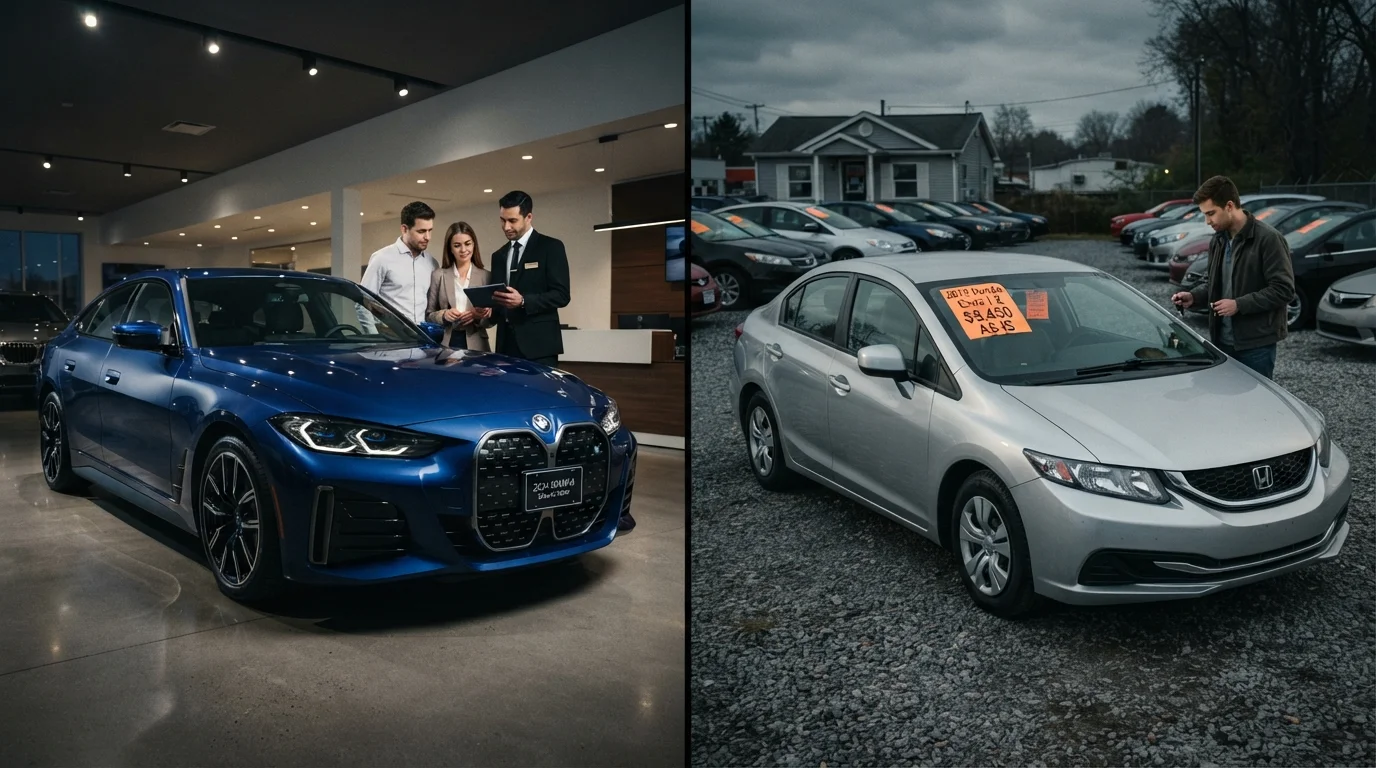
Why the Sticker Price Gap Is Often Misleading
The used car's lower purchase price is real — but it's the starting point for cost analysis, not the conclusion. Several structural factors routinely push the total cost of a used vehicle higher than buyers anticipate, and sometimes higher than a comparable new car when all variables are accounted for.
The most underappreciated factor is financing. Used car loan rates consistently run higher than new car rates — often significantly so. On a $25,000 used car financed at 9% versus a $31,000 new car at 4.9%, the actual interest paid over 60 months can eliminate most of the purchase price difference. Add in the absence of manufacturer warranty coverage and the picture shifts further.
This doesn't mean used cars are the wrong choice — it means the decision requires a full-cost comparison, not a sticker-price comparison. A clear-eyed financial comparison needs to include interest, insurance, expected repairs, and remaining warranty value before drawing any conclusions.
~2–5%
Interest rate premium on used car loans
Experian's automotive finance data consistently shows used car loan rates running 2 to 5 percentage points above comparable new car rates, depending on borrower credit profile and lender.
$1,500+
Average annual repair cost for vehicles over 5 years old
AAA's annual 'Your Driving Costs' research has found that older, out-of-warranty vehicles can average over $1,500 per year in unplanned repair costs, varying significantly by vehicle type and condition.
The Mistakes That Tip the Scales Against You
Most buyers don't set out to overpay for a used car. The mistakes that lead there are predictable, and most stem from comparing the wrong numbers or skipping steps that feel optional but aren't.
Comparing sticker prices without accounting for financing costs.
Why it happens: Buyers naturally anchor on the purchase price because it's the most visible number. The interest rate differential between new and used loans rarely gets the same attention.
Ignoring what it costs to replace the missing warranty.
Why it happens: Warranty coverage is invisible until something breaks. Buyers tend to discount the value of protection they haven't needed yet.
Assuming certified pre-owned (CPO) programs make the used car categorically cheaper.
Why it happens: CPO branding creates a perception of a bargain with protection attached. In reality, CPO vehicles carry a meaningful price premium over non-certified used cars.
Overlooking insurance cost differences when budgeting.
Why it happens: Insurance is often treated as a fixed background expense rather than a variable that changes with the vehicle.
Underestimating imminent maintenance costs on a used vehicle.
Why it happens: Pre-purchase inspections aren't universal, and sellers don't volunteer information about deferred service items like timing belts, brake pads, or tire replacement.
This article provides general financial information for educational purposes only and is not personalised financial or purchasing advice. Loan rates, insurance premiums, and vehicle costs vary significantly based on individual circumstances. Consult a qualified financial adviser for guidance specific to your situation.
Total Cost Comparison Is Non-Negotiable
Never compare a used car's sticker price to a new car's sticker price in isolation. Factor in interest paid over the loan term, expected maintenance and repair costs, insurance premiums, and remaining warranty value. Skipping this math is the single biggest reason buyers end up surprised by what their 'cheaper' used car actually costs them.
How to Run the Comparison That Actually Matters
The right comparison isn't new versus used — it's total cost of ownership over your expected ownership period. That calculation includes: loan total (principal plus interest), estimated insurance premiums, anticipated maintenance and repair costs, and the value of any remaining or applicable warranty coverage.
Depreciation is part of this too. A used vehicle that's already absorbed the steepest part of its depreciation curve has a real financial advantage — but only if the purchase price reflects fair market value and the vehicle's condition is sound. Understanding how depreciation affects new and used vehicles differently is essential context for this calculation.
There are also circumstances where buying new genuinely makes more financial sense — particularly when manufacturer financing rates are low, you plan to hold the vehicle long-term, or reliability is a hard requirement. When buying new actually makes financial sense outlines those scenarios without the usual hand-waving.
High-Mileage Vehicles Near New-Car Prices
When a used vehicle is priced within a few thousand dollars of a comparable new model — especially with significant mileage — the financial case for buying used collapses quickly. You're absorbing the risk of deferred maintenance, unknown history, and imminent wear items like tires and brakes, without a meaningful price discount to compensate. Run the full numbers before assuming the used option is the conservative choice.
The bottom line: treat the used car's price advantage as a hypothesis to test, not a conclusion to accept. The math will tell you whether it holds up in your specific case.