
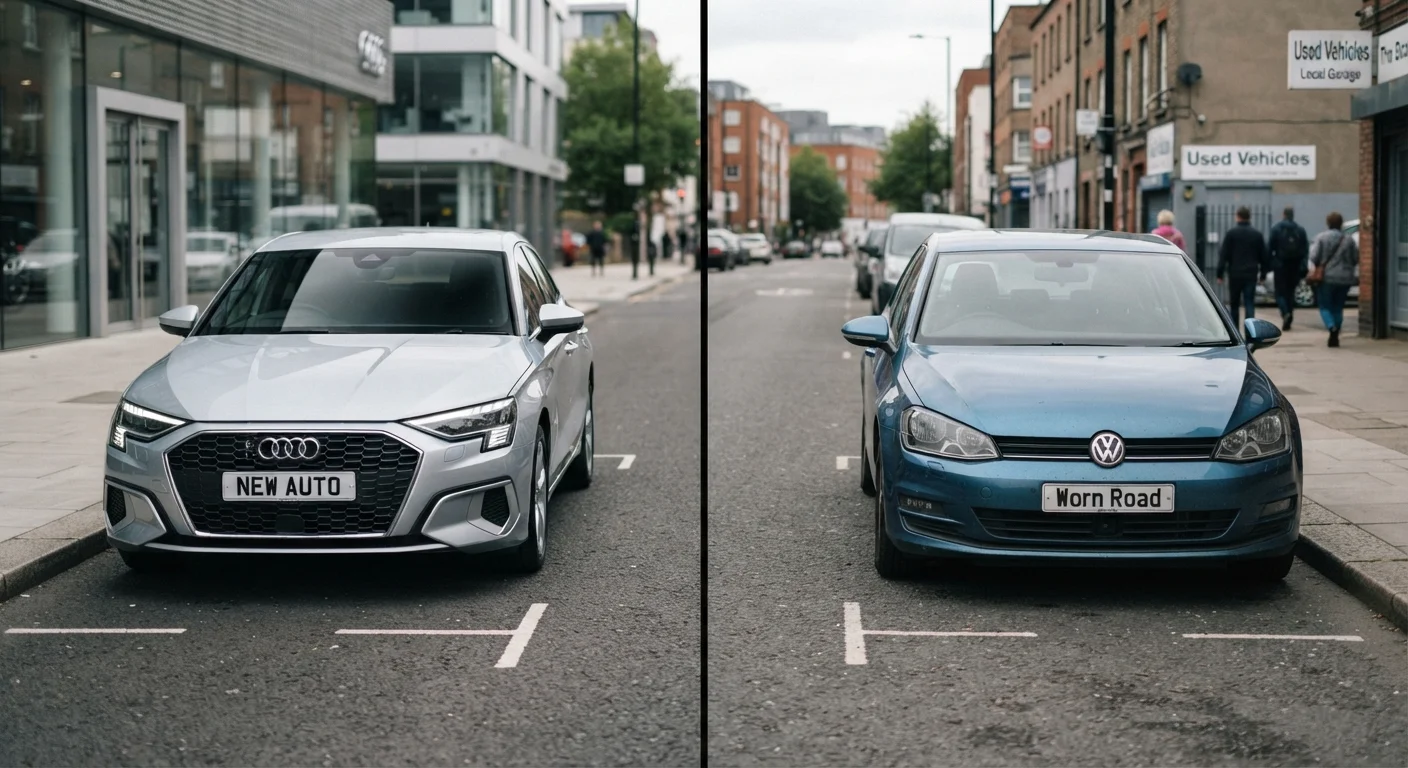
The Depreciation Curve: How It Differs for New vs. Used
Depreciation is the difference between what you paid for a vehicle and what it's worth when you sell or trade it. That gap is not evenly spread — it front-loads dramatically on new cars.
A new vehicle typically loses somewhere between 15% and 25% of its value within the first 12 months of ownership, according to widely cited industry benchmarks. By the end of year five, cumulative depreciation commonly reaches 50–60% of the original purchase price. The curve is steepest early and gradually flattens as the car ages.
Used cars enter a fundamentally different part of that same curve. If you buy a vehicle that is two to four years old, the original owner has already absorbed the sharpest decline. Your depreciation exposure from that point is considerably lower on a percentage basis, even if the absolute dollar amounts can still be meaningful.
For a deeper look at how the depreciation schedule works and when it hits hardest, see how depreciation shapes the new vs. used decision.
| Criterion | New Car | Used Car |
|---|---|---|
| Year-one depreciation | 15–25% of purchase price | Lower; steep drop already absorbed |
| 5-year cumulative depreciation | ~50–60% of original price | Smaller % loss from purchase point |
| Purchase price | Full MSRP or near it | Reduced by prior depreciation |
| Warranty coverage | Full manufacturer warranty included | Varies; may be expired or CPO |
| Financing rates | Generally lower (new-car rates) | Often higher for older vehicles |
| Best ownership horizon | 7–10+ years | 3–7 years from purchase |
| Risk of hidden issues | Minimal | Higher; vehicle history matters |
What This Means for Your Total Cost of Ownership
Depreciation is the single largest component of ownership cost for most drivers — typically outweighing fuel, insurance, and maintenance when measured annually. But it does not exist in isolation.
A new car comes with a manufacturer warranty that reduces out-of-pocket repair costs during the period when depreciation is steepest. That partially offsets the value loss. A used car sidesteps the steep depreciation window but may require more repairs and could carry higher financing rates, since lenders often treat older vehicles as higher risk.
~20%
Average new-car value lost in year one
Industry depreciation benchmarks consistently place first-year value loss for new vehicles in the 15–25% range depending on segment.
~50%
Typical value remaining after 5 years
Across most vehicle categories, roughly half the original purchase price has depreciated by the five-year mark.
2–4 years
Used-car sweet spot for depreciation value
At this age range, the steepest depreciation has passed while most vehicles remain mechanically reliable and potentially warranty-eligible.
The net result depends heavily on how long you keep the car. A buyer who holds a new vehicle for ten years spreads the depreciation hit across a long window. A buyer who trades every three years on new cars repeatedly re-enters the steepest part of the curve — a costly pattern. Used doesn't always mean cheaper: higher interest rates, missing warranty coverage, and repair costs can close the gap faster than many buyers expect.
For a full breakdown of how these costs interact, this clear-eyed financial comparison of new vs. used walks through purchase price, financing, insurance, and long-term expenses together.
Timing and Vehicle Selection: Where the Leverage Is
Not all used cars represent the same depreciation value. The sweet spot for most buyers is typically a vehicle that is two to four years old with moderate mileage. At that age, the largest annual value drops have already occurred, the mechanical track record is partially established, and — for many models — a certified pre-owned warranty may still apply.
Vehicle segment matters too. Trucks and certain SUVs have historically held value better than sedans, meaning the used-market discount relative to new is smaller. High-depreciation segments — certain luxury cars, for instance — can offer significant used-market value, but that lower price may reflect ongoing ownership costs rather than a pure bargain. Understanding the trade-offs of strong resale value vehicles is worth reviewing before assuming low depreciation equals low total cost.
Timing your purchase to where a specific vehicle sits on its depreciation curve is one of the most actionable strategies available to used-car buyers. Buying at the right point on the depreciation curve explains how to identify that position for the models you're considering.
Certified Pre-Owned Can Bridge the Gap
Many automakers offer certified pre-owned (CPO) programs that extend warranty coverage to used vehicles meeting specific age and mileage criteria. A CPO vehicle can reduce the reliability risk associated with used-car purchases, though it typically commands a price premium over non-certified equivalents. Always review what the specific CPO warranty covers and excludes before factoring it into your decision.
This article provides general financial education about vehicle depreciation and is not personalized financial advice. Individual outcomes vary based on vehicle, market conditions, financing terms, and personal circumstances. Consult a qualified financial professional for guidance specific to your situation.