
What Depreciation Resistance Actually Means
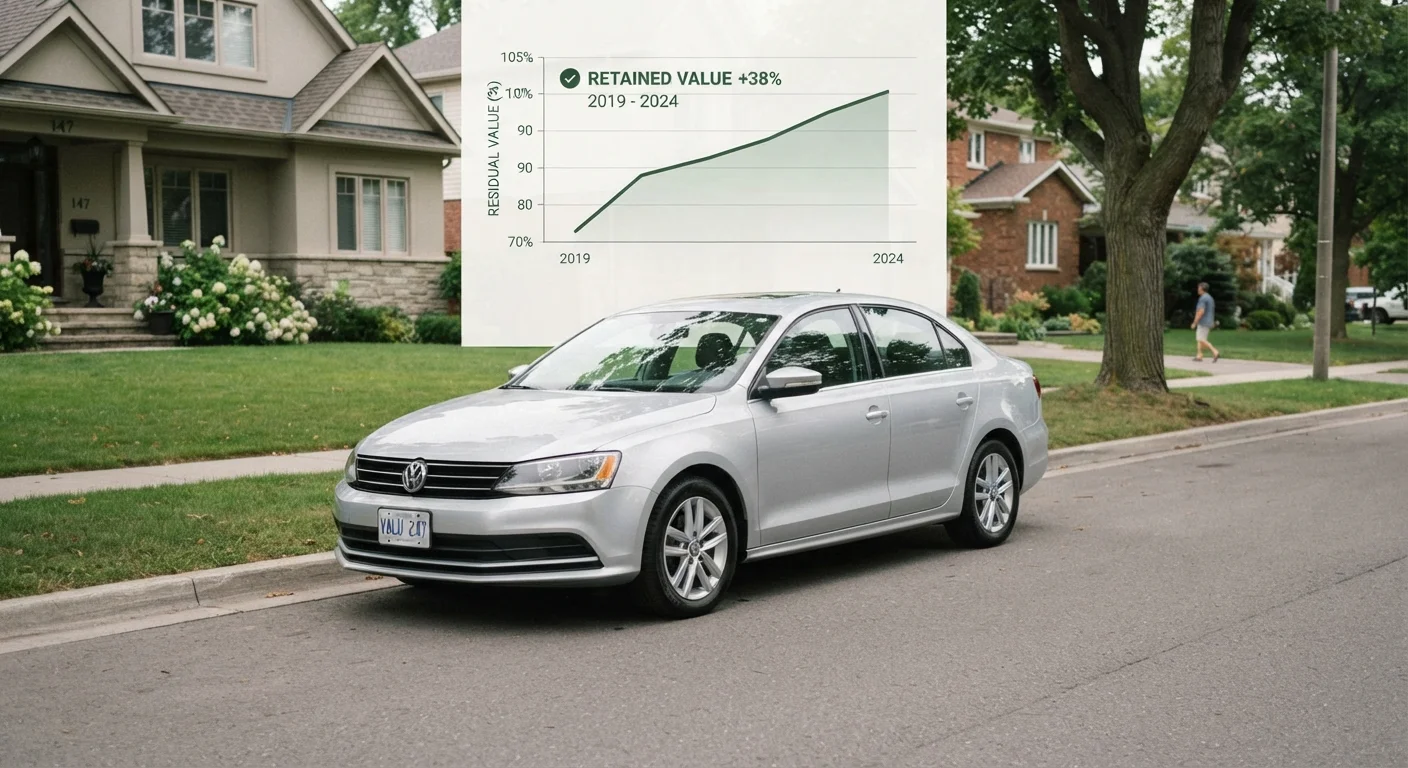
A car described as "depreciation resistant" retains a higher percentage of its original purchase price over time compared with the average vehicle. While a typical new car may lose 15–25% of its value in the first year alone, certain models — often those with persistent buyer demand, limited supply, or a reputation for long-term reliability — hold closer to 60–70% of their value after three years.
It's important to understand that no vehicle fully escapes depreciation. The question is always rate — how steeply and how quickly a car loses value relative to comparable options. For a deeper look at how that curve works, see how depreciation separates new from used.
Depreciation resistance is also not a fixed trait. Market conditions, fuel prices, consumer preferences, and supply chain dynamics all shift what buyers will pay used. What held value well in one decade may not in the next.
~49%
Average 5-year depreciation for a new vehicle
Industry data from sources including iSeeCars and Edmunds historically estimates that the average new car loses roughly half its value over five years, with significant variation by segment.
15–25%
Value lost in year one for a typical new car
The steepest portion of the depreciation curve typically occurs in the first twelve months, regardless of the vehicle's long-term resale strength.
The Genuine Advantages
Higher resale return when you sell or trade in
Owners who sell within three to six years recoup a meaningfully larger share of their purchase price, which can reduce the net cost of moving to a different vehicle.
Lower lease payments due to stronger residual values
Lenders use residual value projections to set monthly lease amounts — a higher expected resale value means you finance a smaller portion of the car's worth over the lease term.
Greater financial flexibility if life circumstances change
A vehicle with a stable market value gives you more options if you need to sell quickly, since you're less likely to be significantly underwater on the asset.
Often signals broad consumer confidence in reliability
Persistent demand in the used market frequently reflects a track record of durability, which can correlate with lower surprise repair costs — though this is not guaranteed.
The most tangible benefit is straightforward: if you sell or trade in within a typical ownership window of three to six years, you recoup a larger share of what you paid. That difference can meaningfully offset the cost of your next vehicle.
Leasing is another area where resale strength pays off directly. Lease payments are partly determined by residual value — what the lender expects the car to be worth at lease end. A higher residual translates to lower monthly payments, all else being equal. See how residual and resale value differ for a clear breakdown of that distinction.
There's also a psychological stability that comes with knowing your asset isn't in freefall. For buyers who want to remain flexible — switching vehicles as life circumstances change — that floor under market value is genuinely useful.
The Real Trade-Offs
Higher purchase price upfront, new or used
Strong demand keeps prices elevated at every point in the ownership chain. You typically pay more to acquire these vehicles, which can erode the financial advantage of the resale benefit.
Ongoing insurance costs track the higher retained value
Comprehensive and collision premiums are partly based on what the insurer would pay to replace the vehicle. A car that holds value longer costs more to insure for a longer period.
Resale advantage shrinks the longer you keep the car
Beyond 100,000–150,000 miles, depreciation curves from different vehicles tend to converge. Owners who rarely trade in may never realize the value they paid a premium to preserve.
Limited negotiating room in the used market
Popular, value-retaining models often sell quickly and close to asking price. Buyers hoping for a discount on a well-regarded used vehicle may find less room to negotiate than expected.
Resale strength can reflect market trends, not just quality
External factors like fuel prices, supply constraints, and brand perception can inflate or deflate used prices independently of a vehicle's actual mechanical quality or ownership cost.
The core tension is this: the same demand that keeps resale prices high also inflates what you pay to acquire the vehicle. Buying a depreciation-resistant model often means paying close to sticker price new, and finding little discount in the used market either. If you're considering a used vehicle specifically to save money, high-demand models may offer a narrower price advantage than you expect.
Insurance costs also tend to track vehicle value. A car that retains more of its worth will generally cost more to insure comprehensively, since the insurer's liability is higher for longer. That's an ongoing ownership cost that doesn't show up in the sticker price.
For buyers who keep cars well past the typical trade-in window, the resale advantage matters less. At 150,000 miles or beyond, most vehicles — regardless of their initial depreciation curve — have converged toward similar low values. Paying a premium for resale strength you never capture is a poor trade.
Resale Value Is Only One Part of Ownership Cost
Total cost of ownership includes fuel, insurance, maintenance, financing interest, and taxes — not just what a vehicle is worth when you sell. A car with strong resale value but high insurance premiums or costly scheduled maintenance may not be cheaper to own overall. Running a complete cost comparison across your expected ownership period gives a more accurate picture than resale strength alone. For more on what quietly affects that number, see choices that can hurt resale value.
Matching Your Ownership Plan to the Math
The clearest way to evaluate whether depreciation resistance is worth prioritizing is to map it against your actual ownership timeline. Buyers who trade frequently, lease regularly, or want maximum flexibility get the most out of a vehicle that holds value. Those who plan to drive a car into high mileage are often better served by focusing on reliability and lower purchase price.
It's also worth separating resale value from reliability. Some vehicles hold value precisely because they're reliable — but that's not always the case. Market perception, brand prestige, and category demand all influence used prices independently of how often a car needs repairs. The depreciation myths many buyers still hold often conflate these factors.
For a comparison of how this plays out across new and used purchases, new car vs. used car depreciation lays out the full financial picture. And if you already own a depreciation-resistant vehicle, the habits you maintain during ownership matter too — see keeping resale value in mind throughout ownership for the long-game perspective.
This article provides general educational information about vehicle depreciation and ownership costs. It is not personalized financial advice. For decisions specific to your situation, consult a qualified financial professional.