
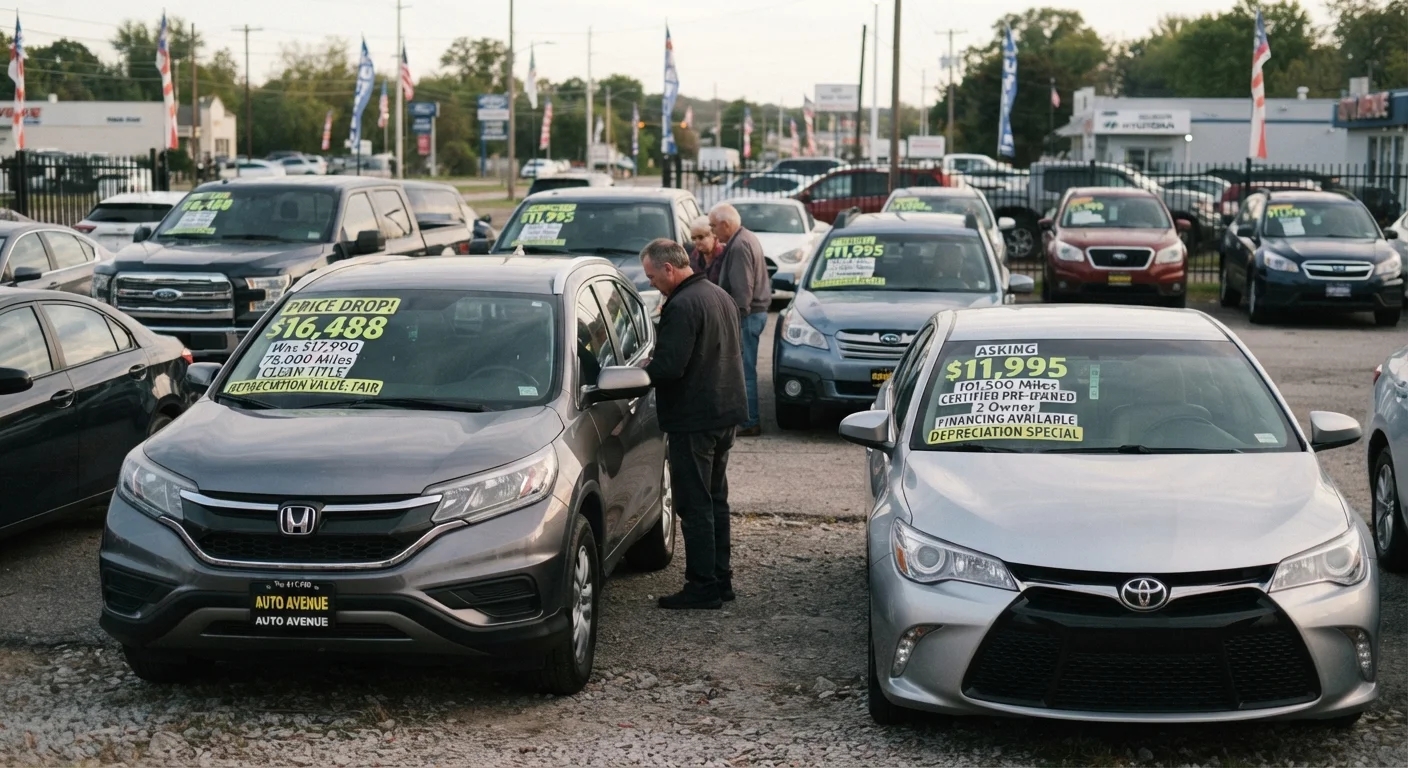
Why Depreciation Myths Are So Persistent
Depreciation is one of the largest real costs of car ownership — often exceeding fuel and maintenance over a five-year period — yet most buyers navigate it using assumptions that don't hold up under scrutiny. The myths stick around partly because they contain a kernel of truth, partly because they're simple, and partly because the used car market is genuinely complex enough that anecdotes feel convincing. This article addresses five of the most common ones, with what the evidence actually supports.
If you're weighing new versus used, myths around buying new and used car myths are worth reading alongside this piece — many misconceptions cluster around the new-versus-used decision itself.
Myth
A new car loses thousands of dollars the moment you drive it off the lot.
Fact
Depreciation in the first year is real but varies widely by model — some vehicles hold value far better than average.
The "drives off the lot" line is repeated so often it's taken as gospel. In reality, first-year depreciation can range from under 10% to over 30% depending on the vehicle's segment, demand, and inventory conditions. High-demand vehicles in tight supply have, in some market cycles, actually sold used for close to or above their new MSRP. The steepest drop typically occurs across years one through three combined, not in a single dramatic moment. Understanding the actual depreciation curve — not just the anecdote — helps buyers decide when to buy. See how depreciation curves really work for a fuller breakdown.
Myth
An unusual or bold colour will dramatically tank your car's resale value.
Fact
Colour is a factor, but its impact is modest compared to condition, mileage, and service history.
Neutral colours like white, black, and silver do tend to appeal to the broadest pool of buyers, which can support resale. But the gap between a well-maintained car in a less-popular colour and a neglected car in white is far larger than any colour premium. Some analysis has even found that less common colours — yellow or orange on sports-oriented vehicles, for example — can command a premium in niche markets. Colour is one variable among many. The full picture of what drives resale value covers the factors that consistently outweigh paint choice.
Myth
German luxury cars hold their value better because of their premium reputation.
Fact
German luxury vehicles frequently depreciate faster than mainstream alternatives over a three-to-five-year ownership window.
The perception of prestige doesn't insulate a vehicle from depreciation — it can actually accelerate it. High new-car prices combined with elevated maintenance costs and wide availability of lease returns mean German luxury sedans and SUVs often lose a larger share of their original value by year four or five than comparable mainstream vehicles. A buyer paying a premium new price for a prestige badge may find the used market for that same car is crowded with off-lease units. That's worth weighing carefully before assuming a luxury badge equals better value retention.
Myth
Electric vehicles depreciate much faster than comparable gas-powered cars.
Fact
Early-generation EVs depreciated sharply, but newer models show resale patterns that are increasingly competitive with traditional vehicles.
This myth was largely accurate for EVs introduced in the early-to-mid 2010s, where range limitations and rapid battery technology advances made older models quickly feel obsolete. The pattern has shifted. High-demand EVs from established manufacturers have in some periods held value as well as or better than their internal combustion equivalents. Battery warranty terms, available range, and brand perception all influence the curve. The category is diverse — treating all EVs as a single depreciation story leads to poor conclusions in either direction.
Myth
Low mileage is the single most important factor in a used car's value.
Fact
Mileage matters, but service records, condition, and spec level can override its effect on resale price.
A 40,000-mile car with no service records, accident history, or a base trim level may be worth less than a 65,000-mile car with a full dealer-stamped service book, clean title, and popular options. Buyers and appraisers look at the complete picture. Very low mileage on an older vehicle can also raise questions — a car sitting unused for years may have dry seals, degraded fluids, or other issues that erode its value despite the odometer reading. Several quiet factors erode used car value beyond what the mileage number tells you.
What These Myths Actually Cost You
Acting on depreciation myths has real financial consequences. Avoiding a well-maintained vehicle because of its colour, overpaying for a German badge expecting it to hold value, or dismissing a newer EV because of outdated assumptions about resale — each of these decisions can mean thousands of dollars left on the table, either in overpaying at purchase or underselling when it's time to move on.
~49%
Average 5-year depreciation for new vehicles
Industry analyses of large vehicle transaction datasets consistently find the average new car retains roughly half its value after five years, though the range across segments is wide.
Year 1–3
Window of steepest value loss
Most vehicles experience the sharpest depreciation in the first three years of ownership, with the rate typically slowing considerably after that threshold.
The smarter approach is to look at actual transaction data and depreciation curves for the specific model you're considering, not category assumptions. Strong depreciation resistance comes with its own trade-offs, too — vehicles that hold value well tend to cost more at purchase and offer less room to negotiate. Understanding the full ownership cost equation, not just the resale number, leads to better decisions. For general guidance on what shapes value over time, the factors that determine how much value a car retains is a useful reference before you buy.
This article is for general informational purposes only and does not constitute financial or purchasing advice. Resale values vary significantly by market, region, vehicle condition, and timing. Consult relevant professionals for decisions specific to your circumstances.