
Why Used Car Myths Are Expensive
Persistent myths about used car buying don't just cause confusion — they cost real money. Buyers who skip inspections because a car has low mileage, or who overpay for a CPO label without understanding what it covers, are making financial decisions based on folklore rather than evidence.
This article works through the most common misconceptions that trip up otherwise informed buyers. For broader context on how used car assumptions stack up against reality, see Common Assumptions About Used Cars That Don't Hold Up.
Myth
Low mileage means the car is reliable and in good condition.
Fact
Mileage is one data point, not a condition report. How a car was driven and maintained matters far more than the odometer reading.
A 40,000-mile vehicle that spent most of its life on short cold-start trips, sat unused for months, or was serviced irregularly can be in worse mechanical shape than a 100,000-mile car that received consistent highway use and on-schedule maintenance.
Rubber seals, hoses, and gaskets deteriorate with age regardless of mileage. Engines that rarely reach full operating temperature accumulate internal moisture and carbon deposits. Low mileage on an older vehicle can signal neglect rather than care. Always pair mileage with a full service history review and an independent mechanical inspection before drawing conclusions.
Myth
A clean vehicle history report means the car has no hidden problems.
Fact
History reports only capture what was officially reported. Unreported accidents, private repairs, and pre-purchase damage will not appear.
Services like Carfax or AutoCheck compile data from insurance claims, DMV records, and some repair shops — but private-party repairs, cash settlements, and incidents that were never filed with an insurer leave no trace. A car can have a spotless report and significant undisclosed structural damage.
A history report is a useful screening tool, not a guarantee. It should be the first step in your due diligence, not the last. An independent pre-purchase inspection by a qualified mechanic remains the most reliable way to surface issues a report cannot reveal. See common pitfalls used car buyers face for more on where buyers place too much trust.
Myth
Certified Pre-Owned vehicles are always worth the premium over a standard used car.
Fact
CPO programs vary widely in what they cover. Some offer genuine peace of mind; others provide limited coverage that duplicates what a standard warranty would offer anyway.
A manufacturer-backed CPO program is generally more comprehensive than a dealer-branded one. Terms, deductibles, covered components, and inspection standards differ significantly between programs — and between the fine print and the sales pitch.
Before paying the CPO premium, ask specifically: What components are covered? What is the deductible per claim? Does the warranty transfer if you sell the car? Is it backed by the manufacturer or a third party? If the answers are vague or you're not given documentation to review, treat the premium with skepticism. The CPO badge alone is not a reliable proxy for value.
Myth
Dealers always charge more than private sellers.
Fact
Dealer prices are often higher on the sticker, but private sales carry their own costs and risks that frequently close the gap.
Private sellers typically don't offer warranties, financing, or recourse if something goes wrong after the sale. Buyers often absorb the cost of any repairs discovered post-purchase. There's also no standardised inspection process, and negotiating without documentation can be difficult.
Dealers — particularly franchise dealers — generally provide inspection records, CPO options, title guarantees, and financing. The net cost after accounting for repairs, registration assistance, and financing convenience can be comparable to or lower than a private deal that appears cheaper upfront. This comparison of used car assumptions looks at the private vs. dealer dynamic in more detail.
Myth
You should always arrange financing through your own bank before visiting a dealer.
Fact
Pre-approval is smart preparation, but dealer financing can sometimes be competitive or offer manufacturer incentives worth comparing.
Having a pre-approval in hand gives you a clear rate benchmark and prevents a dealer from focusing the conversation entirely on monthly payment. But assuming dealer financing is always worse means buyers sometimes leave money on the table when a dealer has access to lenders offering lower rates for specific credit profiles.
The right approach is to arrive with a pre-approval and treat it as a floor to beat, not a ceiling to settle for. For a detailed breakdown of how rate comparisons actually work, Auto Loan Rate Myths That Cost Buyers Money covers the mechanics without the dealer-speak.
What These Myths Actually Cost You
Each of the myths above has a dollar figure attached to it — whether that's a skipped inspection that leads to a $3,000 transmission repair, an inflated CPO premium for coverage you didn't need, or a dealer financing rate you assumed was bad without ever comparing it to a bank offer.
~40%
Used car buyers who skip independent inspections
Industry surveys consistently suggest a significant portion of used car buyers forgo a pre-purchase inspection, often citing trust in history reports or seller assurances.
$1,500–$3,000+
Typical cost of undisclosed repair needs found post-purchase
Consumer advocacy organisations note that buyers who skip inspections frequently encounter repair bills in this range within the first year of ownership.
Smart used car buying comes down to verifying claims rather than assuming them. A vehicle history report is a starting point, not a verdict. An independent inspection from a qualified mechanic is the single highest-return step most buyers skip. And if you're weighing financing options, Auto Loan Myths That Cost Buyers Real Money breaks down how lending actually works — separate from the car itself.
An Independent Inspection Is Non-Negotiable
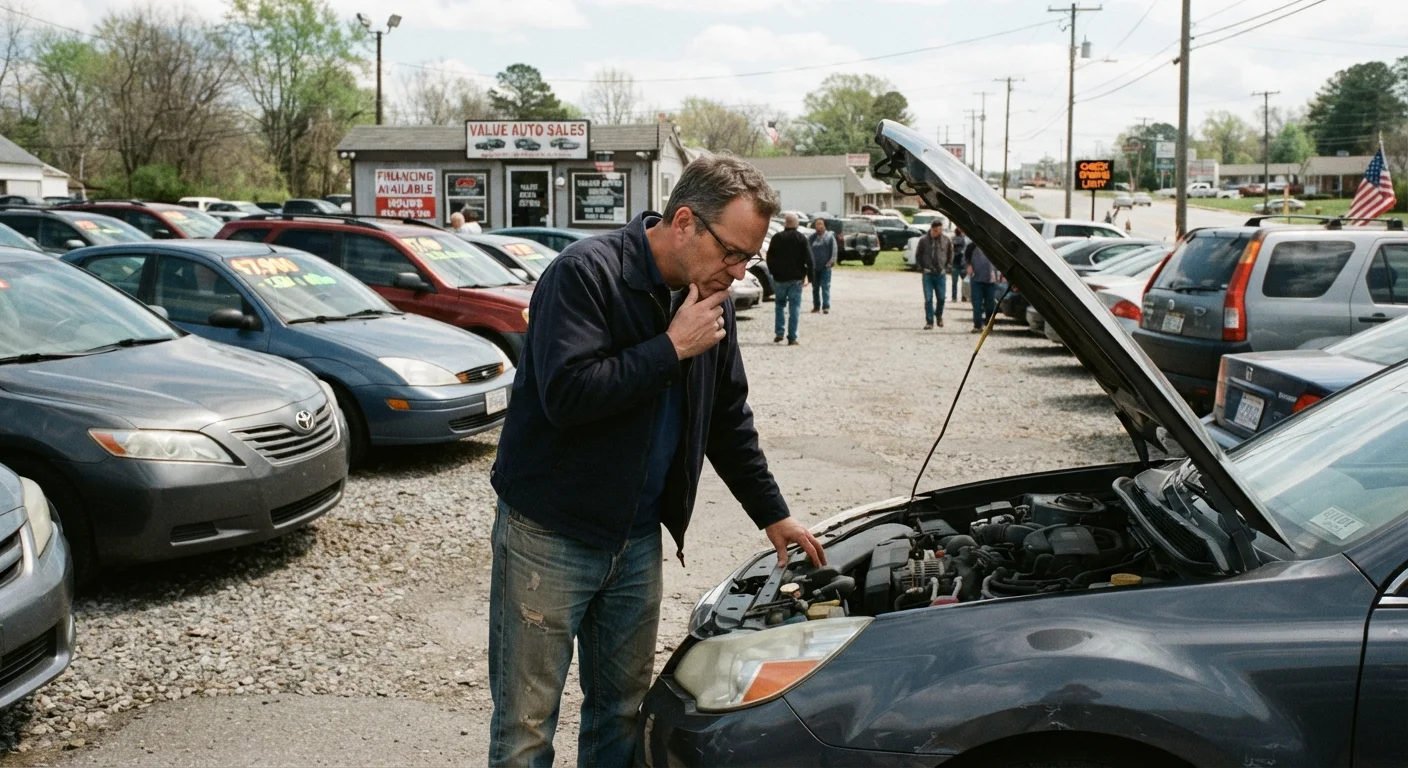
No history report, CPO badge, or seller assurance replaces a pre-purchase inspection by a qualified mechanic of your choosing — not one recommended by the seller. Budget $100–$200 for this step. It's the single most effective way to avoid absorbing someone else's mechanical problems. If a seller refuses to allow an independent inspection, treat that refusal as a disqualifying red flag.
Used cars represent genuine value for many buyers — but only when the decision is grounded in facts. Understanding the pitfalls that catch buyers more than once is the most reliable way to avoid becoming a statistic.
This article provides general information for educational purposes and is not personalised financial or legal advice. Consult a qualified professional for guidance specific to your situation.