
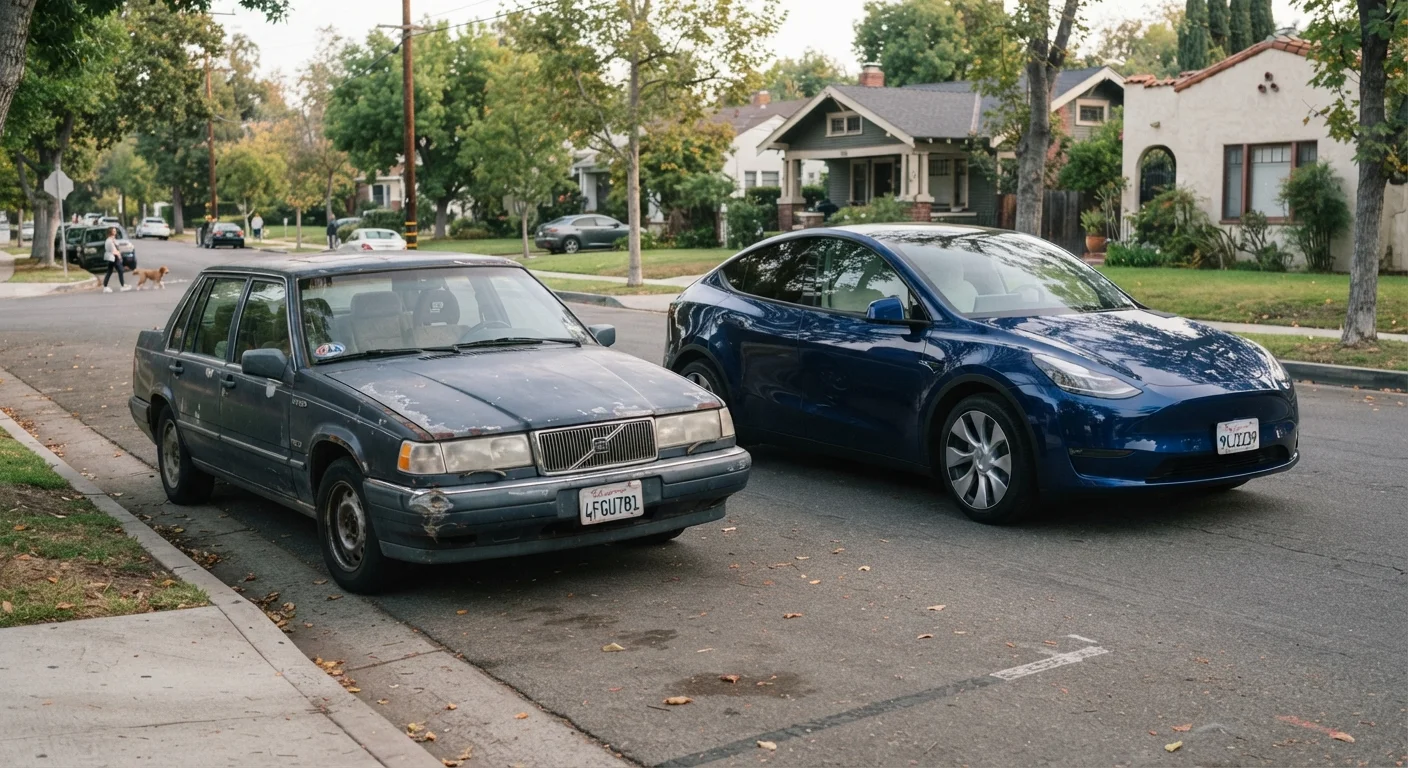
Why Depreciation Changes the Insurance Equation
When you first drive a car off the lot, comprehensive and collision coverage often make clear financial sense. The vehicle is worth a significant sum, and a total-loss payout would meaningfully replace what you lost. But that calculus shifts every year the car depreciates.
A typical car loses value rapidly in its early years, often shedding 15–25% in the first year alone and continuing to fall through years two through five. By the time a vehicle is eight to ten years old, its market value may be a fraction of what you paid. The insurance payout on a total loss — based on actual cash value, not replacement cost — shrinks right along with that number.
This is why coverage that felt essential at purchase can become financially inefficient over time. You may be paying annual premiums for protection whose maximum possible benefit no longer justifies the cost.
~47%
Average value lost in first three years
Industry depreciation data consistently shows many vehicles lose roughly 40–50% of their original value within the first three years of ownership, according to analyses by automotive valuation services.
10%
Premium-to-value ratio worth examining
Consumer finance guidance commonly cites a 10% annual premium-to-vehicle-value ratio as the point at which dropping comprehensive and collision coverage merits serious evaluation.
The Core Framework: What to Weigh Before Adjusting Coverage
Before dropping or reducing physical damage coverage, work through these key variables:
Calculate your vehicle's current market value before your next renewal
Insurance payouts for comprehensive and collision claims are based on actual cash value at the time of loss, not what you paid or what you owe. If you don't know what your car is currently worth, you can't evaluate whether your premiums are proportionate to your potential benefit.
Apply the 10% rule as a starting benchmark for dropping physical damage coverage
A widely cited rule of thumb holds that if your annual comprehensive and collision premiums exceed 10% of your vehicle's current market value, those coverages may no longer be cost-effective. This isn't a rigid formula, but it provides a concrete starting point for the conversation.
Factor in your financial ability to self-insure before dropping coverage
Dropping comprehensive and collision means accepting the full financial risk of a total loss or major damage yourself. If replacing or significantly repairing the vehicle out of pocket would cause real hardship, coverage may be worth keeping even when the math is borderline.
Review your deductible alongside your vehicle's value, not independently
A deductible that made sense when your car was worth $22,000 may be poorly matched to a vehicle now worth $6,000. The net payout after your deductible is the real figure to evaluate against your premium cost.
Check your loan or lease agreement before making any coverage changes
Lenders have a financial interest in the vehicle securing the loan and routinely require comprehensive and collision coverage as a condition of financing. Making changes without confirming lender requirements can result in a policy breach and costly force-placed insurance.
The Deductible Factor: Often Overlooked, Always Relevant
Even when keeping comprehensive and collision coverage makes sense on paper, the deductible you carry matters enormously on an older vehicle. If your car is worth $6,000 and you carry a $2,000 deductible, any damage that doesn't exceed $2,000 comes entirely out of your pocket — and claims that do pay out may only net you $4,000 before depreciation adjustments reduce it further.
Raising your deductible lowers your premium, which can make sense on a newer vehicle where the coverage limit is still substantial. On an older, lower-value car, a high deductible paired with a low coverage ceiling creates a mismatch: you're paying for a safety net with a very small opening.
Match Your Deductible to Your Vehicle's Reality
As your vehicle's value declines, revisit your deductible alongside your premium. A deductible that once represented a modest fraction of your car's worth may now consume a substantial share of any potential payout. Running a quick net-benefit calculation — market value minus deductible — makes this concrete. If that number no longer justifies what you're paying, it's a conversation worth having with your agent.
For guidance on the structural differences between physical damage coverage types, see comprehensive vs. collision coverage explained.
Financed and Leased Vehicles: The Lender Constraint
If you still owe money on the vehicle, this decision may not be fully yours to make. Most lenders and lease agreements contractually require comprehensive and collision coverage for the life of the loan or lease. Dropping coverage on a financed vehicle without lender approval can trigger force-placed insurance — a policy the lender selects on your behalf, typically at a much higher premium with fewer protections for you.
Early in a loan, the gap between what you owe and what the car is worth can be significant. Gap insurance addresses exactly this scenario — if your car is totaled and the payout falls short of your loan balance, gap coverage bridges the difference. Once your loan balance drops below the vehicle's market value, that risk disappears — and so does the argument for gap coverage.
For a broader look at how upkeep costs shift as vehicles age, comparing older and newer car costs puts insurance in context alongside maintenance trends.
Building a Review Habit That Keeps Coverage Aligned
Insurance needs aren't static — they shift as your vehicle loses value, your financial situation changes, and your driving patterns evolve. Without a deliberate review process, it's easy to continue paying for coverage that no longer serves you.
A structured annual insurance review — timed to your renewal date — is the most reliable way to catch mismatches before you pay another year's premium. Pull a current market value estimate for your vehicle each year and run the 10% test against your comp and collision costs. If the math no longer works, discuss your options with a licensed insurance agent who can explain the trade-offs for your specific situation.
This article is for general informational purposes only and does not constitute personalized insurance or financial advice. Coverage needs vary by individual, vehicle, lender requirements, and state regulations. Always review your actual policy documents and consult a licensed insurance agent or financial adviser before making changes to your coverage.