
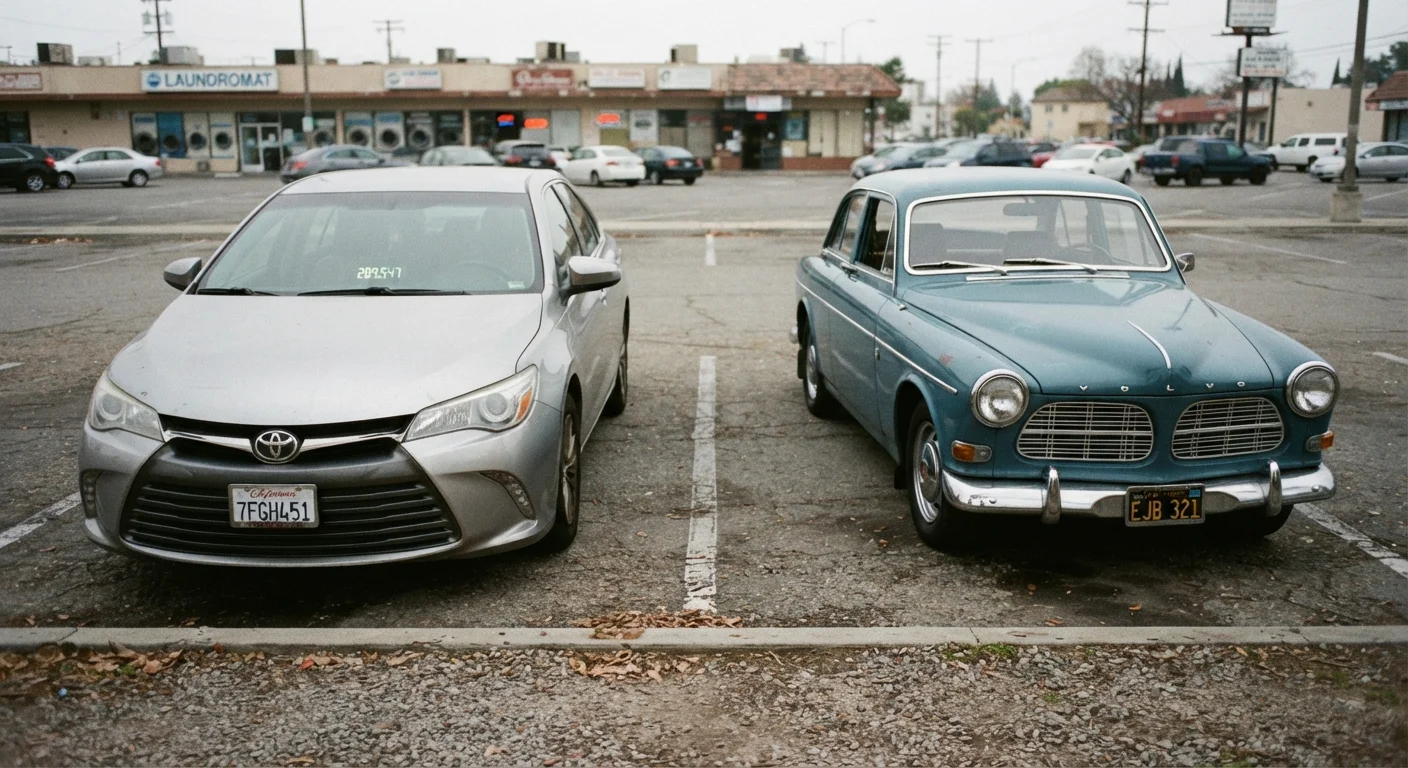
Why This Trade-Off Is Harder Than It Looks
Most used car buyers instinctively focus on the odometer. But mileage is a signal, not a verdict. A five-year-old sedan with 130,000 highway miles may be in better mechanical shape than a twelve-year-old equivalent sitting at 55,000 city miles. The reason: engines accumulate wear differently depending on how they're driven, how they're serviced, and how old the surrounding components are.
This is the core tension. High mileage on a newer vehicle means you're dealing with known, measurable wear — but on a platform with modern engineering tolerances, current parts availability, and often better safety standards. A low-mileage older vehicle presents the opposite problem: the odometer looks reassuring, but age quietly degrades rubber seals, timing belts, brake fluid, and cooling hoses regardless of how rarely the car was driven.
Understanding which trade-off suits your situation requires looking beyond the number on the dash. See our age vs. mileage breakdown for a deeper look at how these two factors interact in valuation.
| Criterion | High-Mileage Newer Vehicle | Low-Mileage Older Vehicle |
|---|---|---|
| Odometer risk | High miles, measurable wear | Low miles, but age-related wear |
| Safety technology | More likely to include modern features | Older platforms, fewer active safety systems |
| Parts availability | Generally strong for recent models | Can be limited for older platforms |
| Service history documentation | Often available, especially fleet vehicles | Variable; older records harder to verify |
| Age-related deterioration risk | Lower — fewer years of rubber/seal aging | Higher — seals, belts, fluids age regardless |
| Purchase price | Moderate — mileage discounts newer price | Often lower — age discounts older models |
| Insurance cost | Moderate to higher (newer vehicle value) | Typically lower on older vehicles |
| Inspection priority items | Transmission, suspension, CV joints | Timing belt, hoses, seals, fluid condition |
What High Mileage Actually Means for a Newer Car
A newer vehicle with high mileage has usually covered those miles under more controlled conditions than you might expect. Fleet vehicles, highway commuters, and ride-share cars account for a large share of high-mileage used inventory — and many carry documented service histories. That documentation changes the risk profile considerably.
Highway miles are gentler on engines than stop-start city driving. An engine that has spent most of its life at steady highway cruising temperatures will typically show less cylinder wear than one subjected to constant cold starts and idling. The caveat is transmission and suspension: highway miles accumulate wear on those systems too, and a pre-purchase inspection should specifically check transmission fluid condition, CV joints, and shock absorbers on any high-mileage vehicle.
Modern vehicles are also engineered to higher durability standards than equivalents from 15–20 years ago. Many contemporary engines are routinely reaching 150,000–200,000 miles with proper maintenance, which means a five-year-old vehicle at 100,000 miles may still have significant useful life remaining. How mileage affects long-term reliability covers this nuance in detail.
~15,000
Average annual miles driven per U.S. driver
The U.S. Federal Highway Administration estimates average annual vehicle miles traveled per driver, providing a useful benchmark for assessing whether a used car's mileage reflects typical or heavy use.
200,000+
Miles modern engines can reach with proper maintenance
Consumer reliability data and industry engineering assessments consistently show that well-maintained contemporary engines from major manufacturers routinely reach or exceed 200,000 miles before major overhaul.
Up to 30%
Price discount typical on high-mileage used vehicles
Used vehicle valuation guides generally show high-mileage examples (above 100,000 miles) priced 20–30% below comparable lower-mileage vehicles of the same model year, reflecting market perception of wear risk.
The Hidden Costs of a Low-Mileage Older Vehicle
An older car with a modest odometer reading can feel like a bargain. It often isn't — at least not without careful scrutiny. Age-related deterioration follows its own timeline, independent of how many miles have accumulated. Timing belts have replacement intervals measured in years, not just miles. Coolant, brake fluid, and power steering fluid degrade chemically over time. Rubber gaskets and seals harden and crack. None of this shows up on the odometer.
A vehicle that spent years sitting in a garage or driven only on short local trips faces additional risks. Short trips prevent the engine from reaching full operating temperature, which accelerates moisture buildup in the oil and can accelerate internal wear. Infrequent use also allows brake calipers to seize, fuel systems to varnish, and tires to develop flat spots or sidewall cracking from age rather than wear.
Insurance costs tend to be lower on older vehicles, and the purchase price is typically more accessible — but buyers should build a maintenance buffer into their budget to address age-related items that a pre-purchase inspection may flag. For a structured look at how upkeep costs compare across vehicle age, see older car vs. newer car upkeep costs.
Short-Trip Driving and Engine Wear
A low odometer on an older vehicle isn't always a sign of gentle use. Vehicles used primarily for short, local trips — under five miles per journey — may never fully warm the engine to operating temperature. This accelerates moisture accumulation in the oil, increases fuel dilution, and can cause more internal wear per mile than longer highway trips. If an older low-mileage vehicle was a 'second car' or primarily used for errands, factor this into your assessment and request an oil analysis as part of your pre-purchase inspection.
Making the Call: Key Questions Before You Decide
Neither option is inherently superior — the right choice depends on your use case, budget, and risk tolerance. Before committing, work through these questions:
- What's your annual mileage? If you plan to drive heavily, a newer high-mileage vehicle often has more remaining useful life than an older low-mileage one — particularly if you're adding city miles.
- Can you verify the maintenance history? For a high-mileage vehicle, service records are non-negotiable. For an older vehicle, documentation of age-sensitive service items (timing belt, fluid changes) matters just as much as the odometer.
- Have you budgeted for age vs. wear items? A high-mileage newer car may need a transmission service or new shocks. An older low-mileage car may need timing belt replacement, new coolant hoses, and fresh brake fluid — even if it looks pristine.
- Has an independent mechanic inspected it? This is the most valuable $100–$200 you will spend. A qualified mechanic can identify both high-mileage wear patterns and age-related deterioration that a test drive won't reveal.
For buyers who cover significant annual distance, the drivetrain efficiency and fuel economy angle is also worth considering — hybrid vs. diesel for high-mileage drivers addresses how powertrain choice intersects with heavy usage. And for a broader framework on used car decision-making, the new vs. used trade-offs hub covers cost, reliability, and value factors side by side.
This article provides general automotive information for educational purposes. It is not a substitute for professional mechanical inspection or personalised financial advice. Always consult a qualified mechanic before purchasing a used vehicle, and consider speaking with a financial adviser regarding vehicle financing decisions.