
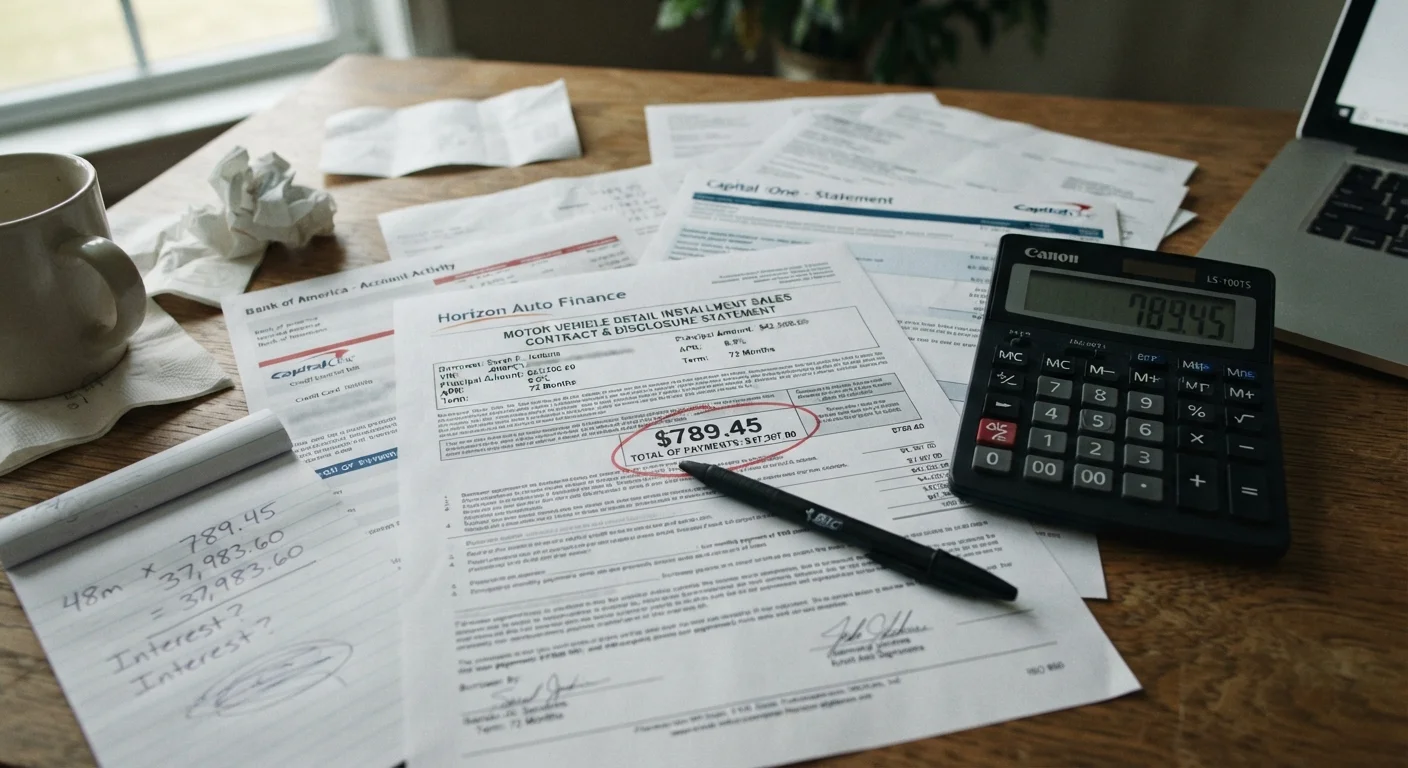
How the Monthly Payment Frame Works Against You
The monthly payment is the easiest number in a car deal to manipulate — and the least useful for judging whether you're getting a fair outcome. When a negotiation centers on reaching a specific monthly figure, three invisible levers can be quietly adjusted to hit that target: the vehicle price, the loan term, and the interest rate. A dealer who knows your payment ceiling can use any combination of these to meet it while maximizing their margin.
This is sometimes called "payment selling" — structuring the entire conversation around a number that sounds affordable while the underlying deal terms drift in the dealer's favor. As the monthly payment conversation can become a negotiation trap, buyers who anchor to that figure often end up overpaying on the vehicle price, accepting a longer term, or absorbing a higher interest rate — sometimes all three at once.
Understanding this dynamic is the first step toward approaching financing with confidence rather than confusion.
72+ months
Average new-vehicle loan term in recent years
Experian's State of the Automotive Finance Market reports have tracked average new-vehicle loan terms consistently exceeding 69 months, with a growing share extending past 72.
~$1,000+
Extra interest from a longer term on a typical loan
Extending a $30,000 loan from 60 to 72 months at the same rate adds roughly $700–$1,200 in total interest, depending on the APR — money that buys the buyer nothing.
Common Mistakes That Cost Buyers Thousands
The errors below follow a predictable pattern: each one feels reasonable in the moment but redirects the buyer's attention away from total cost and toward a monthly figure that can be engineered to seem acceptable. Recognizing these mistakes before you sit down with a finance manager is your best protection.
Telling the salesperson your target monthly payment before discussing price.
Why it happens: Buyers naturally think in terms of what fits their monthly budget, so sharing that number feels like a logical starting point for the conversation.
Accepting a stretched loan term to hit a payment target without calculating the total interest cost.
Why it happens: A 72- or 84-month loan makes the monthly number look comfortable, and the long-term cost isn't immediately visible on the payment quote sheet.
Skipping pre-approval from a bank or credit union before visiting the dealership.
Why it happens: Many buyers assume dealer financing is convenient and competitive, and they don't realize the dealer earns a markup — called the dealer reserve — on the interest rate.
Allowing optional add-ons to be bundled into the financed amount without scrutiny.
Why it happens: Finance office staff often present add-ons in payment-per-month terms ("it's only $18 more a month"), which masks the total cost of the product and its associated interest.
Ignoring the interest rate entirely when a monthly payment feels affordable.
Why it happens: When the monthly figure is manageable, buyers feel the deal is working in their favor and stop examining other variables.
Monthly Payment ≠ Total Cost
A payment that fits your budget today can still result in paying thousands more over the life of a loan. Always calculate the total amount you will repay — principal plus all interest — before agreeing to any financing terms. A longer loan term or a higher interest rate can turn an affordable-looking payment into a costly long-term commitment.
What to Focus on Instead
The clearest path to a financially sound car purchase is to build your analysis around numbers that can't be obscured by term length or rate adjustments. Start with the out-the-door price — the total amount you agree to pay for the vehicle before financing enters the conversation. This includes taxes, registration, and any dealer fees. As our guide to negotiating the out-the-door price instead of the monthly payment explains, this figure is the true basis of any deal.
From there, calculate the total repayment cost for any loan offer: monthly payment multiplied by number of payments. Then compare financing options from multiple sources. Resources like financing strategy guides and rate and payment explainers can help you understand how APR and term length interact before you're in the finance office under time pressure.
Finally, separate the vehicle transaction from the financing transaction in your own thinking — and keep them separate at the dealership whenever possible. Dealers benefit when these conversations blur together; buyers benefit when they stay distinct. For a deeper look at how these two conversations differ, see negotiating price vs. negotiating the payment. And if you want to address common financing misconceptions head-on before stepping into a dealership, car financing myths that catch buyers off guard is a useful companion read.
Watch for Payment-Packing at the Dealership
Some dealers add optional products — GAP coverage, paint protection, or extended service contracts — directly into your loan without making the cost explicit. When these extras are folded into the financed amount, they generate additional interest charges over the entire loan term. Always ask for an itemized breakdown of every charge before signing the finance contract.
This article provides general financial education about auto financing concepts. It is not personalized financial or legal advice. Loan terms, rates, and dealer practices vary widely. Consult a licensed financial professional for guidance specific to your situation.