
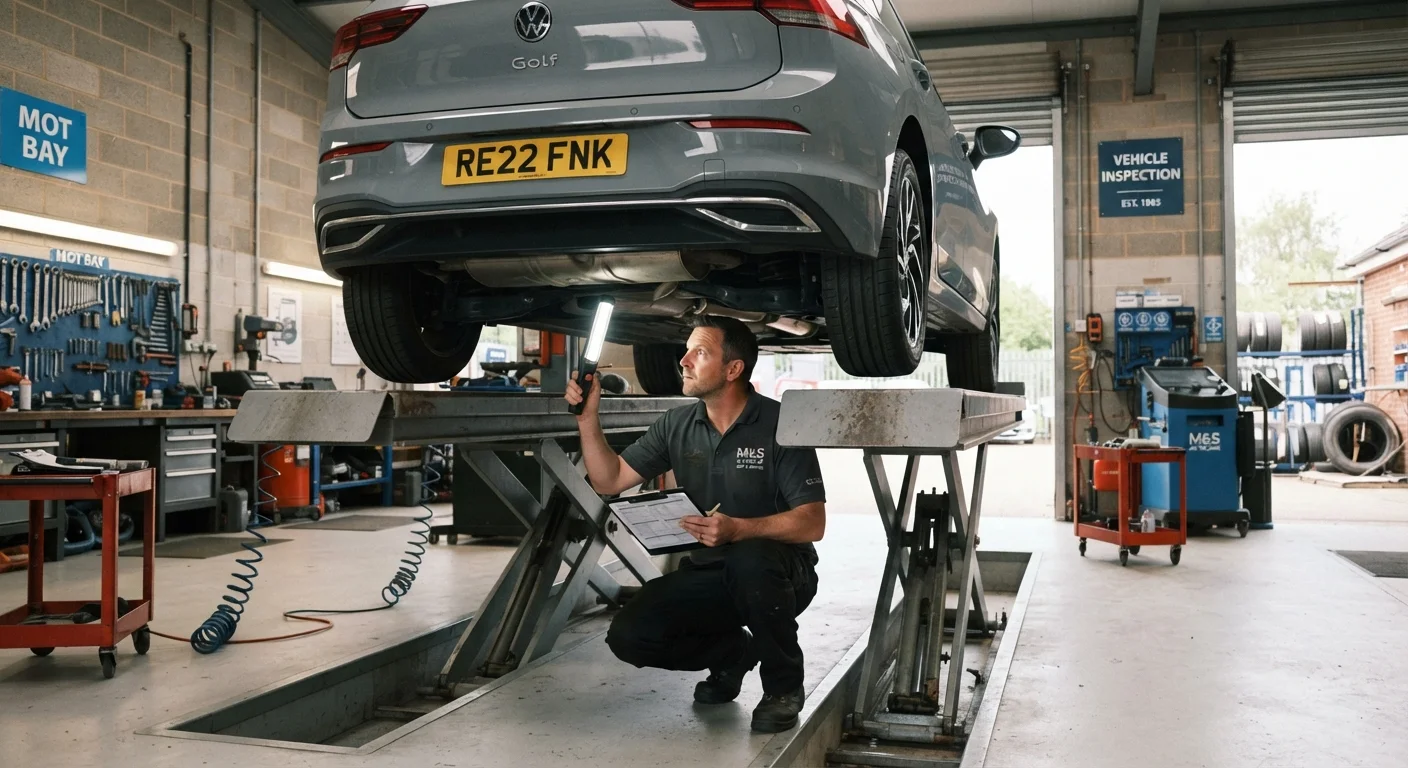
What the MOT Actually Tests
The MOT is a pass/fail snapshot of around 60 items, all focused on whether the car is safe and legal to use on public roads right now. The key areas covered include:
- Brakes: Efficiency, balance, and condition of the braking system — but not brake pad or disc wear unless it's already below legal limits.
- Lights: All exterior lighting must work, aim correctly, and be securely fitted.
- Steering and suspension: Checked for excessive play, wear, or damage — though worn but functional components may only earn an advisory.
- Tyres: Tread depth must be at or above the legal 1.6mm minimum across the central three-quarters of the tyre; sidewall damage is also checked.
- Seatbelts: Must operate correctly, retract properly, and show no damage.
- Windscreen and wipers: No significant chips or cracks in the driver's field of view; wipers must clear effectively.
- Emissions: Exhaust output is measured against type-specific limits — a meaningful check, but distinct from overall engine health.
- Body and structure: Severe corrosion near structural points or seatbelt anchorages causes a failure.
Results fall into three categories: Dangerous (must not be driven), Major (causes failure), or Advisory (noted but passes). Understanding this grading matters — advisories are worth taking seriously, not ignoring.
~40%
MOT failures attributed to lighting defects
DVSA data consistently shows lighting faults as one of the leading causes of MOT failures — a category largely preventable with routine checks.
1.6mm
Minimum legal tyre tread depth (UK)
This is the threshold the MOT tests against; many tyre manufacturers recommend replacement well before this point for optimal stopping performance.
3 years
Age at which most vehicles require first MOT
Cars first registered in the UK are exempt from the MOT requirement until they reach three years old, after which annual testing is mandatory.
What the MOT Doesn't Cover
This is where expectations need resetting — especially for used car buyers. Several of the most expensive components in any vehicle are entirely outside the MOT's scope:
- Engine condition: Oil leaks, timing chain wear, overheating tendencies, and internal wear are not assessed.
- Clutch and gearbox: A slipping clutch or notchy gear change won't appear on an MOT report.
- Air conditioning and heating systems: Not checked at all.
- General wear items: Unless they've crossed a legal threshold, worn brake pads, thinning discs, or ageing coolant hoses are not tested.
- Electrical and infotainment systems: Faulty sensors, warning lights that indicate deeper issues, and non-safety electronics are outside the test scope.
- Fluid levels and service intervals: Oil, coolant, and transmission fluid are not measured — the MOT is not a service check.
A vehicle can carry every one of these problems and still receive a valid MOT certificate. That's not a flaw in the system — the MOT was never designed to replace proper mechanical servicing. But it's a distinction buyers often miss.
Always Get an Independent Pre-Purchase Inspection
Before buying a used car, consider paying for a pre-purchase inspection from an independent mechanic or a service like the AA or RAC inspection programmes. These check the items the MOT doesn't — engine health, fluid condition, clutch feel, and general wear — giving you a far more complete picture of what you're actually buying and what it might cost you.
Why This Matters When Buying Used
A current MOT is often listed as a selling point in used car listings. It provides useful, verifiable information — but it's easy to overread. Checking MOT history through the DVSA's free online tool can reveal recorded mileage at each test (useful for spotting odometer anomalies) and whether a car has a pattern of recurring failures. That's genuinely valuable context. See our guide to reading used car listings for how to interpret MOT status alongside other listing details.
But an unbroken run of MOT passes tells you nothing about whether the engine has been properly maintained, whether the gearbox is on its last legs, or whether the cooling system is quietly deteriorating. For that, you need a full service history — and ideally, an independent pre-purchase inspection carried out by a qualified mechanic.
Similarly, vehicle history reports can surface accident records, previous ownership patterns, and title issues, but they share the MOT's blind spots when it comes to mechanical condition. See what a vehicle history report actually tells you for a fuller picture of what those reports do and don't reveal.
MOT History Is Free to Check
The DVSA offers a free online tool at gov.uk that lets anyone check a vehicle's MOT history using its registration number. You'll see pass and fail records, advisory items, and mileage at each test date. It's a quick, reliable first step — but treat it as background context, not a substitute for a proper mechanical assessment.
This article provides general information about the MOT test for educational purposes. Specific test requirements can change; always refer to official DVSA guidance for current standards. For decisions about purchasing or maintaining a vehicle, consult a qualified mechanic or relevant professional.