
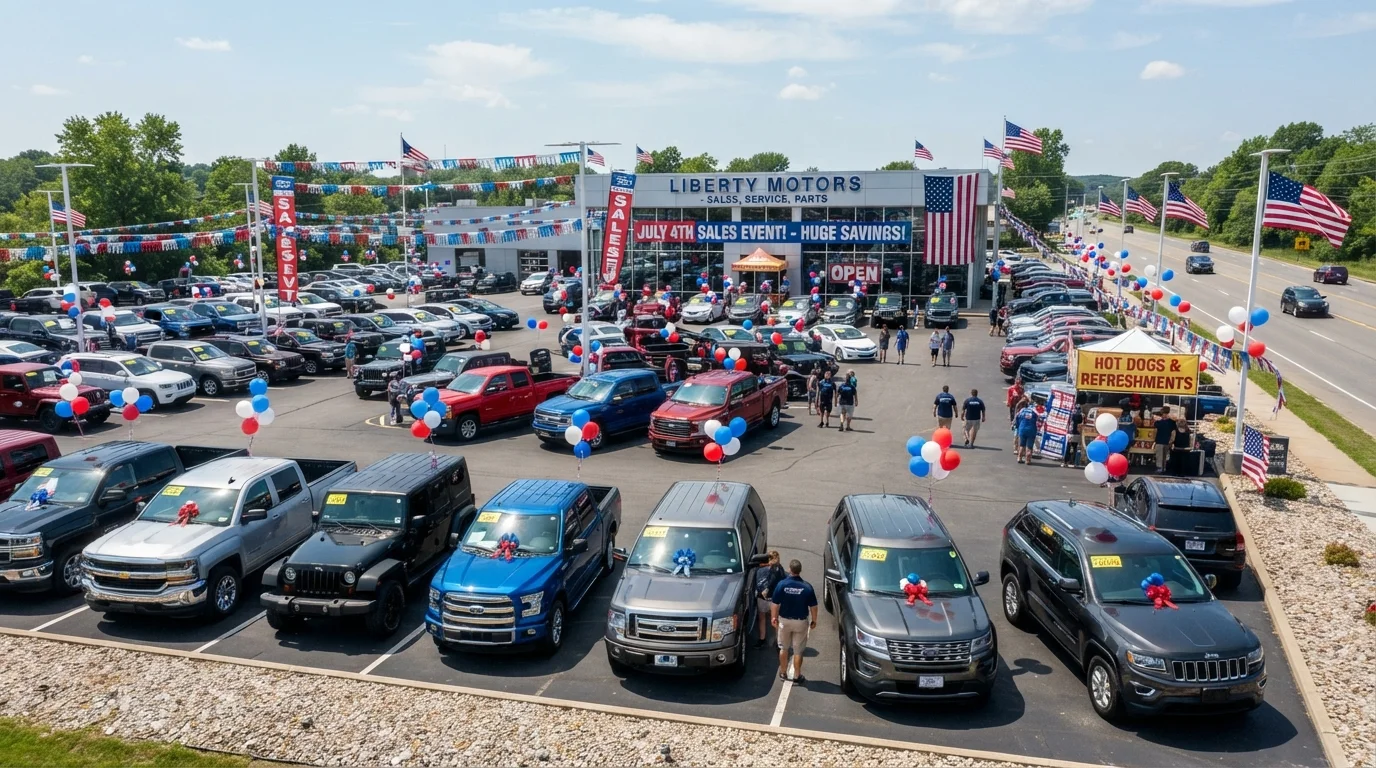
Why Holiday Sales Events Exist — and Who They Serve
Memorial Day, Labor Day, Fourth of July, Presidents' Day — every major holiday on the calendar arrives with a wave of dealership advertising. The events are real. The implied savings are where things get complicated.
Dealerships use holiday weekends strategically because foot traffic spikes and buyers arrive already primed to spend. The advertising costs are justified by volume, not necessarily by deeper discounts. What looks like a limited-time opportunity is often a repackaging of the same factory incentives that were available the previous Tuesday — and will still be available the following one.
Understanding this dynamic doesn't mean holiday weekends are worthless to buyers. It means the savings you capture depend entirely on your own preparation, not on the event's branding. See how these dynamics connect to broader dealership pricing mechanics in our look at common beliefs about car negotiation that simply aren't true.
Myth
Holiday weekend sales offer exclusive discounts you can't get at any other time of year.
Fact
Most discounts advertised during holiday events are tied to manufacturer incentive programs that run for the entire calendar month, not just the weekend.
Automakers set regional incentive programs — cash rebates, special financing rates, lease support — on monthly cycles. A dealership advertising a "Memorial Day Special" is almost always simply promoting incentives that were already in place on May 1st and will remain active through May 31st. The holiday branding creates urgency; the underlying discount structure doesn't change for the weekend.
Myth
You'll get a better deal because dealers want to move more cars during a big sales event.
Fact
Higher showroom traffic during holiday weekends often reduces individual buyer leverage, not increases it.
Negotiating leverage comes partly from a dealer's desire to close a specific deal with you. When a showroom is busy, sales staff have less incentive to spend time negotiating with any one buyer. The implicit message is: if you walk, someone else will buy it. Quieter periods — mid-week, mid-month, inclement weather days — can actually produce more negotiating room because your individual deal matters more to the salesperson's day.
Myth
Zero-percent financing offers during holiday sales are always the best financial choice.
Fact
Promotional financing often requires forfeiting a cash rebate, and the better option depends on the loan term, the rebate size, and your credit profile.
Manufacturers frequently present buyers with a choice: take the cash rebate and arrange your own financing, or accept the promotional rate and forgo the rebate. Depending on the rebate amount, the loan term, and what rate you'd qualify for independently, the cash rebate option can cost less overall. Running the numbers on both paths before the dealership visit is essential. See auto loan rate myths that cost buyers money for a deeper look at how promotional rates are structured.
Myth
If a vehicle is marked down during a holiday event, that's the lowest price available.
Fact
Advertised sale prices are typically a starting point, and additional negotiation below the advertised price is often possible — especially on slow-moving inventory.
An advertised holiday price usually reflects the manufacturer's suggested retail price minus any factory rebate. It does not incorporate dealer-specific discounts, holdback funds (a portion of MSRP the manufacturer pays back to the dealer after the sale), or any flexibility the dealer has on their own margin. Buyers who arrive knowing the invoice price and current incentive stack are often able to negotiate below the advertised event price. The holiday banner is a ceiling presented as a floor.
Myth
End-of-year holiday sales (like December events) are always the best time to buy.
Fact
December can offer strong incentives, but the actual savings window varies by brand, model popularity, and regional inventory levels.
December does bring genuine pressure on some dealers — annual sales targets, outgoing model-year stock, and manufacturer year-end bonuses all converge. But popular models in tight supply won't discount meaningfully regardless of the calendar. High-demand vehicles move with or without a holiday sale event. The leverage exists on slow-selling trims, outgoing model years, and vehicles that have accumulated significant lot time — not on every car in the showroom simply because it's December.
When Timing Actually Matters — and When It Doesn't
Not all timing strategies are equal. Holiday weekends generate buzz, but the calendar windows that most reliably correlate with genuine pricing movement are end-of-month and end-of-quarter periods, when sales staff are working toward quota targets. A slow Tuesday in late September may outperform a high-traffic Labor Day Saturday on pure discount depth.
~30 days
Typical duration of manufacturer incentive programs
Most automaker rebate and special financing offers are structured on monthly cycles, meaning a holiday weekend falls within — not outside — a standard incentive window.
2–3%
Typical dealer holdback as a percentage of MSRP
Industry sources indicate most domestic automakers pay dealers a holdback of roughly 2–3% of MSRP, providing margin room that exists independent of any advertised sale event.
Model-year-end clearance — typically late summer through early fall — is the one seasonal window where timing genuinely converges with structural pricing pressure. Dealers need floor space for incoming model-year inventory, and manufacturer incentives on outgoing models tend to be at their deepest. That's a real, verifiable dynamic. A Presidents' Day banner is not.
For financing decisions tied to any promotional period, the same skepticism applies. Our examination of auto loan myths that cost buyers real money covers how promotional rate offers can obscure the actual cost of borrowing. And if you want a broader view of negotiation folklore, common myths about car price negotiation, examined is a useful companion read.
Know the Incentive Stack Before You Arrive
Manufacturer rebates, regional incentives, and loyalty or conquest offers are publicly disclosed on automaker websites. Pulling this information before any dealership visit — holiday weekend or not — tells you exactly which discounts are structural and which are pure marketing theater. A dealer cannot give you a rebate that doesn't exist, and they cannot hide one that does once you've seen it in writing.
This article is for general informational purposes only and does not constitute financial or legal advice. Pricing, incentives, and market conditions vary by region, dealership, and vehicle. Consult qualified professionals for decisions specific to your situation.