
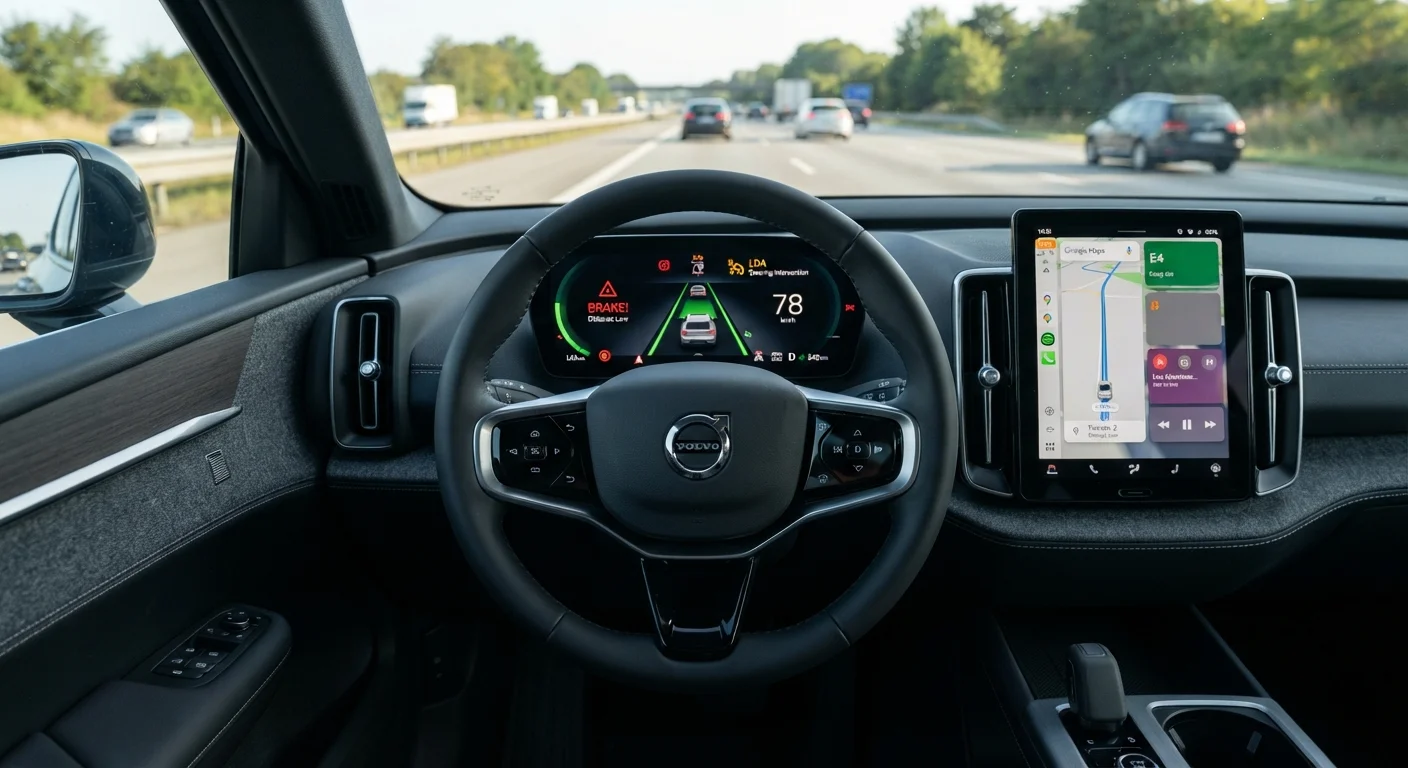
The Baseline: Safety Tech That's Genuinely Standard Now
Federal safety mandates and competitive pressure have pushed several technologies into standard equipment territory across virtually all new passenger vehicles sold in the U.S. If a feature appears on your window sticker as standard, you're paying for it in the base price — nothing extra required.
The most broadly available standard features as of recent model years include:
- Automatic Emergency Braking (AEB) with forward collision warning — now standard on a large share of new vehicles through industry-wide commitments and regulatory direction from the NHTSA.
- Rearview cameras — federally mandated on all new passenger vehicles.
- Electronic Stability Control (ESC) — required by federal law since model year 2012.
- Tire Pressure Monitoring System (TPMS) — also a federal requirement.
- Lane Departure Warning (LDW) — increasingly standard on base trims, though the more active Lane Keeping Assist often sits a trim level up.
For a fuller picture of everything included in a new car purchase, see what a brand-new car actually delivers.
What Typically Sits Behind an Option Package
Marketing materials often list safety features prominently without clarifying which trim or package they require. The distinction matters: moving from a base trim to one that includes a full driver-assistance suite can add anywhere from a few hundred to several thousand dollars to your out-of-pocket cost.
Automatic Emergency Braking (AEB)
A system that detects an imminent forward collision and applies braking force automatically if the driver doesn't respond in time. Effectiveness varies by system and speed range.
Adaptive Cruise Control (ACC)
An advanced cruise control system that uses radar or cameras to maintain a driver-set following distance from the vehicle ahead, automatically adjusting speed.
Lane Keeping Assist (LKA)
An active system that applies gentle steering corrections to keep the vehicle within its lane — distinct from Lane Departure Warning, which only alerts the driver.
Blind Spot Monitoring (BSM)
Uses sensors to detect vehicles in the driver's adjacent blind spots and provides a visual or audible alert. Some systems also intervene with light steering resistance.
Electronic Stability Control (ESC)
A federally mandated system that detects loss of traction or skidding and selectively applies individual wheel brakes to help the driver maintain directional control.
Features commonly locked behind option packages or higher trims include:
- Adaptive Cruise Control (ACC) — maintains a set following distance from the car ahead. Usually bundled with lane-centering systems in mid-to-upper trims.
- Blind Spot Monitoring (BSM) — alerts you to vehicles in your adjacent lanes. Often standard on mid trims, but not always base.
- Rear Cross-Traffic Alert — warns of vehicles approaching from the side while reversing. Frequently paired with BSM.
- Automatic High Beams — switches between high and low beams based on oncoming traffic. Often bundled in lighting or convenience packages.
- Traffic Sign Recognition and Driver Attention Monitoring — more advanced features that typically appear on upper trims or as part of premium technology packages.
These bundles can seem like good value when the per-feature breakdown is marketed as a deal — but understand that you may be purchasing features you don't want to access the ones you do. See which optional extras carry genuine value before you agree to any package.
Hidden Costs That Come With Safety Tech
Safety features aren't just a purchase-time cost — they carry ongoing ownership implications worth understanding before you sign.
20
Automakers committed to standard AEB
Major manufacturers voluntarily agreed with NHTSA and IIHS to make automatic emergency braking standard across their lineups.
~50%
Of new vehicles with standard BSM
Blind spot monitoring has expanded rapidly but remains more common on mid and upper trims than base models, per IIHS vehicle feature availability data.
- Sensor and camera calibration: After a windshield replacement or minor collision repair, cameras and radar units embedded in the bumper or glass often require professional recalibration. This is a real added expense that many buyers don't anticipate.
- Insurance adjustments: Some safety features may affect insurance premiums — either reducing them through insurer credits, or increasing them because sensors make repairs more expensive. Outcomes vary by insurer and coverage type; consult a licensed insurance agent for guidance specific to your policy.
- Software subscriptions: A small but growing number of manufacturers are moving certain driver-assistance features — including enhanced adaptive cruise or lane-centering — to subscription tiers after an initial free period.
These aren't reasons to avoid safety technology, but they're costs that should appear in your total ownership budget. The true cost of new car ownership covers this broader picture in detail.
This article provides general information about automotive safety features and is not a substitute for reading your vehicle's owner manual, consulting NHTSA resources, or speaking with a licensed insurance or financial professional about your specific situation.