
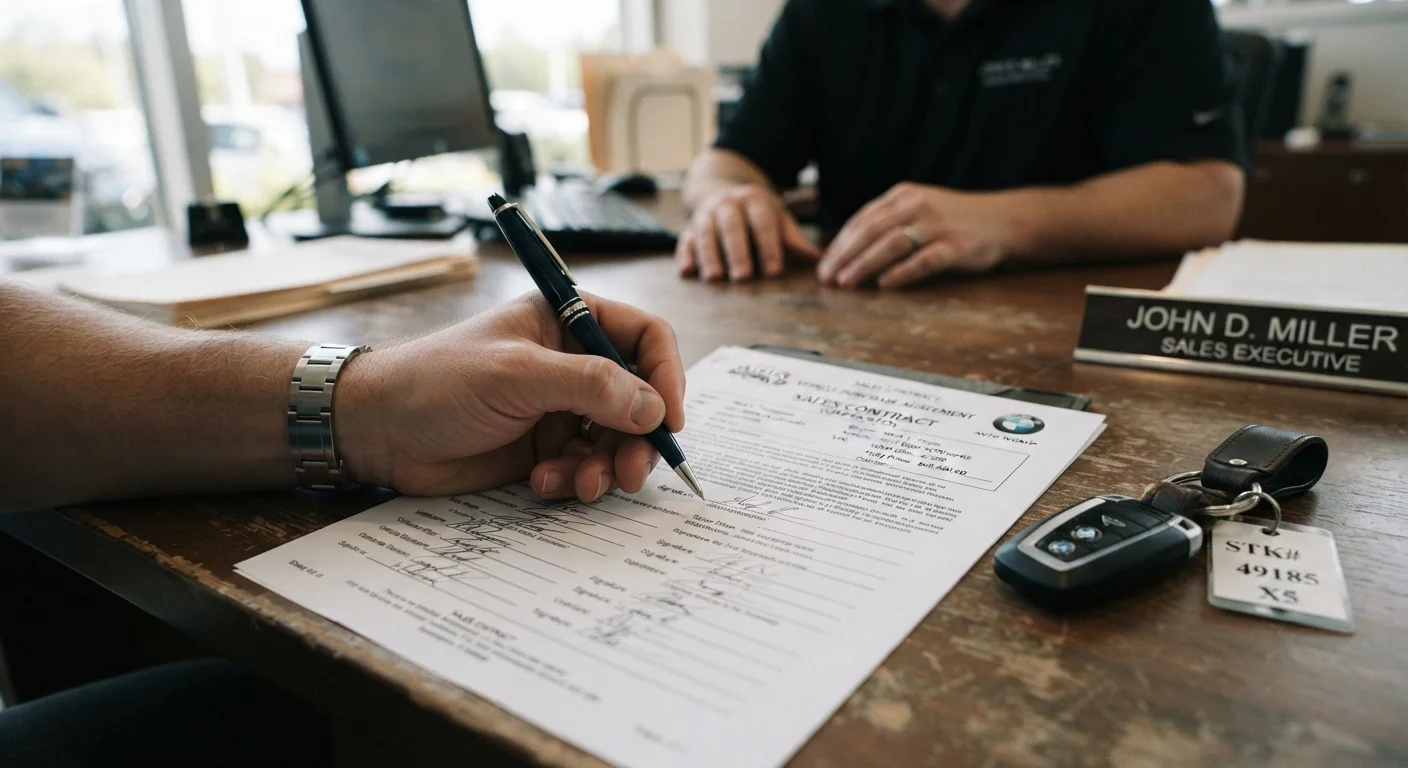
Why Signing Day Deserves Its Own Preparation
Most buyers spend weeks researching trim levels, test driving vehicles, and comparing monthly payments — then rush through the actual signing appointment in under an hour. That imbalance is costly. The finance office is where deals that looked straightforward on the showroom floor quietly accumulate add-ons, adjusted terms, and line items that weren't part of the original conversation.
This checklist is designed to slow that moment down. Use it before you pick up the pen — ideally, request a copy of the contract the day before so you can review it without a sales manager standing nearby. If a dealer won't provide advance copies, that itself is worth noting.
For context on what to research before you even arrive, see The Car Buyer's Pre-Dealership Preparation Checklist.
Contract Basics
Dealer Add-Ons
Financing Terms
Warranties and Protection Products
Fees and Taxes
The Finance Office: Where Deals Get Complicated
The financing portion of a car contract is dense by design. Interest rates, term lengths, and total cost of credit are rarely displayed prominently. A payment that sounds reasonable per month can represent a significantly higher total outlay when stretched across 72 or 84 months.
Verbal Promises Don't Survive Signatures
If a salesperson has committed to free oil changes, a specific accessory, or a particular delivery date, those promises are only enforceable if they appear in the written contract. Anything left out of the paperwork is effectively unenforceable after you sign. Politely ask for any outstanding commitments to be added before you proceed.
Dealer-arranged financing is not inherently worse than bank or credit union financing, but it is negotiable — and dealers sometimes mark up the rate above what a lender actually requires. Always compare the rate in the contract against any pre-approval you secured independently. For a detailed walkthrough of what to verify in any auto loan document, see Before You Sign: What to Verify on an Auto Loan Agreement and Before You Sign: A Rate-and-Payment Review Checklist.
Products like gap insurance (which covers the difference between what you owe and what your insurer pays if the vehicle is totaled) and extended service contracts are frequently presented as package deals. Both may be available elsewhere — sometimes at lower cost — and both are generally optional unless a lender specifically requires them. Check your own auto insurance policy for existing gap coverage before purchasing a duplicate at the dealership.
For broader contract review guidance, Before You Sign: A Pre-Loan Review Checklist covers the full scope of what to confirm before committing.
Pre-approved financing letter from your bank or credit union
Provides a benchmark interest rate to compare directly against the dealer's financing offer in the contract.
Calculator (phone or dedicated)
Allows you to verify total loan repayment cost by multiplying the monthly payment by the number of payments.
Copy of your current auto insurance declarations page
Confirms whether gap coverage already exists in your policy before purchasing it again at the dealership.
Printed negotiation notes or email correspondence
Documents the price, trade-in value, and terms agreed during negotiation so you can cross-check them against the contract.
This article provides general information about car purchasing contracts and is not legal, financial, or consumer-law advice. Contract terms, consumer protections, and regulations vary by state. Consult a licensed professional if you have questions about your specific situation.