
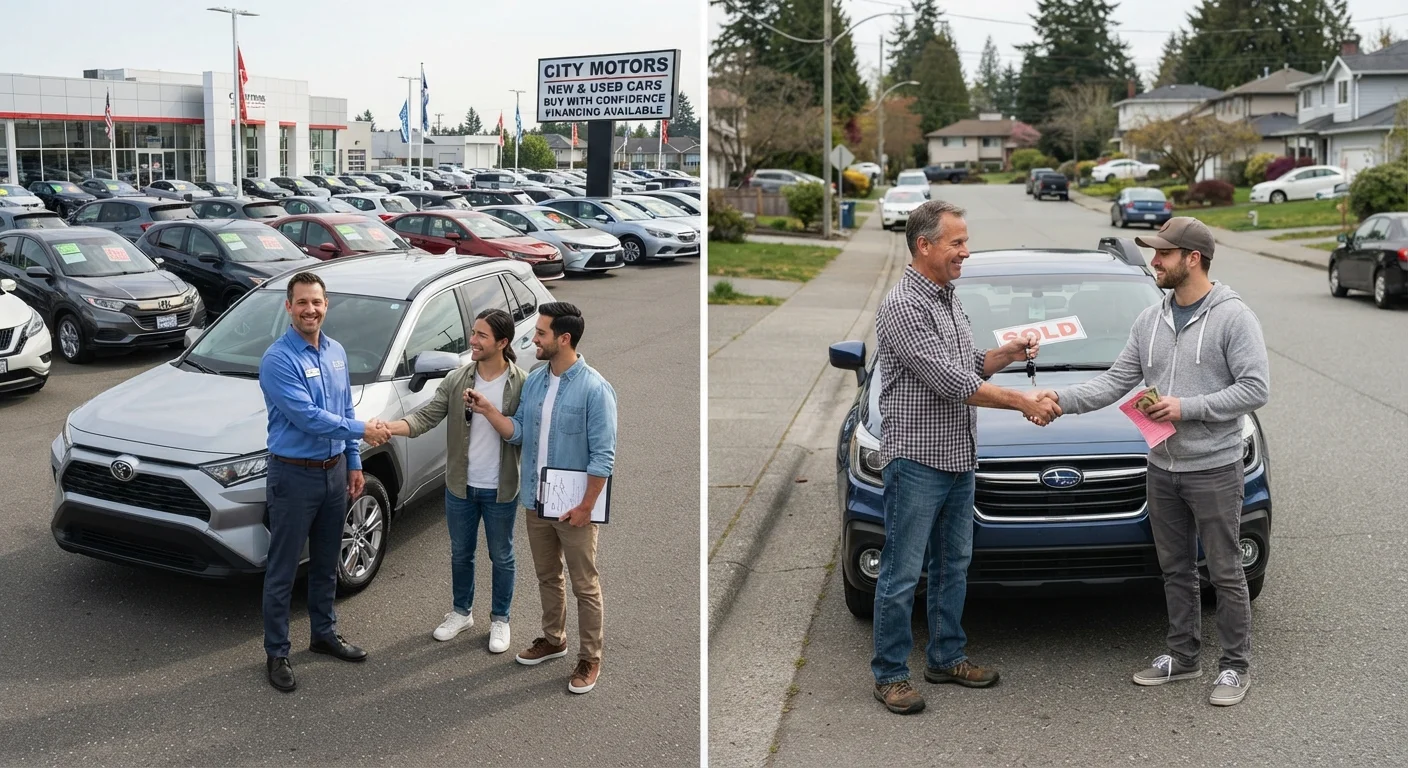
The Core Financial Gap — And What Narrows It
The most commonly cited reason to sell privately is straightforward: private buyers pay more. Dealers must build in reconditioning costs, auction fees, and a retail margin before reselling your vehicle. That spread — between what a dealer will offer and what the open market will pay — represents their operating reality, not a negotiating trick.
However, the raw price difference isn't the full story. In most U.S. states, when you trade in a vehicle at a dealership and purchase another, the trade-in allowance reduces the taxable purchase price of your new car. On a vehicle with a $10,000 trade-in value and a state sales tax rate of 6%, that's roughly $600 in tax savings that a private sale won't generate. On higher-value vehicles or in higher-tax states, this credit becomes more significant.
After accounting for state tax offsets, dealer fees, and the costs associated with a private sale — such as advertising, detailing, and potential minor repairs to attract buyers — the net advantage of selling privately is real but often smaller than the headline numbers suggest. The practical delta depends heavily on your specific vehicle, its condition, current used-car market dynamics, and your state's tax treatment of trade-ins.
| Criterion | Dealer Trade-In | Private Sale |
|---|---|---|
| Typical sale price | Below retail market value | Closer to retail market value |
| Sales tax offset (most states) | Yes — reduces taxable purchase price | No offset available |
| Time to complete | Same day | Days to weeks |
| Paperwork burden | Dealer handles title transfer | Seller coordinates title transfer |
| Buyer vetting required | None | Seller's responsibility |
| Works well with problem vehicles | Generally yes | Harder to sell; buyers discount heavily |
| Fraud risk | Minimal | Present; requires payment diligence |
| Integration with new car financing | Seamless — equity applied at signing | Requires bridging funds or timing |
Time, Effort, and Risk: The Hidden Costs of Each Route
Money is only one variable. A dealer trade-in typically closes the same day. You sign the paperwork, hand over the keys, and the transaction is complete — no strangers test-driving your car, no title transfer coordination, no risk of a deal falling through at the last moment.
Private sales demand more. You'll need to establish a competitive asking price using market data, create a compelling listing, field inquiries, coordinate test drives with vetted strangers, and navigate the title transfer process — which varies in complexity by state. If a buyer backs out after inspection, the process resets.
There's also a fraud risk dimension. Cashier's check scams targeting private vehicle sellers are well-documented. Accepting payment safely — whether through a bank wire, escrow service, or cash — requires deliberate planning. None of these friction points are insurmountable, but they represent genuine time and attention costs that should factor into your decision.
For sellers simultaneously managing a new vehicle purchase and financing, the added complexity of a parallel private sale can create timing pressure. See our guide on using a trade-in within a financing deal for how trade-in equity can be positioned effectively when financing is involved.
$1,000–$3,000+
Typical trade-in vs. private sale price gap
Industry valuation guides consistently show private market prices running above dealer trade-in offers, with the spread varying by vehicle age, condition, and demand.
45 states
States offering a trade-in sales tax credit
Most U.S. states reduce the taxable value of a new vehicle purchase by the trade-in allowance amount, partially offsetting the trade-in price discount.
Strategic Considerations Before You Decide
Your vehicle's condition is a practical filter. Dealers can price reconditioning into their offer — they do it at scale. Private buyers, by contrast, often walk away or discount aggressively when a pre-purchase inspection surfaces mechanical or cosmetic issues. If your car needs work, the private market may deliver disappointment rather than a premium.
Timing the sale also matters. Used vehicle values fluctuate with fuel prices, seasonal demand, and broader supply conditions. Aligning your sale timing with peak valuation periods can meaningfully affect the outcome regardless of which route you choose.
If you're weighing where to buy your next vehicle after selling, the channel decision intersects: each buying source carries different risks and price points. And if you plan to negotiate at a dealership, understand that keeping your trade-in and new purchase as separate transactions limits the dealer's ability to obscure numbers across the combined deal.
Neither route is objectively superior. The dealer trade-in suits sellers who value certainty and speed. The private sale suits those who can absorb the process overhead in exchange for a higher net return. Mapping your priorities honestly against these trade-offs — rather than defaulting to one or the other — is the most financially sound approach.
This article is for general informational and educational purposes only and does not constitute personalized financial or legal advice. Tax treatment of vehicle trade-ins varies by state; consult a qualified tax or financial professional for guidance specific to your situation.