
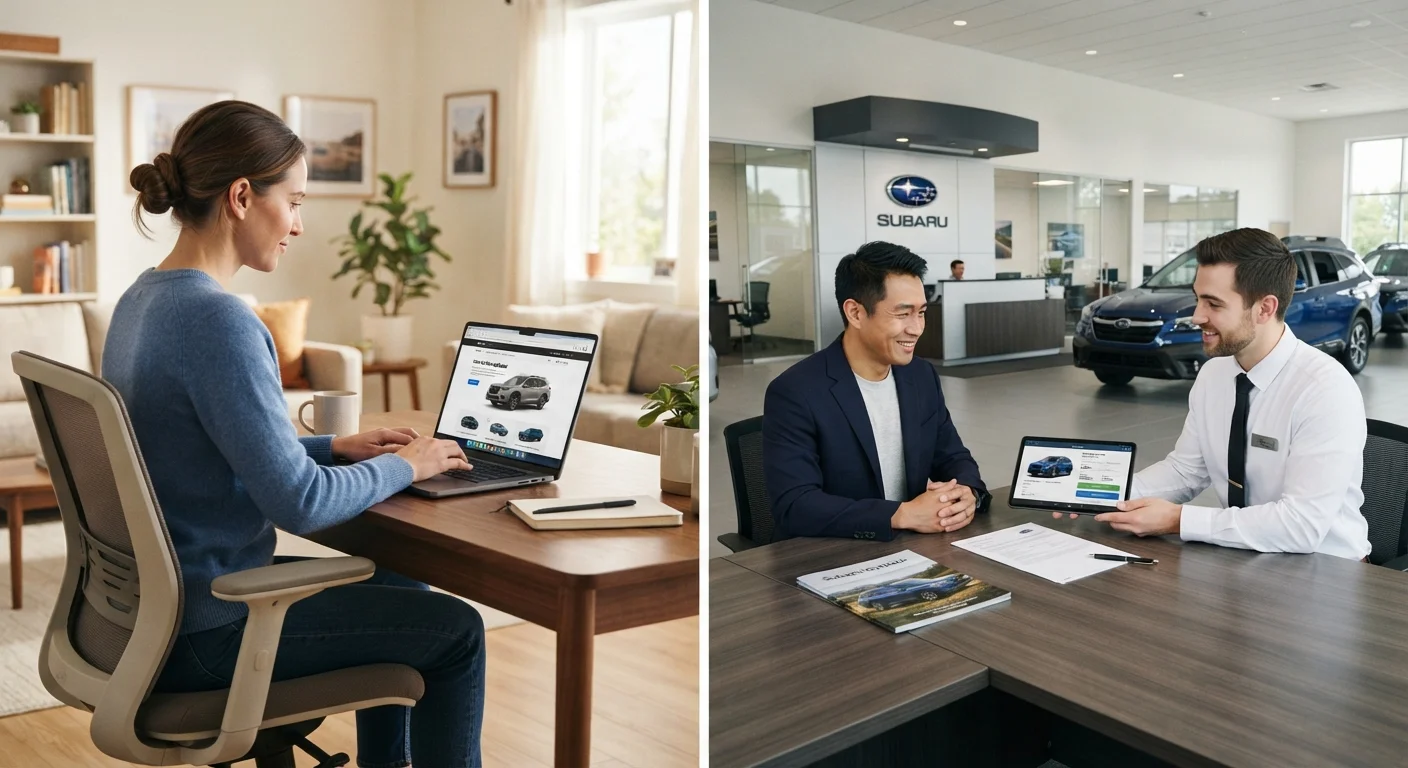
How Each Approach Actually Works
Online negotiation typically starts with you submitting an inquiry — via the dealership's website, a third-party pricing tool, or a direct email to the internet sales department. From there, you exchange offers and counteroffers by email or phone, ideally reaching a firm out-the-door price before you set foot in the showroom. For a deeper look at how dealerships structure these interactions on their end, see our guide to what happens behind the sales desk.
In-person negotiation follows the more traditional path: you visit the lot, test-drive the vehicle, and negotiate face to face with a sales representative, typically across multiple rounds of back-and-forth that may involve a sales manager. This format tends to compress the timeline — everything happens in one sitting — which can work in either party's favor depending on how well-prepared you are.
| Criterion | Online Negotiation | In-Person Negotiation |
|---|---|---|
| Pace of negotiation | Self-directed; respond on your timeline | Real-time; compressed into one visit |
| Pressure level | Lower; no physical presence tactics | Higher; sales team present throughout |
| Vehicle inspection | Not possible until you visit | Immediate; inspect and test-drive on-site |
| Written record of offers | Built-in via email thread | Requires you to request written quotes |
| Competing dealer quotes | Easy to gather from multiple dealers | Harder to leverage in the moment |
| Trade-in appraisal | Requires in-person visit regardless | Can be handled during same visit |
| Best suited for | New cars with known specs and pricing | Used cars where condition varies |
The Case for Negotiating Online
The clearest advantage of online negotiation is control over your own pace. You can take time to look up market pricing, cross-check competitor quotes, and draft a measured response rather than reacting under pressure. Contacting multiple dealerships simultaneously — asking each for their best price on the same vehicle — creates genuine competition and often produces lower initial offers than you'd receive walking in cold.
Written communication also creates a record. If a dealer quotes you a specific price via email and the contract looks different on signing day, you have documentation to point to. This matters more than many buyers realize. As detailed in our complete dealership negotiation guide, the F&I (finance and insurance) office is where deal terms can quietly shift — a prior written quote helps hold the line.
75%+
Buyers who research online before visiting
Cox Automotive's annual car buyer studies consistently show that a large majority of US vehicle buyers conduct significant research online before visiting a dealership.
3–5
Competing quotes recommended before committing
Consumer finance educators commonly suggest obtaining quotes from at least three to five dealers on the same vehicle to create meaningful price competition.
The Case for Negotiating In Person
In-person negotiation has real advantages that digital channels can't fully replicate. You can physically inspect the vehicle, confirm trim features, check for wear or damage, and take a proper test drive before committing. For used cars especially, this matters enormously — two vehicles with identical specs on paper can differ significantly in actual condition. Our article on negotiating new vs. used cars covers why condition assessment changes the negotiation dynamic entirely.
Some buyers also find they negotiate more effectively in person because they can read non-verbal cues, build rapport, and gauge how flexible a salesperson actually is. That said, in-person settings are also where high-pressure tactics are most likely to appear — extended waits, urgency claims, and payment-focused conversations that obscure the actual vehicle price. Being aware of the difference between negotiating price and negotiating monthly payment is critical here. See why these are two separate conversations before you sit down at the desk.
Using Both Methods Together
Most experienced buyers don't treat this as a strict either/or choice. A common and effective approach is to negotiate online first — locking in a price with at least one dealer via email — and then visit in person only to finalize paperwork, inspect the vehicle, and handle the trade-in appraisal if applicable. This hybrid method gives you the documentation benefits of written negotiation while still allowing for the hands-on steps that require physical presence.
Whatever method you use, keep the focus on the out-the-door price rather than monthly payments, and be cautious about bundling negotiations for your trade-in, the new vehicle, and financing all at once. For broader strategy on each of these variables, explore our negotiation tactics hub for practical frameworks that apply to both online and in-person settings.
Internet Sales Departments Work Differently
Most dealerships route online inquiries to a dedicated internet sales team whose incentives and pricing authority may differ from the floor sales staff. When you arrive in person after negotiating online, confirm you're working with the same person or department — and bring your written quote. Terms can shift if the handoff isn't managed carefully.
This article provides general educational information about car-buying approaches and is not a guarantee of specific outcomes. Negotiation results vary based on market conditions, vehicle availability, and individual circumstances.