
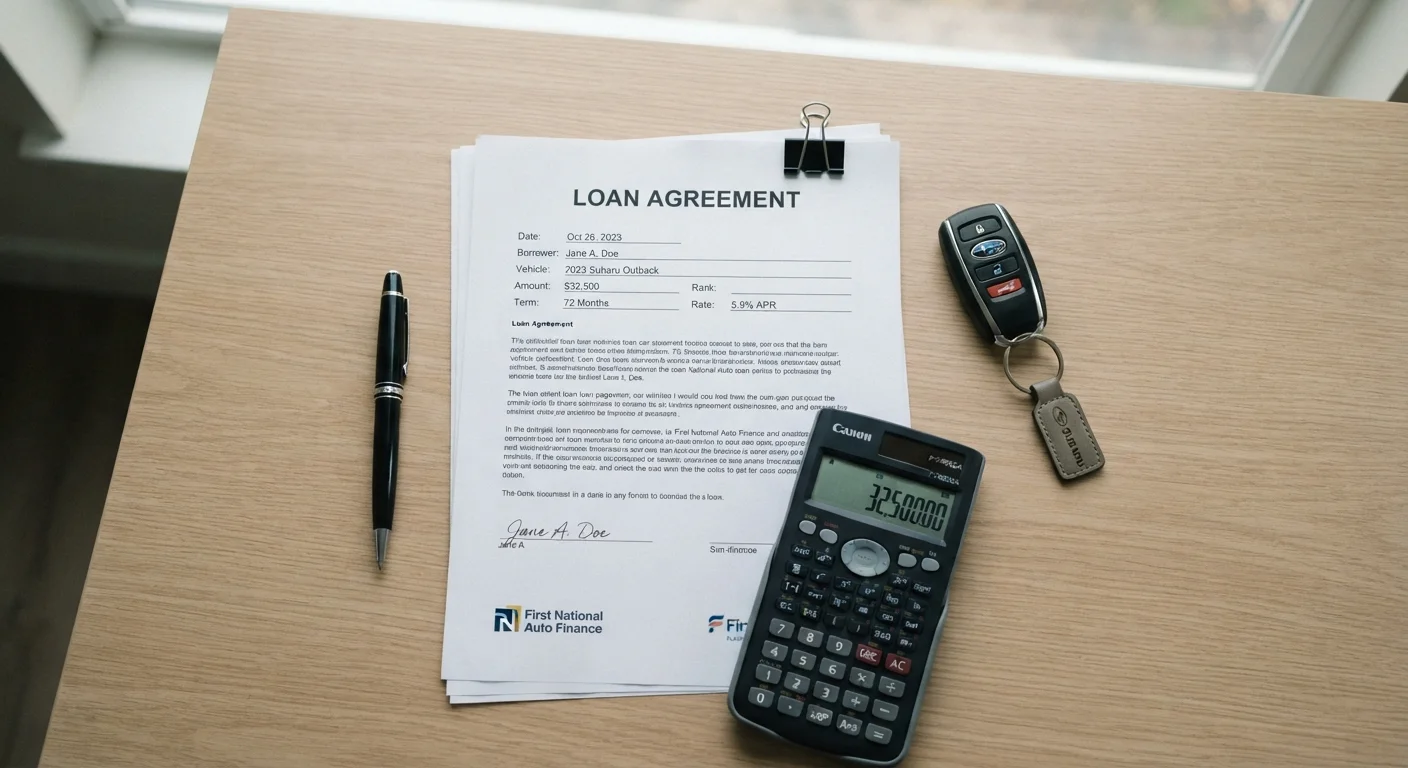
Why These Numbers Matter Before You Shop
Most car buyers focus on the sticker price or the monthly payment — but the numbers that truly shape what you pay are less visible. APR, LTV, DTI, and residual value all influence the total cost of financing a vehicle, yet they rarely appear on window stickers. Knowing what each figure means — and roughly where yours stands — lets you evaluate any financing offer on its actual merits.
This article is a plain-language reference, not personalised financial advice. For guidance tailored to your situation, consult a licensed financial professional. See also our Auto Loan Glossary for a broader vocabulary list.
The Four Core Financing Numbers
Each of the following figures affects either your approval odds, your interest cost, or both. Treat them as a pre-shopping checklist.
1. Annual Percentage Rate (APR)
APR is the annualised cost of borrowing, expressed as a percentage. It bundles the interest rate with any required lender fees, so it gives a truer picture of cost than the base rate alone. A lower APR means less interest paid over the life of the loan. Your credit score, loan term, and lender all influence the APR you're offered. For a deeper look at how APR interacts with loan length, see Auto Loan Rates and Payments: An End-to-End Guide.
2. Loan-to-Value Ratio (LTV)
LTV compares how much you're borrowing to the vehicle's market value. If a car is worth $25,000 and you need a $22,000 loan, your LTV is 88%. Lenders use this to measure collateral risk. A high LTV — often above 100% when fees are rolled in — can trigger a higher rate or outright denial. A larger down payment or a trade-in with positive equity directly lowers your LTV.
3. Debt-to-Income Ratio (DTI)
DTI is the share of your gross monthly income that goes toward recurring debt payments, including the prospective car payment. Lenders generally look for a total DTI below 40–50%, though standards vary. If your DTI is already elevated, a more affordable vehicle or paying down existing debt first may improve your approval odds and rate.
4. Residual Value
Residual value matters most in lease agreements — it's the projected worth of the vehicle at lease end, expressed as a percentage of MSRP. A higher residual means lower monthly payments because you're financing a smaller portion of depreciation. In a loan context, understanding how quickly a vehicle depreciates helps you avoid being "underwater" — owing more than the car is worth. Our guide on reading vehicle valuation reports explains how to check projected depreciation before you commit.
Annual Percentage Rate (APR)
The yearly cost of borrowing expressed as a percentage, incorporating both the interest rate and required lender fees. It allows apples-to-apples comparison between loan offers.
Loan-to-Value Ratio (LTV)
The ratio of your loan amount to the vehicle's market value. A lower LTV signals less risk to the lender and can result in better rate offers.
Debt-to-Income Ratio (DTI)
Your total monthly debt obligations divided by gross monthly income, expressed as a percentage. Lenders use DTI to assess whether you can comfortably manage an additional payment.
Residual Value
The estimated market value of a vehicle at the end of a lease term. It is set by the lessor and directly influences the monthly lease payment calculation.
Capitalized Cost
The agreed selling price of a leased vehicle, similar to the negotiated price on a purchase. Reducing it lowers the amount being financed through the lease.
Amortization
The scheduled repayment of a loan through regular installments. Early payments are weighted heavily toward interest; later payments reduce more principal.
Putting the Numbers Together
These figures don't operate in isolation. A high LTV paired with a high DTI can compound into a significantly more expensive loan. Conversely, a strong credit profile, a meaningful down payment, and a vehicle with solid residual value tend to work together to produce more favorable terms.
~65%
New vehicle purchases financed in the US
According to Experian's State of the Automotive Finance Market reports, a consistent majority of new vehicle transactions involve financing.
6–7 years
Average new car loan term length
Loan terms have extended significantly over the past decade, increasing total interest paid even when monthly payments appear manageable.
20%
Common recommended minimum down payment
A 20% down payment helps keep LTV below 100% and reduces the risk of negative equity, particularly for new vehicles that depreciate quickly.
Before visiting a dealership, pull your credit report (available free at AnnualCreditReport.com), calculate your current DTI using your monthly obligations divided by gross income, and research the market value of any vehicle you're considering. Understanding how loan term length affects total cost is equally critical — Financing a New Car: How Loan Terms Shape What You Really Pay walks through that calculation in detail.
This article is for general informational purposes only and does not constitute personalised financial, legal, or lending advice. Loan terms, approval criteria, and rates vary by lender and individual circumstances. Consult a qualified financial professional before making financing decisions.