
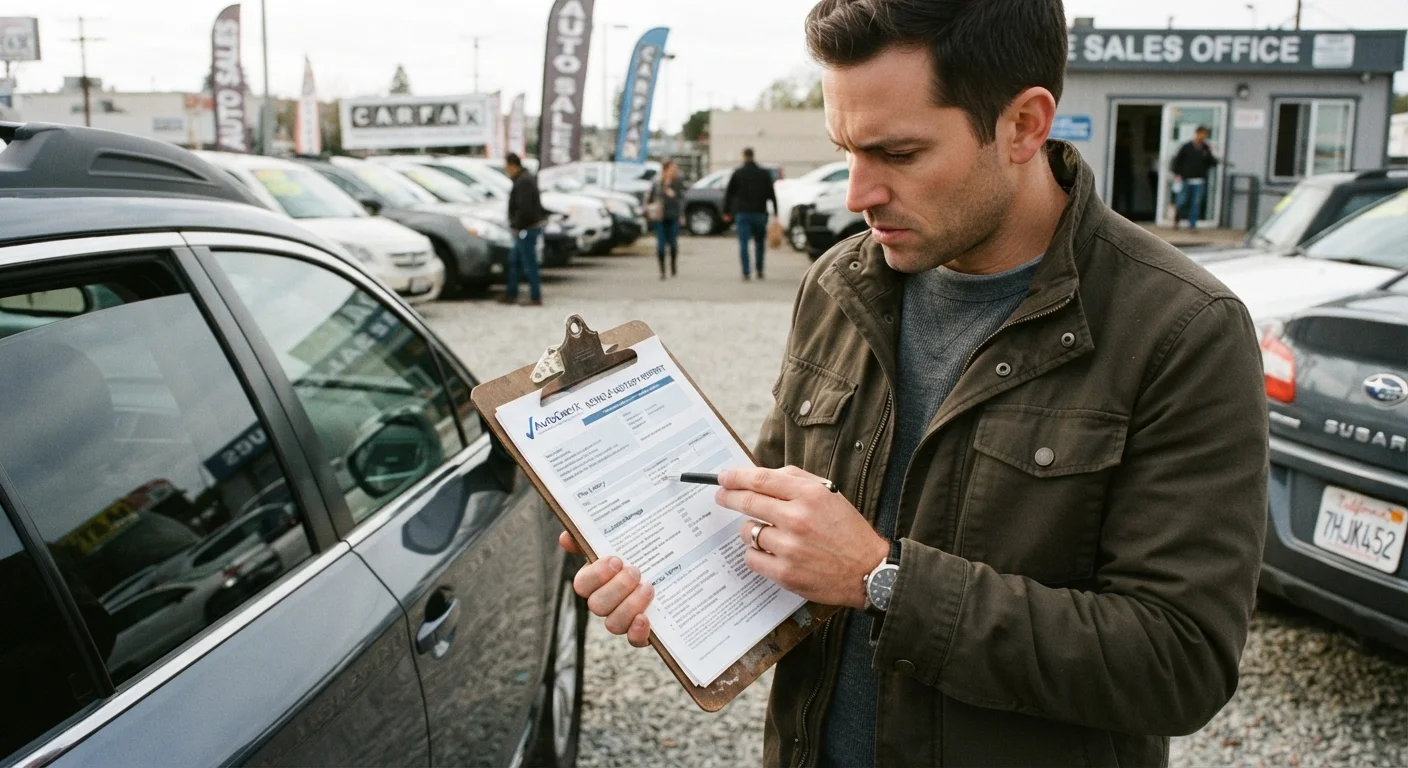
What a Vehicle History Report Actually Contains
When you run a report on a used car's VIN, you're pulling together information from a patchwork of sources: state DMV records, insurance claims databases, auto auction records, rental and fleet company data, and in some cases, participating repair shops. The result is a timeline of key events in that vehicle's documented life.
The most valuable disclosures typically include:
- Title brands: Designations like salvage, rebuilt, flood, lemon law buyback, or odometer rollback are among the most consequential flags a report can surface. These brands follow the title across state lines and signal events that materially affect a vehicle's value and safety.
- Accident and damage records: Collisions reported through insurance claims or police reports, along with any recorded airbag deployments.
- Ownership history: The number of previous owners and whether the vehicle was registered to private individuals, rental companies, or commercial fleets.
- Odometer readings: Recorded mileage at inspection or registration intervals, which can reveal inconsistencies suggesting tampering.
- Service and recall records: Maintenance visits logged by participating shops and any open or completed manufacturer recalls.
For a broader look at how these details interact with a listing, see reading a used car listing.
~40%
Used vehicles with undisclosed prior damage
Industry estimates suggest a substantial share of used vehicles on the market have damage history not reflected in available history reports, underscoring the importance of independent inspections.
17 digits
Characters in a standard US VIN
Every vehicle history report is anchored to the car's VIN, standardized across the US market since the 1981 model year, enabling consistent cross-database lookups.
Millions
Recall-affected vehicles still on US roads
The NHTSA estimates that millions of vehicles remain subject to unaddressed open recalls at any given time, making independent recall verification an important step alongside any history report.
Where History Reports Fall Short
Understanding the limits of a vehicle history report is just as important as understanding what it shows. The core problem is that these reports are only as complete as the data submitted to underlying databases — and significant gaps exist.
Unreported damage
If a seller repaired cosmetic or moderate damage out of pocket without filing an insurance claim, that event will not appear. Minor rear-enders, parking lot impacts, and even some structural repairs can be handled privately and leave no trace in any database.
The "title washing" problem
A practice known as title washing involves re-registering a branded (e.g., salvage) vehicle in a state with looser titling rules to obtain a clean title. The vehicle then enters the resale market without any visible brand. While federal and state laws prohibit this, enforcement is imperfect, and buyers can be caught off guard.
Incomplete service records
Only shops that actively submit data to reporting networks appear in the maintenance history. Independent mechanics, dealerships that don't participate, and all DIY maintenance are invisible. A car with apparently sparse service records may simply have been maintained by a careful private owner who kept paper records — or it may have been neglected. The report alone can't tell you which.
Geographic data gaps
Vehicles that spent time in states or jurisdictions with thinner reporting infrastructure may have event gaps that don't reflect a true clean record. This is a particular concern for vehicles imported from other regions or sold through multi-state auction chains.
"Clean Report" Does Not Mean Problem-Free
Databases can only record events that were reported to them. A vehicle with zero entries may simply have had all its damage repaired privately, maintained by a non-reporting shop, or registered in a low-data state. A clean report narrows your risk — it does not eliminate it.
These blind spots are why pitfalls that catch out used car buyers so often involve vehicles with apparently clean reports.
How to Use a Report Alongside Other Due Diligence
A vehicle history report works best as a screening tool — not a final verdict. Here's how to build it into a more complete evaluation process.
“A vehicle history report is the beginning of your research, not the end of it. The absence of red flags is meaningful — but it's not the same as a clean bill of health.”
— Consumer Automotive Education Council, Industry education body focused on used-vehicle transparency
Pair the report with a professional inspection
A licensed mechanic performing a pre-purchase inspection can identify current mechanical issues, evidence of past structural repair, and signs of flood or fire damage that would never appear in any database. This step is especially important when a report shows previous accidents, even if repairs are listed as complete.
Cross-reference the odometer
Compare the mileage readings documented in the report against the current odometer. Large unexplained gaps or mileage readings that appear to decrease between entries are significant warning signs worth investigating before any offer is made.
Review the service record gaps
If the report shows little or no maintenance history, ask the seller directly for physical service records — receipts, dealer stamps in the owner's manual, or invoices from independent shops. Evaluating a used car's maintenance history provides a practical framework for interpreting what you find.
Check for open recalls
Even if a report notes recalls, confirm their status independently using the National Highway Traffic Safety Administration (NHTSA) website, which allows free VIN-based recall lookups. Recalls that haven't been completed can represent safety risks and potential future costs.
Always Verify Recalls Independently
Don't rely solely on a history report to confirm recall status. Use the NHTSA's free VIN lookup tool at nhtsa.gov to see all open and completed recalls directly. An unaddressed recall can affect safety and may also be a point for negotiation on price.
This article provides general information about vehicle history reports for educational purposes. It is not a substitute for professional mechanical advice or legal counsel. Always consult a qualified mechanic before purchasing a used vehicle, and review all documentation with appropriate care.