
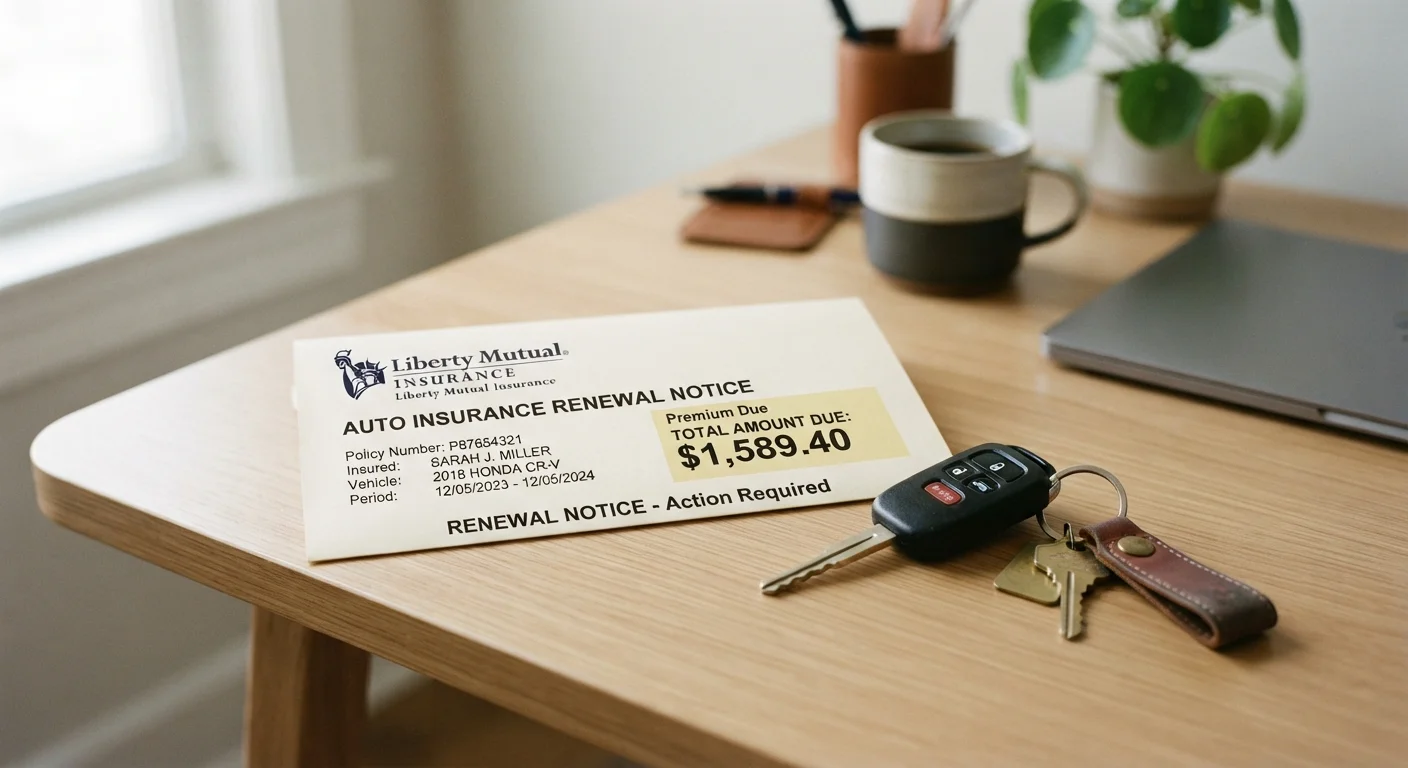
Why Your Premium Can Rise Without Any Change on Your End
Renewal time reveals a frustrating reality: your premium can jump even if you haven't filed a claim, received a ticket, or changed anything about your coverage. Auto insurance pricing isn't just a reflection of your individual history — it's also shaped by broader economic forces, geographic risk pools, and the financial performance of your insurer's entire portfolio.
Understanding these less-visible triggers helps you interpret your renewal notice more accurately — and gives you a stronger basis for asking questions or reassessing your options. For a broader view of how different vehicle types affect baseline premiums, see our article on insurance costs for new vs. used vehicles.
This Is General Insurance Information
The factors described here are common rating variables used across the auto insurance industry in the US, but individual policy terms, eligible discounts, and rate structures vary by insurer and by state. This content is educational and does not constitute personalised insurance or financial advice. Review your actual policy documents and consult a licensed insurance agent to understand what specifically drives your premium.
Statewide rate filings by your insurer
Insurers periodically file for rate adjustments with state regulators — and once approved, those increases apply to all policyholders in that state, regardless of individual driving history. If your insurer's overall book of business took heavy losses from natural disasters, a spike in large settlements, or rising repair costs, you'll absorb part of that through a higher renewal premium. This is entirely separate from anything on your personal record.
State-approved rate filings raise your premium whether you've done anything wrong or not.
Rising vehicle repair and parts costs
Modern vehicles carry cameras, sensors, radar modules, and advanced driver-assistance systems that are expensive to repair or replace. As those repair costs increase across the industry, insurers adjust their physical damage pricing to keep pace. Even if your car is a few years old, its actuarial repair cost profile can shift upward as labor rates and parts availability change — pushing comprehensive and collision coverage higher.
Advanced vehicle technology makes even routine repairs expensive, and premiums follow.
Local claims frequency in your ZIP code
Insurers price risk at a geographic level. If your area has seen a rise in vehicle theft, catalytic converter theft, hail claims, or at-fault accidents among other drivers, your premium can increase even though none of those incidents involved you. Your ZIP code is one of the most influential rating variables in auto insurance, as it shapes the statistical likelihood that a claim will occur. See why location affects what you pay for a deeper look at geographic rating.
Your neighbors' claims can drive up your premium — location risk is pooled, not individual.
A change in your credit-based insurance score
Most states allow insurers to use a credit-based insurance score — a metric derived from your credit file, but distinct from a standard FICO score — as a rating factor. A missed payment, a new hard inquiry, or a higher credit utilization ratio can shift this score downward and trigger a premium increase at renewal. The effect can be significant: industry studies consistently show credit score is one of the strongest predictors of claim likelihood used by underwriters.
A dip in your credit-based insurance score can quietly raise your renewal rate.
Loss of discounts you no longer qualify for
Many discounts have eligibility conditions that can lapse quietly. A good-student discount may expire when a dependent leaves school. A multi-policy discount disappears if you switch your home insurance. A loyalty or continuous-coverage discount can be recalculated if there's even a brief gap in coverage. When these discounts fall away, the premium increase looks like a rate hike but is technically a discount removal — an important distinction when shopping or negotiating.
Expired discounts look identical to rate increases on your renewal declaration page.
Increased mileage reported or estimated
If your insurer uses estimated annual mileage as a rating factor and your driving patterns have changed — more commute miles, a new job farther from home, or usage-based telematics data showing higher actual mileage — expect the premium to reflect that. Higher mileage means greater exposure to at-fault accident risk. Conversely, if you're driving significantly less, it's worth notifying your insurer; underreporting mileage intentionally, however, constitutes misrepresentation on your policy.
More miles driven means more statistical exposure — and a higher premium to match.
Household member changes
Adding a driver to a household — a newly licensed teenager, a partner moving in, or even a college student listed at your address — changes the risk profile on the policy. Insurers rate household members even if they aren't the primary driver of a vehicle, because coverage generally extends to anyone with regular access. An unlisted driver who starts appearing in telematics data, or who is added after a claim, can also trigger retroactive premium adjustments.
Anyone with regular access to your vehicle can affect your premium, listed or not.
What to Do When You Spot Unexplained Premium Increases
Unexplained increases deserve scrutiny rather than passive acceptance. Start by comparing your current and prior declaration pages line by line — premium components are usually separated by coverage type, and changes are traceable. If a discount has lapsed, ask whether you can reinstate it or substitute another. If the increase is tied to a statewide rate filing, that's harder to reverse, but it may justify shopping your coverage with other carriers offering comparable terms.
Request a Renewal Explanation in Writing
When your premium increases, ask your insurer for an itemized breakdown of what changed. Insurers are generally required to provide an adverse action notice if a credit-based factor contributed to a rate increase. Reviewing these details helps you identify whether the change is fixable — like restoring a lapsed discount — or systemic, like a statewide rate adjustment.
An annual policy review structured around life changes — not just triggered by a rate increase — is the most effective way to stay ahead of creeping costs. Timing your annual insurance review outlines a practical framework for that process. Keep in mind that switching insurers mid-policy can create a coverage gap if not handled carefully — a gap that could itself become a future rating factor.
This article is for general informational and educational purposes only. It does not constitute personalised insurance, financial, or legal advice. Coverage terms, rating factors, discounts, and regulations vary by insurer and state. Consult a licensed insurance professional for guidance specific to your situation.