
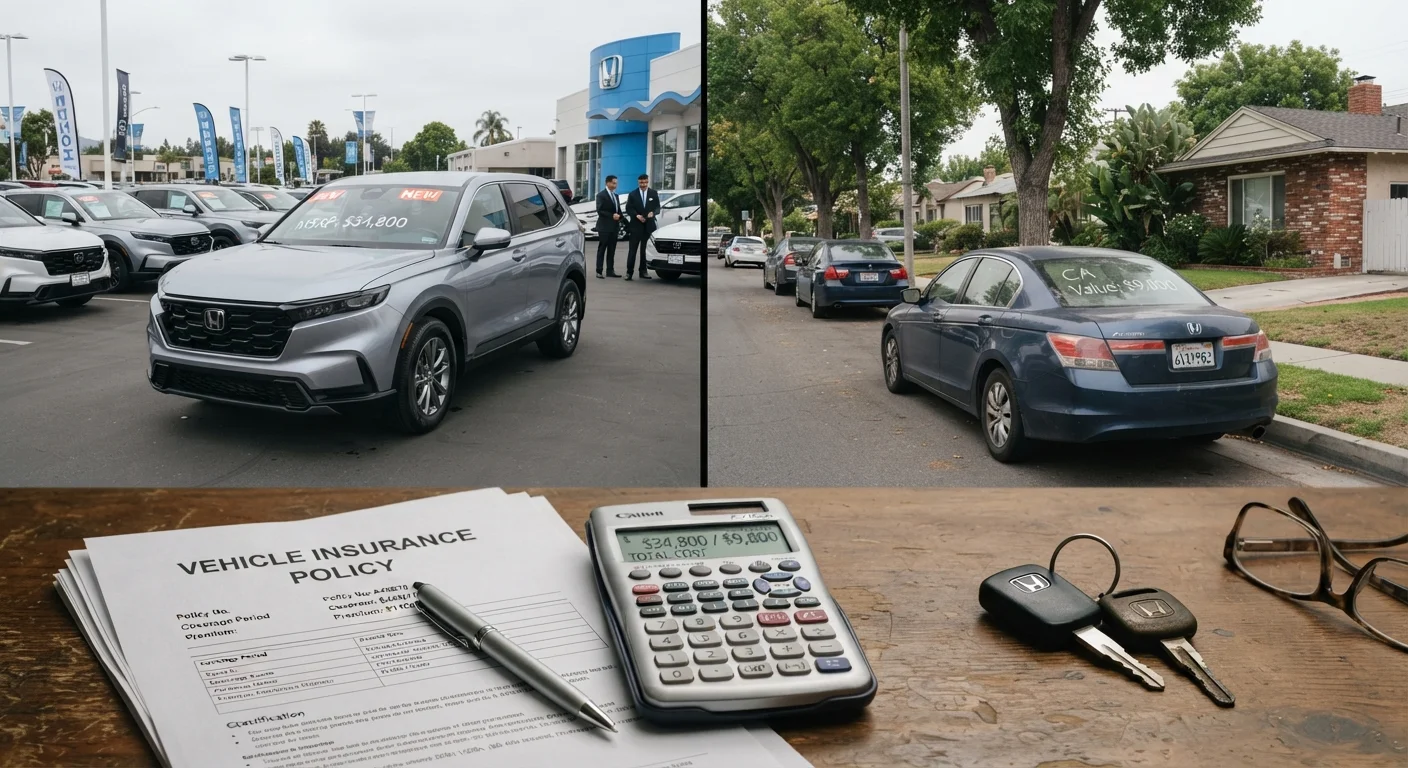
Why Vehicle Age Affects What You Pay
Insurance premiums are built around risk — specifically, the insurer's estimate of what it might cost to repair or replace your vehicle, and how likely a claim is. A new car commands a higher replacement value, which means a comprehensive or collision claim costs the insurer more. That cost gets reflected in your premium from day one.
Used vehicles generally depreciate to a lower market value, so the insurer's maximum payout on a total-loss claim is smaller. That reduction in exposure often translates to lower premiums — but it's not automatic, and several factors can neutralize the savings. See how this fits into the broader financial picture in our clear-eyed financial comparison of new vs used cars.
| Factor | New Vehicle | Used Vehicle | |
|---|---|---|---|
| Typical premium level | Higher (greater replacement value) | Lower (depreciated value) | |
| Comprehensive & collision required? | Yes, if financed | Yes, if financed | |
| Gap insurance relevance | High — rapid early depreciation | Lower — slower depreciation curve | |
| Safety feature discounts | Often available (ADAS, AEB) | Limited on older models | |
| Theft-related risk | Moderate — newer tech deters theft | Varies — some older models high-risk | |
| Option to carry liability-only | Rarely practical if financed | Viable once loan is paid off |
Coverage Requirements: Lenders Change the Equation
If you're financing either a new or used vehicle, your lender will almost certainly require comprehensive and collision coverage — not just liability. This requirement applies regardless of vehicle age. What changes is the dollar value being protected and, for new cars specifically, the relevance of gap insurance.
Gap insurance covers the difference between what your insurer pays on a total loss (market value) and what you still owe on the loan. Because new vehicles can depreciate 15–20% in the first year, a driver who puts little money down on a new car can quickly find themselves owing more than the car is worth. Gap coverage addresses that risk directly.
On a used vehicle with a smaller loan balance and slower depreciation curve, gap insurance is less often necessary — though some lenders may still offer or require it. Always check your loan agreement and verify whether your existing policy automatically covers a newly purchased vehicle.
Don't Assume Your Current Policy Extends Automatically
Many drivers believe their existing auto policy covers a newly purchased vehicle from the moment they drive it off the lot. Policies vary significantly — some extend coverage for a limited grace period, others require immediate notification. Confirm the exact terms with your insurer before you take delivery, and never drive off the lot without confirmed coverage in place.
Factors That Can Raise Used Car Insurance Costs
It's tempting to assume that older automatically means cheaper to insure. That's not always the case:
- Theft risk: Certain older model years are disproportionately targeted by thieves because their parts are in high demand or their security systems are outdated.
- Parts availability: Rare or discontinued parts for older vehicles can inflate repair estimates, pushing collision premiums higher.
- Fewer safety features: Modern vehicles with automatic emergency braking, lane departure warnings, and stability control may qualify for safety discounts that older models can't access.
- Unknown history: A used vehicle with prior accident repairs may be rated differently by underwriters if a CarFax or equivalent report reveals structural damage.
For a broader view of the less obvious variables that move premiums, see factors that quietly push your insurance premium higher each renewal.
15–20%
New car depreciation in year one
Industry estimates commonly cite first-year depreciation in this range, creating gap insurance exposure for low-down-payment buyers.
~$700+
Average annual premium difference
Analysis from the Insurance Information Institute indicates new vehicles can cost several hundred dollars more per year to insure than comparable used models, though this varies widely.
How to Compare Costs Before You Buy
The most reliable way to understand insurance costs for any specific vehicle is to request quotes before you finalize the purchase. Provide the insurer with the exact year, make, model, trim level, and VIN if available. A quote at the trim level matters — a base model and a performance variant of the same nameplate can carry meaningfully different premiums.
When comparing total ownership costs, factor in:
- The annual premium difference between your new and used shortlisted vehicles
- Whether gap insurance adds cost for a new financed vehicle
- Any discounts your new vehicle qualifies for (advanced safety systems, anti-theft tech)
- Whether you could responsibly drop to liability-only on a paid-off used vehicle
Insurance is just one piece of the ownership cost equation. Financing terms play an equally important role — see how loan rates and terms differ between new and used auto financing before you finalize any decision.
Get Quotes on Your Shortlist, Not a Category
Insurance rates are vehicle-specific. A five-year-old luxury SUV can cost more to insure than a brand-new economy sedan. Before comparing 'new vs used' in the abstract, pull actual quotes for the two or three specific vehicles you're genuinely considering. This takes 15 minutes and can meaningfully change your total-cost calculation.
This article provides general insurance information for educational purposes only and does not constitute personalised insurance or financial advice. Coverage terms, premiums, and eligibility vary by provider, state, and individual circumstances. Consult a licensed insurance agent to understand your specific options.