
Why Ongoing Vehicle Taxes Catch Buyers Off Guard
Most car buyers focus on the sticker price, negotiated deal, and one-time sales tax. But a less-discussed cost hits every year after you drive home: recurring state and local vehicle taxes. As part of the full picture of car ownership costs, these annual levies deserve a spot in every buyer's budget — yet they're rarely mentioned at the point of sale.
The variation across states is substantial. A resident of Virginia or Connecticut might pay $400–$600 or more per year in vehicle property taxes on a mid-range car, while someone in Florida or Texas pays nothing in annual property tax on the same vehicle. That gap compounds over a multi-year ownership period into a meaningful real-dollar difference.
Sales Tax vs. Annual Property Tax: A Key Distinction
Sales tax on a vehicle is a one-time charge paid at purchase — typically 4%–10% of the sale price depending on the state. Annual vehicle property taxes and excise taxes are entirely separate and recur every year you own the car. Buyers who only account for sales tax at the point of sale can be caught off guard when the first annual bill arrives. See the plain-English glossary of sales tax and dealer charges for a breakdown of the one-time fees.
The Three Main Types of Recurring Vehicle Taxes
Understanding the categories helps you know what to look up for your state:
- Personal property tax: Assessed annually on the value of your vehicle. States like Virginia, Missouri, and Mississippi use this model. The bill is sent each year and is based on a depreciation-adjusted value multiplied by a local millage rate.
- Excise tax: Common in New England states like Massachusetts and Maine, this is typically based on a formula using the vehicle's original list price and age. It functions similarly to a property tax but uses a standardized rate rather than market value.
- Annual use or privilege fees: Some states roll a value-based fee into the registration cost rather than sending a separate tax bill. Georgia's Title Ad Valorem Tax (TAVT) is a notable example — it's paid once at purchase, not annually, but it's a state-specific quirk worth understanding when comparing states.
Vehicle registration fees are a related but distinct cost — they fund road infrastructure and DMV operations and are often a flat or tiered amount that doesn't track your car's value as directly.
$400–$700
Typical annual vehicle property tax in high-tax Virginia localities
Based on locality rates applied to a vehicle assessed at $30,000–$35,000 in counties such as Fairfax and Arlington.
$0
Annual vehicle property tax in Florida, Texas, and New York
These states do not levy a recurring personal property tax on vehicles, though registration and other fees still apply.
~1.5%–5%
Range of personal property tax rates on vehicles across taxing states
Rates vary significantly by state and locality; actual bills also depend on assessed value and local millage calculations.
How State and Local Rates Stack Up
No single federal rule governs how states tax vehicle ownership, which is why the landscape is so fragmented. Some high-level patterns to know:
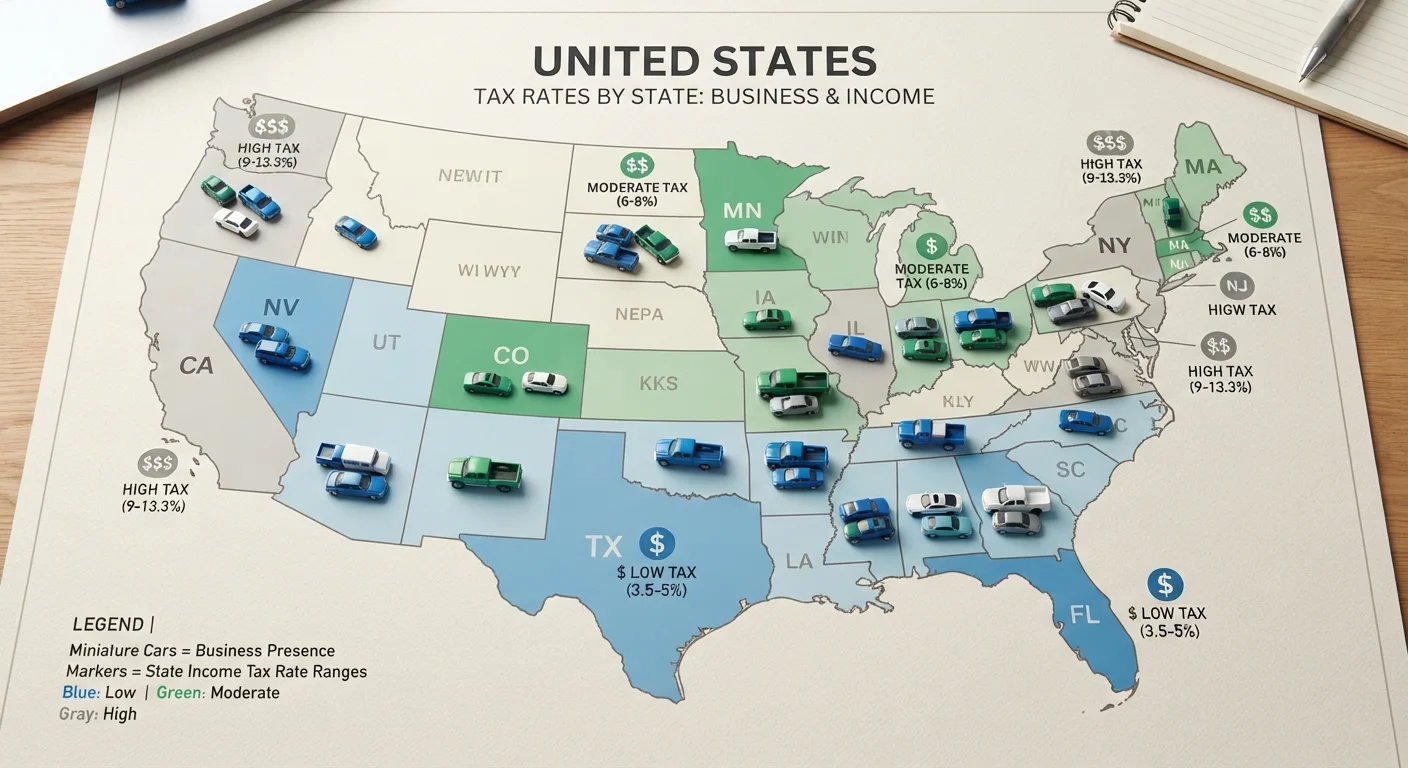
- High-tax states for vehicle property include Virginia, Rhode Island, Connecticut, and Missouri, where annual bills on a $30,000 car could reach $300–$700 depending on locality.
- No annual property tax states include Florida, Texas, California, and New York — though California charges weight-based fees and California's Vehicle License Fee is value-based but folded into registration.
- County-level variation matters even within states. In Virginia, for example, car tax rates differ by county, meaning two residents in the same state can face noticeably different bills.
Before purchasing or relocating, it pays to look up your specific county's rate — not just the statewide average. This is an often-overlooked element of the ownership costs worth calculating before you buy.
Check Your County Rate, Not Just the State Average
State-level averages can be misleading because localities often set their own millage rates on top of state rules. Before buying, go directly to your county assessor or state DMV website and look up the specific rate for your registration address. This 10-minute check can reveal a meaningful annual cost that doesn't show up anywhere on the dealer's paperwork.
Budgeting for These Costs as a Buyer
The practical step is straightforward: before you finalize a vehicle purchase, look up your state and county's vehicle property tax or excise tax rate, then run a rough estimate against the car's purchase price. For a value-based tax, plan for the bill to shrink modestly each year as the car depreciates — but don't assume the first year's bill will be manageable just because the car loses value quickly.
If you're weighing a used car purchase, note that these taxes apply regardless of whether the car is new or used. A two-year-old vehicle with a still-high market value can carry a significant first-year tax bill. Used car buyers face several hidden costs, and recurring taxes are consistently underestimated. For EV buyers, some states offer reduced or waived vehicle property taxes on electric vehicles as an incentive — worth checking as part of your EV total cost of ownership research.
This article is for general informational purposes only and does not constitute financial, tax, or legal advice. Tax rules vary by state, locality, and individual circumstance. Consult a qualified tax professional or your state's Department of Motor Vehicles for guidance specific to your situation.