
What Actually Defines a Hatchback
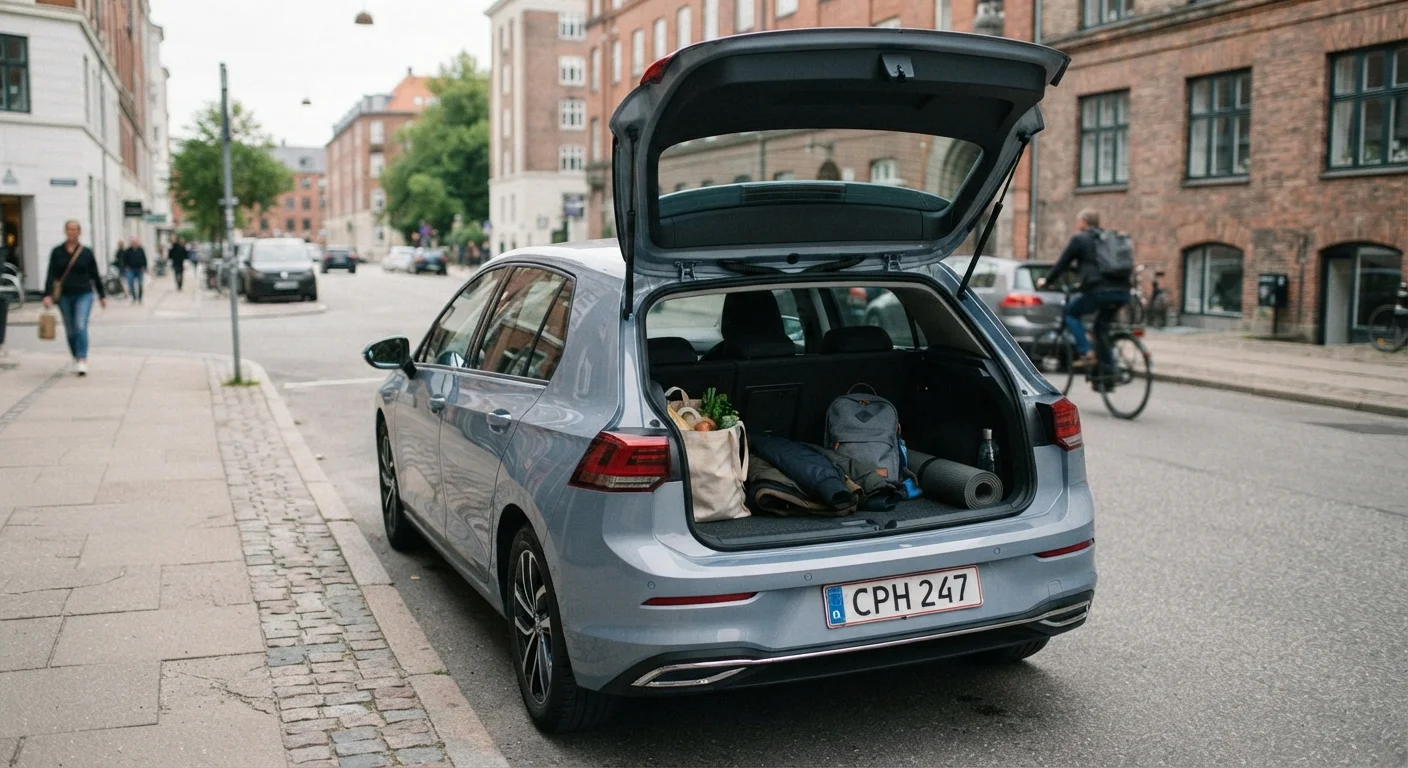
The term "hatchback" describes a specific rear body configuration — not a size category. A hatchback has a rear door (the "hatch") that opens upward as part of the roofline, integrating the cargo area and passenger compartment into one continuous space. This is the defining characteristic, full stop.
That single structural difference has major practical consequences. Without the trunk lid and separate trunk box of a sedan, the hatchback's cargo floor can be accessed from a wider angle, and folding the rear seats creates a flat, extended load floor. The same rear-door logic applies whether the vehicle is a subcompact city car or a full-size sport utility. For a deeper look at how body terminology works across vehicle types, see Body Style Terminology Every Car Buyer Should Understand.
Common Hatchback Myths — Corrected
Several persistent beliefs cause buyers to pass over hatchbacks before they ever sit in one. The myth-and-fact breakdowns below address the most common ones directly.
Myth
Hatchbacks are only available as small, entry-level cars.
Fact
Hatchbacks span multiple size segments, from subcompacts to larger five-door models that compete directly with small crossovers.
The confusion stems from the fact that many subcompact and compact cars in the US happen to use a hatchback body style — but the body style itself carries no size requirement. Manufacturers produce hatchbacks across the full passenger car size spectrum. Some models in this configuration have interior volumes and wheelbase dimensions that overlap with crossover SUVs, while sitting lower to the ground and offering better fuel efficiency in many cases.
Myth
A hatchback always has less cargo space than a sedan.
Fact
With rear seats folded, most hatchbacks offer substantially more usable cargo space and better load access than a comparable sedan.
A sedan's trunk is fixed in size and limited by the trunk opening. A hatchback's cargo area opens fully and, when rear seats fold flat, extends the entire length of the rear compartment. This means a hatchback with a smaller trunk-only measurement can still outperform a sedan for real-world hauling of large or awkward items. The relevant comparison is not just cubic-foot ratings but the shape of the space and how easily items can be loaded.
Myth
Hatchbacks are underpowered economy cars.
Fact
Performance-oriented hatchback variants have existed for decades and are available in configurations with substantial horsepower ratings.
The "hot hatch" segment — high-output versions of hatchback platforms — has a well-documented history in global and US markets. These vehicles use the same structural advantage of the hatchback body (low weight, rigid architecture) combined with upgraded powertrains. Buyers who associate hatchbacks exclusively with fuel economy over performance are working from an incomplete picture of what the body style encompasses. Powertrain choice and body style are independent variables.
Myth
Hatchbacks aren't practical for families.
Fact
Depending on size and configuration, hatchbacks can be well-suited for small families, particularly those who prioritize cargo flexibility over third-row seating.
Family suitability depends on seat count, safety ratings, cargo access, and interior packaging — none of which are inherently limited by the hatchback body style. Larger hatchbacks in the compact and mid-size segments often offer rear passenger legroom and cargo capacity that matches or exceeds similarly priced crossovers. The relevant question is whether the specific vehicle's dimensions match the family's needs, not whether it has a hatchback rear door.
Myth
A hatchback and a crossover SUV are essentially the same vehicle.
Fact
Hatchbacks and crossovers differ in ride height, ground clearance, standard all-wheel-drive availability, and overall vehicle proportions.
While some larger hatchbacks and some smaller crossovers occupy overlapping interior volume territory, the platforms and design priorities differ. Crossovers typically sit higher off the ground, offer more standard all-wheel-drive configurations, and are styled to suggest utility. Hatchbacks generally sit lower, handle more like passenger cars, and tend to return better fuel economy. They are related in the sense that both prioritize interior flexibility, but they are distinct vehicle types with different driving characteristics.
How Cargo Space and Practicality Actually Compare
One of the strongest practical cases for a hatchback is cargo flexibility. Because the cargo area and cabin share one uninterrupted space, folding the rear seats dramatically expands what you can carry — bicycles, flat-pack furniture, sporting equipment — in a vehicle that parks like a passenger car.
~10–15 cu ft
Typical compact hatchback trunk volume (seats up)
Compact hatchbacks generally offer 10–15 cubic feet of trunk space with seats up, but seat-folding can more than double usable cargo room.
2x+
Cargo space increase when rear seats fold flat
Many compact hatchbacks roughly double or exceed their stated trunk volume once rear seats are folded, enabling transport of items no sedan trunk could accommodate.
Sedans of equivalent length typically outperform hatchbacks on maximum trunk volume when seats are up, because a dedicated trunk box can be sized independently. But once rear seats fold, most hatchbacks gain a significant advantage in total floor length and flat-loading capability. For buyers who regularly move bulky or awkwardly shaped items, that trade-off matters.
If you're weighing hatchbacks against sedans or wagons, Sedan, Hatchback, or Wagon: Choosing the Right Passenger Car Shape walks through those trade-offs in detail.
Matching the Hatchback Body Style to Your Lifestyle
Hatchbacks are available in a wide range of sizes and configurations in the US market — from subcompacts suited for city parking to larger five-door models that rival small crossovers in interior volume. Understanding where you fall on that spectrum matters more than the body-style label itself.
Don't Rely Solely on Cubic-Foot Ratings
Official cargo volume figures measure maximum cubic capacity but don't capture the shape of the space, load floor height, or ease of access — all of which affect real-world usability. Before making a decision based on spec-sheet numbers, physically load test the vehicle with the kinds of items you actually carry. A larger stated volume in a sedan trunk doesn't automatically mean it's more useful than a smaller stated volume in a hatchback with a wide opening and flat floor.
Urban commuters benefit from the hatchback's combination of a compact footprint and practical cargo access. Families who don't need third-row seating often find a larger hatchback handles everyday hauling more efficiently than a sedan. Enthusiast drivers have a long tradition of choosing performance-oriented hatchback variants, which are offered by several manufacturers in the US and tend to combine usable cargo space with engaging driving dynamics.
If your purchase will also involve navigating financing decisions, it's worth reviewing Car Financing Myths That Catch Buyers Off Guard — body style decisions and budget decisions are separate, but both benefit from clear thinking.