
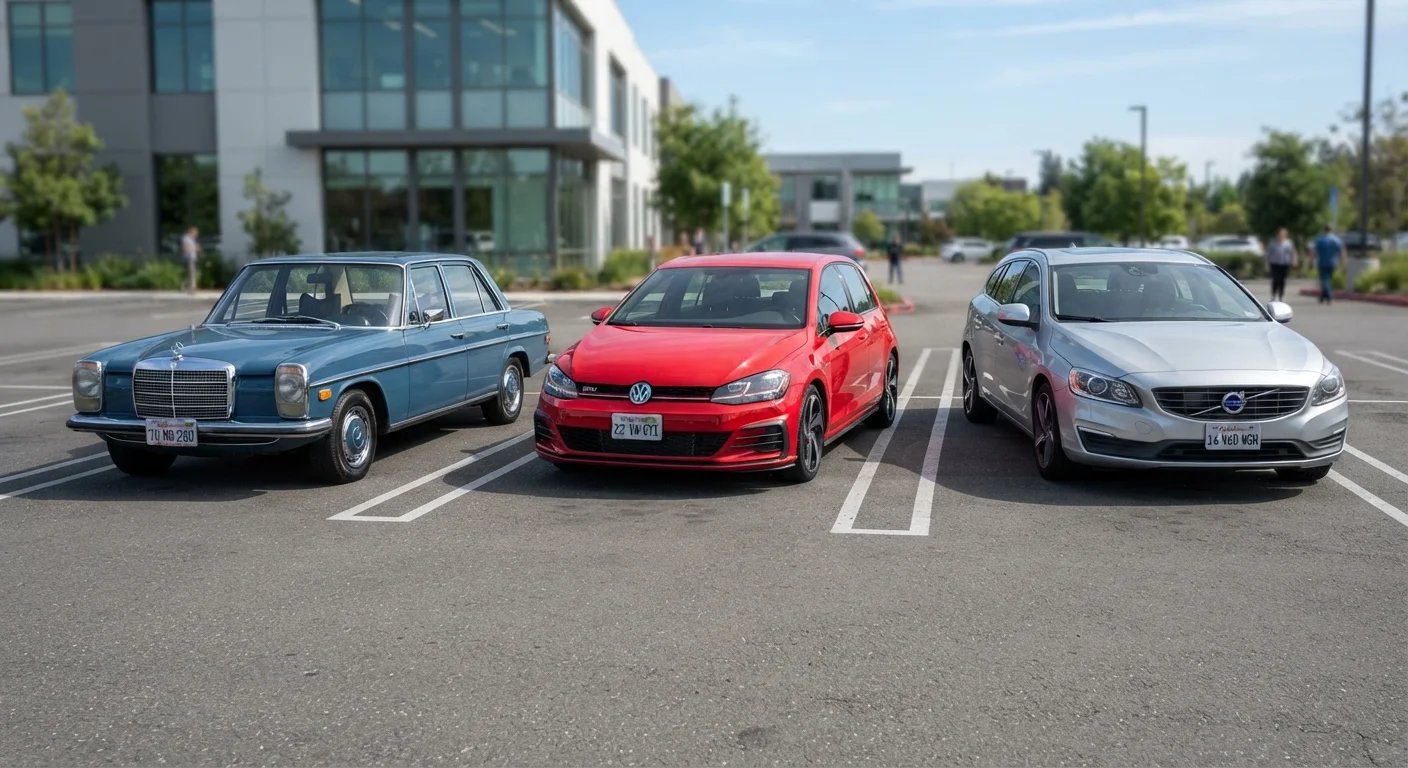
What Actually Separates These Three Shapes
Sedan, hatchback, and wagon — all fall under the broad label of passenger car, and all share a fundamentally similar layout: engine up front, passengers in the middle, cargo at the rear. The differences come down to how the roofline ends and how you access that cargo area.
A sedan has a three-box structure — a distinct engine compartment, passenger cabin, and enclosed trunk separated by a physical partition. The trunk lid opens independently, and the rear seat does not connect to the cargo area.
A hatchback collapses two of those boxes into one: the roofline slopes down over a combined passenger-and-cargo area, accessed through a single rear door (the hatch) that lifts upward. This makes it a two-box design.
A wagon (sometimes called an estate) extends the roofline horizontally rather than sloping it sharply, creating a tall, boxy cargo area behind the rear seats. Like a hatchback, the cargo area is accessible through a rear liftgate and is open to the cabin when the seats fold. For a deeper look at how roofline geometry shapes every practical decision, see how rooflines change everyday practicality.
Cargo and Space: Where the Trade-Offs Live
Cargo capacity is where these three shapes diverge most noticeably in everyday use.
| Sedan | Hatchback | Wagon | |
|---|---|---|---|
| Roofline design | Three-box, separate trunk | Two-box, sloped rear | Two-box, extended flat roof |
| Cargo access | Trunk lid only | Rear liftgate, open to cabin | Rear liftgate, open to cabin |
| Typical cargo volume (seats up) | 12–16 cu ft | 20–25 cu ft | 30–40 cu ft |
| Rear-seat headroom | Good | Moderate (varies by model) | Good to excellent |
| Urban parking ease | Moderate | High | Moderate to low |
| Cabin noise isolation | High (sealed trunk) | Moderate | Moderate |
| Tall/bulky item loading | Limited | Good | Excellent |
Sedans typically offer 12–16 cubic feet of trunk space. That's respectable for grocery runs and overnight bags, but the enclosed design means you can't carry tall items or slide long objects through from the cabin. The separation does provide one advantage: cargo noise and temperature are better isolated from passengers.
Hatchbacks generally provide less rated cargo volume than wagons — often 20–25 cubic feet with rear seats up — but the open, squared-off load floor and wide hatch opening make loading bulky items straightforward. Folding the rear seats flat typically doubles available space. It's worth noting that advertised cargo numbers can be misleading across all body types; cargo space on paper vs. in practice explains how to read those figures accurately.
Wagons lead the segment on raw volume — commonly 30–75 cubic feet with seats folded — and their tall, flat load floors make them genuinely practical for hauling furniture, sports gear, or dog crates. The trade-off is size: wagons are longer than hatchbacks and may present parking challenges in dense urban environments.
Test the Load Floor Before You Commit
When evaluating any of these body styles, measure the actual load-floor opening height and width at the liftgate or trunk opening — not just the cubic-foot figure. A wagon with a high load floor lip or a hatchback with a narrow opening can frustrate owners who regularly carry large or heavy items. Bring your most common cargo scenario to mind and test it physically during a dealership visit.
Passenger Comfort and Daily Driving Feel
Beyond cargo, the shape affects how the car feels to live with day to day.
Sedans generally provide the most refined rear-seat headroom because the roofline stays relatively high over rear passengers before dropping to the trunk. Wind and road noise are also typically better managed, partly because the sealed trunk acts as a buffer. This explains why sedans remain popular as executive and long-haul commuter vehicles.
Hatchbacks trade some rear headroom for practicality. The sloped roofline that creates the hatch can compress rear-seat headroom on smaller models — though larger hatchbacks mitigate this. Their shorter overall length and tighter turning radius make them well-suited for city parking and narrow streets.
Wagons typically match or exceed sedans for rear-seat headroom, since the roofline stays level. Passengers sitting in the back of a wagon often have more shoulder room and head clearance than in a comparable hatchback. The wagon's elevated load floor can also make loading and unloading easier on the back.
If your daily life factors go beyond body shape — commute length, family size, storage patterns — the body styles and the lifestyles they suit best guide matches each shape to broader lifestyle profiles.
Picking the Right Shape for Your Situation
No single body style is universally superior — each makes specific compromises that suit specific lives.
- Choose a sedan if your cargo needs are moderate and predictable, you value a quieter, more composed cabin, and you prefer a traditional car profile with a dedicated trunk.
- Choose a hatchback if you drive in the city, park in tight spaces regularly, need cargo flexibility for irregular loads, and want a compact footprint without sacrificing versatility.
- Choose a wagon if you need serious load capacity, carry passengers and gear simultaneously, and want to stay in a car rather than stepping up to an SUV or minivan. Wagons remain a strong alternative to crossovers for buyers who prioritize driving dynamics; why wagons still hold a strong niche explores that case in detail.
Size class also intersects with body style — a compact hatchback and a midsize sedan serve different spaces even within the same broad category. comparing compact vs. midsize cars helps clarify those segment boundaries. For a structured self-assessment, work through key questions to answer before settling on a body style before you finalize a decision.