
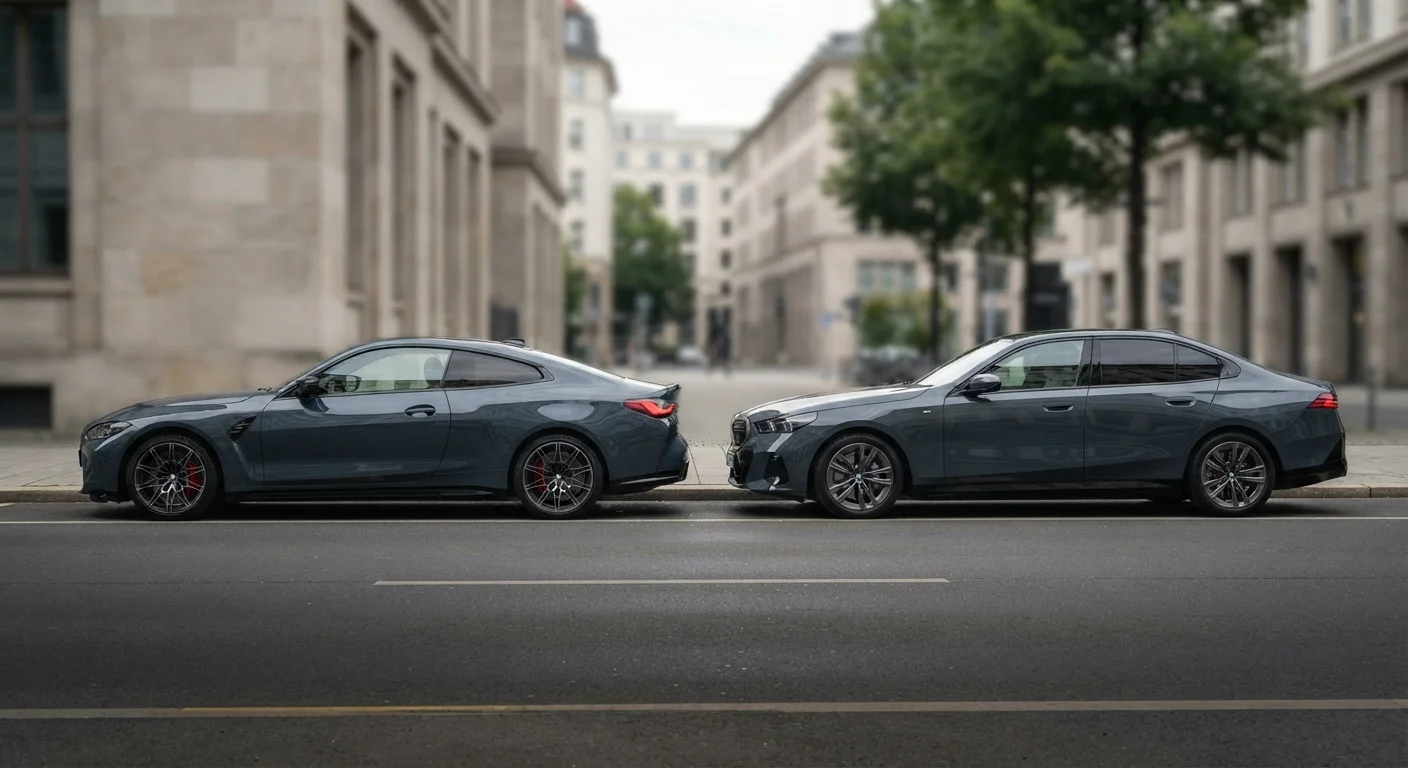
What Actually Defines a Coupe vs. a Sedan
The distinction between a coupe and a sedan is rooted in roofline geometry — specifically, how the roof slopes toward the rear of the vehicle and where the body ends. A sedan traditionally features a three-box silhouette: a distinct hood, a cabin, and a separate trunk. The roofline is relatively upright, and four doors allow access to both front and rear seating areas.
A coupe — historically defined as a two-door car — has a roofline that slopes more aggressively from the B-pillar (the structural post behind the front door) toward the rear. This swept profile reduces the available headroom over the rear seats and gives the car a lower, more streamlined appearance.
It's worth noting that the industry definition has blurred in recent decades. Several manufacturers now market four-door vehicles as "coupes" based purely on roofline shape rather than door count. If precise rear-seat space matters to you, always check actual measured dimensions rather than relying on the body style label alone. For a broader look at how these terms are used across the market, see body style terminology every buyer should understand.
How the Roofline Reshapes the Interior
The roofline isn't just a styling decision — it is an engineering constraint that ripples through nearly every interior dimension that matters to passengers.
Rear Headroom
A steeply raked coupe roofline compresses vertical space over the rear seats. Adults of average height may find themselves sitting with their head close to — or brushing — the headliner. Sedans, with their more vertical rear glass and taller roof arc, preserve significantly more rear headroom. This single difference is the most practical reason families tend to gravitate toward sedans.
Door Opening Size and Rear Access
Coupes compensate for having only two doors by making the front doors notably wider and longer. While this improves front-seat entry, it creates two problems: the wider door requires more clearance in tight parking spaces, and accessing the rear seats still requires front passengers to move their seats forward — an inconvenience that compounds on longer trips.
Rear Visibility
The aggressive slope of a coupe's rear window typically reduces the size of the rear glass, which can affect over-the-shoulder visibility. Backing cameras have reduced the practical impact of this, but it remains a consideration for drivers who prefer natural sightlines.
| Criterion | Coupe | Sedan |
|---|---|---|
| Typical door count | 2 doors (some 4-door exceptions) | 4 doors |
| Roofline angle | Steeply raked toward rear | More upright, three-box shape |
| Rear headroom | Reduced — tighter for adults | More generous, suitable for adults |
| Rear seat access | Requires front seat adjustment | Direct entry via dedicated rear door |
| Front door size | Wider and longer | Standard width |
| Rear visibility | Often reduced by smaller rear glass | Typically better natural sightlines |
| Typical powertrain options | Mirrors sedan counterpart | Mirrors coupe counterpart |
| Visual character | Sportier, lower stance | Conservative, balanced proportions |
Shared DNA: What Coupes and Sedans Have in Common
When a manufacturer offers both a coupe and a sedan version of the same model, the two vehicles often share far more than most buyers realize.
Powertrain options — engines, transmissions, and drivetrain configurations — are typically identical across body style variants. Trunk volume is frequently comparable as well, since both body styles use a separate enclosed cargo area (unlike a hatchback, which integrates the cargo space into the cabin). For a comparison of how cargo accessibility differs across passenger car shapes, see how sedans, hatchbacks, and wagons handle space differently.
Safety ratings, infotainment systems, and available technology packages also tend to mirror each other within the same model family. The choice between coupe and sedan is therefore largely a cabin geometry and lifestyle decision — not a performance or feature trade-off.
~4 inches
Typical rear headroom difference
Industry measurements commonly show coupes offering roughly 3–5 fewer inches of rear headroom compared to sedan variants of the same model platform.
2 of 3
Passenger car body styles with separate trunk
Coupes and sedans both use an enclosed trunk separate from the cabin, unlike hatchbacks or wagons that integrate cargo and passenger space.
Matching the Body Style to Your Real Life
The most useful way to choose between a coupe and a sedan is to audit how you actually use a vehicle day to day — not how you imagine you might use it.
Who typically benefits from a sedan: Buyers who regularly carry two or more passengers in the back seat, anyone with young children who need car seat access through a real rear door, commuters who share rides, and drivers who want to minimize the hassle of parking in tight spaces with large doors.
Who typically benefits from a coupe: Drivers who use rear seats infrequently — perhaps for occasional guests rather than daily passengers — and anyone for whom the vehicle's visual presence and driving character carry significant personal weight. A coupe can also be a strong choice for urban drivers who garage their car, where the wide-door limitation is a non-issue.
For context on where coupes and sedans sit within the full range of available body styles, our guide to major vehicle body styles walks through the broader landscape. And if you're still weighing whether a different passenger car shape — such as a wagon or hatchback — might serve your needs better, this comprehensive body style overview is a useful next step.
Neither choice is inherently superior. The coupe is not more exciting by default, and the sedan is not automatically the responsible choice. The roofline that changes everything is the one that aligns — or conflicts — with how you actually live.