
Why Hybrid Assumptions Cost Buyers
Hybrids occupy a genuinely useful middle ground between conventional internal-combustion vehicles and fully electric cars—but that middle ground is also where buyer confusion tends to cluster. Unlike a straightforward gasoline car or a battery-only EV, the hybrid category spans multiple powertrain architectures, each with distinct charging requirements, fuel-savings profiles, and ownership trade-offs.
The result: buyers often arrive at a dealership with a mental model built on generalizations rather than specifics. They walk away with a vehicle that technically works but doesn't match their life. The mistakes below are the most common reasoning errors that create that mismatch—and how to sidestep each one. For a broader comparison of the trade-offs between hybrids and full EVs, see Hybrid vs Electric: Weighing the Trade-offs for Everyday Drivers.
Treating EPA electric range for a PHEV as the expected daily range.
Why it happens: Window sticker numbers look authoritative, and buyers naturally anchor to them when projecting fuel costs and charging frequency.
Conflating standard hybrids (HEVs) with plug-in hybrids (PHEVs), assuming both require home charging.
Why it happens: The word 'hybrid' covers several distinct powertrain types, and marketing language often blurs the differences between them.
Calculating payback period using fuel savings alone, without accounting for the hybrid price premium.
Why it happens: Buyers focus on miles-per-gallon gains but overlook that hybrid variants typically cost more upfront than their conventional counterparts.
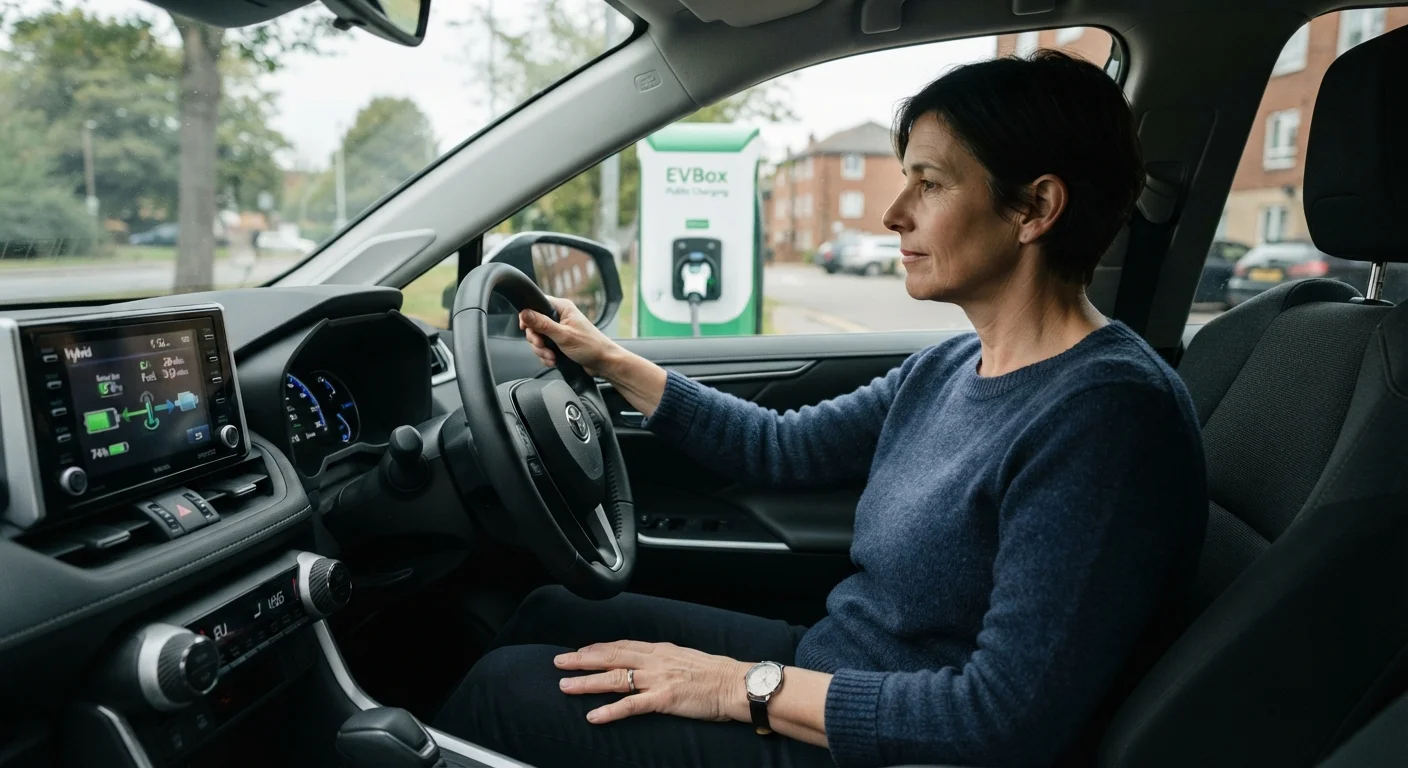
Purchasing a PHEV without confirming reliable access to home or workplace charging.
Why it happens: Buyers assume they will figure out charging logistics after purchase, or overestimate how convenient public charging will be for daily top-ups.
Assuming a hybrid automatically suits any driver because it 'uses less fuel.'
Why it happens: Hybrids carry a halo of efficiency, leading buyers to overlook whether their specific driving patterns—predominantly highway miles, for instance—actually benefit from hybrid technology.
How to Evaluate a Hybrid That Actually Fits
Avoiding these mistakes comes down to one discipline: grounding every assumption in your specific driving life rather than the average use case. Before committing to any hybrid, map your actual annual mileage, your typical route mix (city versus highway), your access to charging infrastructure, and your realistic ownership horizon.
PHEV Range Figures Are Not a Promise
EPA-rated all-electric range for plug-in hybrids assumes a fully charged battery and controlled test conditions. Cold weather, highway speeds, and cabin climate use can cut real-world electric range by 20–40%. Never budget your fuel costs around the window sticker number alone—test your typical route's conditions against the vehicle's real-world performance data.
If you drive primarily urban routes with frequent stops, a standard HEV may deliver strong real-world returns with zero charging overhead. If you have home charging and a moderate daily commute under 30–40 miles, a PHEV may let you cover most weekday driving on electricity alone—but only if you charge it consistently. Our buyer's checklist for evaluating a specific hybrid walks through this assessment step by step.
20–40%
Real-world PHEV range loss vs. EPA rating
Cold temperatures and highway driving are primary factors; figures cited widely in independent EV testing and consumer research.
~3–7 yrs
Typical hybrid fuel-savings payback window
Payback varies substantially based on annual mileage, local fuel prices, and the hybrid premium paid at purchase.
Buyers new to the category should also review Hybrid Ownership from Day One to calibrate expectations before shopping. And if you want to extend whatever electric range your hybrid does have, understanding regenerative braking technique can make a measurable difference.
Skipping Battery Health on Used Hybrids
Hybrid and PHEV battery packs can degrade significantly depending on how the previous owner charged and drove the vehicle. A used PHEV with a degraded battery may behave more like a conventional hybrid, eliminating most of the plug-in fuel savings you budgeted for. Always request a battery state-of-health report or have a qualified technician perform a diagnostic before purchasing any used hybrid.
This article provides general educational information about hybrid vehicle types and ownership considerations. It is not personalized financial, tax, or purchasing advice. Vehicle performance, fuel economy, and total cost of ownership vary by model, driving conditions, and individual circumstances. Consult a qualified automotive or financial professional for guidance specific to your situation.