
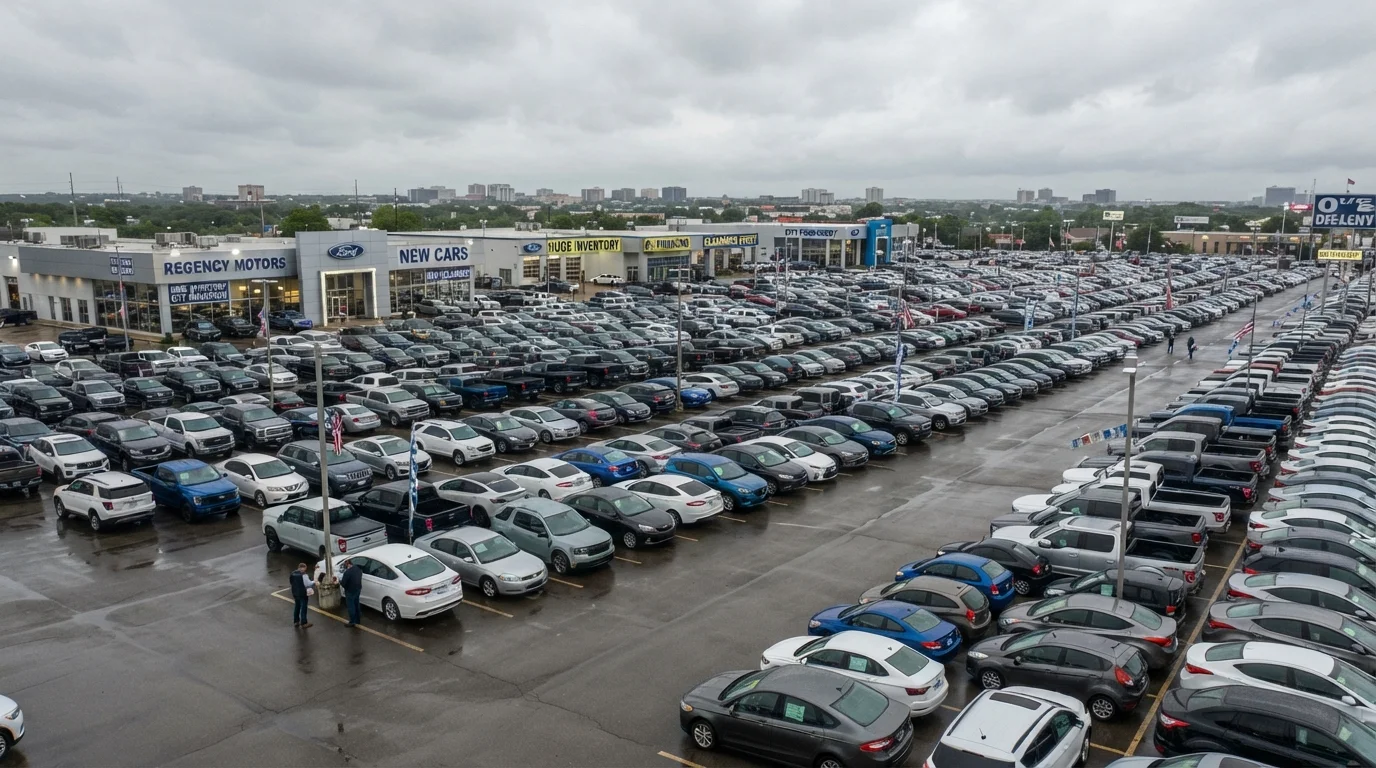
Why Market Conditions Are Your Silent Negotiating Partner
Dealership negotiations don't happen in a vacuum. The same vehicle, the same salesperson, and the same buyer can produce very different outcomes depending on what's happening in the broader market. When inventory is lean and demand is hot, dealers hold most of the cards. When those conditions reverse, leverage quietly shifts to you — whether you realize it or not.
Understanding which signals to watch means you're not just reacting to what a dealer tells you; you're walking in with an independent read on the market. The five conditions below are the most reliable indicators that the environment is tilting in a buyer's direction. Once you can spot them, you can use them. For a complementary look at how the calendar interacts with these conditions, see how visit timing affects your negotiating position.
Elevated Days-to-Turn on Dealer Lots
Days-to-turn measures how long a vehicle sits on a dealer's lot before it sells. Industry convention treats 60 days as a rough threshold — below it, demand is healthy; above it, the dealer is carrying floor-plan financing costs that accumulate daily. When a specific model or trim is averaging 70, 80, or 90-plus days at dealerships in your area, those carrying costs create real pressure to move units.
You can estimate days-to-turn yourself by filtering a listing platform by model and noting how many vehicles show original list dates several weeks or months old. A lot with a dozen examples of the same trim sitting past 60 days is a lot that needs a buyer more than it needs full sticker price.
A vehicle sitting 90 days is costing the dealer money every single day — that cost is your leverage.
Manufacturer Incentive Spend Is Climbing
When automakers increase cash-back offers, low-APR financing, or lease subsidies on a model, it's a reliable signal that wholesale demand has softened. The factory is essentially subsidizing the discount to maintain sales velocity. Publicly tracked average incentive-per-vehicle data — reported quarterly by automotive research organizations — lets you see whether a brand is spending more or less to move product compared with prior periods.
Higher incentive spend matters for negotiation because it compresses the gap between invoice and transaction price, meaning dealers have less room to pocket profit before they trigger factory bonuses. For how to track specific programs before they expire, see reading an incentive window before it closes.
Rising factory incentive spend signals softening demand — the automaker is absorbing part of your discount.
Used-Vehicle Values Are Declining
Wholesale used-car auction prices — reported through indexes like the Manheim Used Vehicle Value Index — move ahead of retail. When those values are trending downward, dealers become more conservative about what they'll pay for trade-ins, and they're also sitting on aging used inventory that's depreciating. Both dynamics make new-vehicle deals more attractive for dealers to close quickly.
For buyers, declining used values mean trade-in offers may be lower, but they also signal a market where dealers are more motivated to transact. If you're bringing a trade, get independent appraisals from multiple sources before stepping into the dealership — competing quotes are a genuine leverage point even on the trade side.
When used-car auction values drop, dealers grow more eager to close new-vehicle transactions quickly.
Regional Supply Exceeds Local Demand
National inventory averages can mask significant regional variation. A model may be flying off lots in one metro while piling up 200 miles away. Dealers can't easily transfer that surplus without logistical cost, so local oversupply creates pockets of buyer-friendly conditions even when the national picture looks tighter.
Search inventory across a broader radius — 100 to 150 miles — and note where concentrations of the same trim exist. A dealer 90 miles away with eight identical units has a different motivation than a local dealer with one. That regional awareness is worth mentioning: "I've seen several of these at X dealership" communicates that you know alternatives exist. The contrast case — navigating when local inventory really is constrained — is covered in navigating car deals when inventory is tight.
Regional oversupply creates buyer-friendly conditions even when national inventory numbers look balanced.
Interest Rate Environment Dampens Overall Demand
When auto loan rates rise significantly, a segment of buyers who were previously comfortable with monthly payments are priced out of the market or delay their purchase. This reduced buyer pool leaves dealers competing for fewer qualified customers. Combined with any of the above conditions, rate-driven demand softening can push dealers to offer sharper prices or contribute more toward rate buy-downs to close deals.
This dynamic is worth monitoring through Federal Reserve rate decisions and the average new-vehicle loan rates published by the Consumer Financial Protection Bureau (CFPB) or similar sources. It doesn't guarantee savings on its own, but it does help explain why dealer behavior shifts during high-rate periods — and why your negotiating position may be stronger than you expect. The dealership negotiation hub has more on reading dealer motivation broadly.
Higher borrowing costs shrink the buyer pool — dealers competing for fewer customers become more flexible on price.
Turning Market Awareness Into Negotiating Action
Spotting a buyer-friendly market is only half the work. The other half is arriving at the dealership prepared to act on that information. Check publicly available inventory data for the specific trim you want — days on lot is often visible on dealer websites or third-party listing platforms. Cross-reference any manufacturer incentive programs with their published expiry dates, since these windows can close without much notice. Reading an incentive window before it closes explains how to track and verify those programs reliably.
Document What You Find Before You Visit
Print or screenshot the specific listings showing high days-on-lot, the incentive program details with expiry dates, and any regional inventory searches you ran. Walking in with printed evidence — rather than relying on memory — signals preparation and anchors the conversation in verifiable data rather than opinion. Dealers respond differently to a buyer who can point to specifics.
When conditions are stacked in your favour, the goal isn't to squeeze every last dollar — it's to reach a deal that reflects fair market value quickly, before conditions change. Buyers who overplay a temporary advantage sometimes delay their own purchase right past the window they identified. For a structured approach to keeping negotiations on track once you're at the table, the proven negotiation habits guide covers the mechanics of staying in control.
This article provides general information about automotive market conditions for educational purposes. It does not constitute financial or purchasing advice tailored to your individual situation. Pricing, incentives, and inventory levels vary by region, dealer, and time period. Consult multiple sources before making any significant purchase decision.