
The Fee Landscape: Fixed vs. Flexible
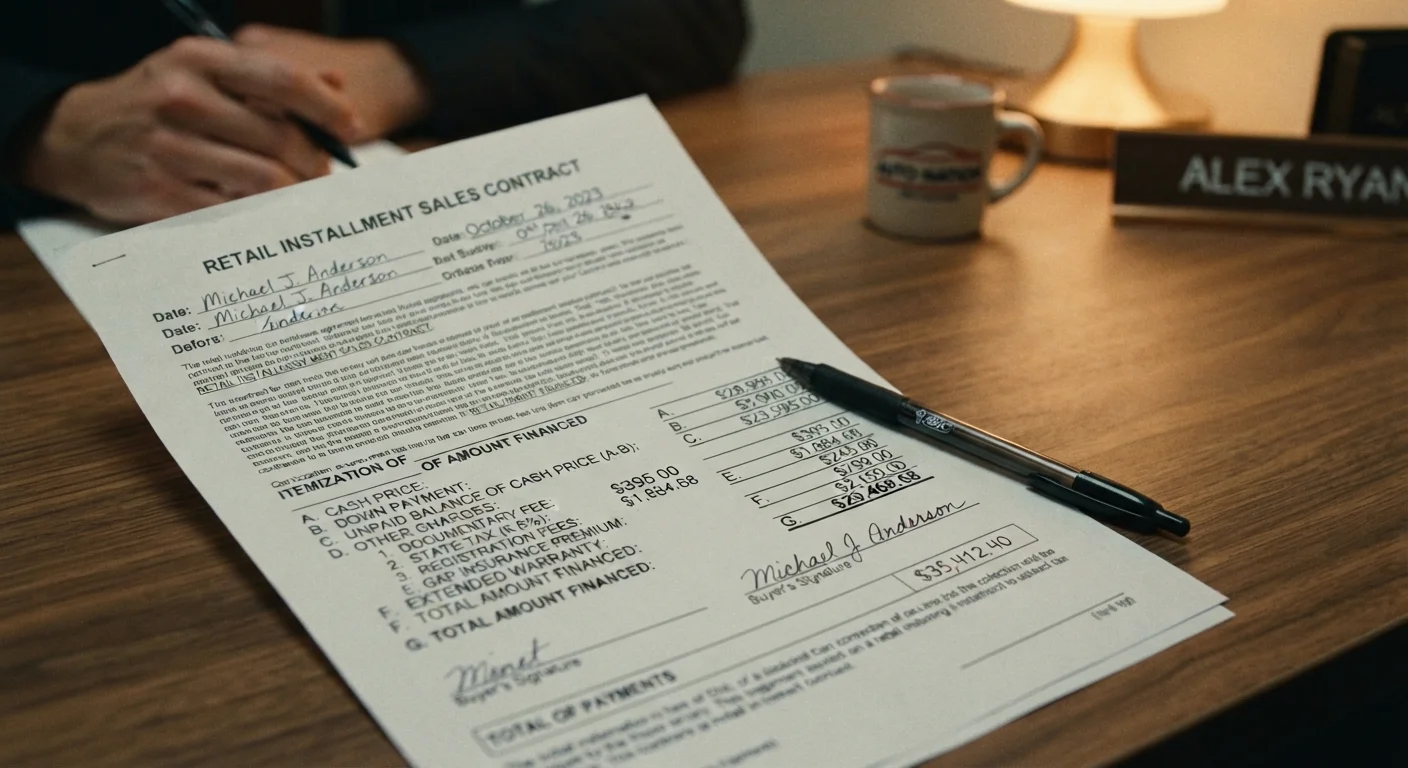
When a dealer hands you a final purchase worksheet, you'll typically see a vehicle price followed by a cluster of additional charges. Some of those charges are mandated by state law and genuinely non-negotiable. Others are dealer-set and fully open to discussion. Knowing which is which is the single most practical leverage point you have before signing. For a broader look at how dealership pricing structures work, see our guide to what happens behind the sales desk.
| Typical Doc Fee Range | $85–$700+ (Varies significantly by state; some states cap the maximum amount) |
| States with Doc Fee Caps | Approximately half of U.S. states (State consumer protection agencies maintain current caps) |
| Government-Mandated Fees | Sales tax, title, registration, emissions (Non-negotiable; set by state or local government) |
| Dealer-Discretionary Fees | Doc fee (above cap), prep, market adjustment, ad fee (Can be reduced or removed through negotiation) |
| Best Comparison Metric | Out-the-door price (Only metric that captures all fees for true dealer-to-dealer comparison) |
The categories below break down the most common line items you'll encounter and explain where your negotiating power actually exists.
Non-Negotiable Fees (Government-Mandated)
These charges are set by state or local governments. A dealer cannot legally waive them, and any offer to do so should raise concern.
- Sales Tax: Calculated as a percentage of the vehicle's purchase price (rate varies by state). Taxable base can sometimes be reduced by a trade-in credit, depending on your state's rules.
- Title and Registration Fees: Paid to your state's DMV to transfer ownership and register the vehicle. Amounts vary by state and sometimes by vehicle weight or value.
- Emissions and Inspection Fees: Required in states with mandatory testing programs. Not a dealer profit item.
For a complete breakdown of government-mandated charges, the plain-English glossary of sales tax and dealer charges covers every registration-side fee you'll encounter.
Negotiable or Removable Fees
These charges originate with the dealer, not the government. They may be presented as standard, but many can be reduced, waived, or countered.
Documentation Fee
A dealer-set charge for processing the paperwork associated with a vehicle sale. Many states cap the maximum allowable amount; in uncapped states, this fee varies widely by dealership.
Market Adjustment
An above-MSRP markup added by a dealer, typically during periods of high demand or limited inventory. It appears as a separate addendum sticker and is entirely at the dealer's discretion.
Dealer Prep Fee
A charge for inspecting, washing, and readying a vehicle for delivery. This work is considered routine overhead at most dealerships and is often negotiable.
Out-the-Door Price
The total amount you actually pay to drive the vehicle home, including vehicle price, all dealer fees, sales tax, and government charges. This is the only number that allows a true apples-to-apples comparison between dealers.
Title and Registration Fee
Government-mandated charges paid to your state's DMV to transfer the vehicle title into your name and register it for road use. These amounts are set by law and cannot be waived by the dealer.
Addendum Sticker
A secondary price sticker placed next to the factory window sticker, listing dealer-installed accessories and any market adjustment markup. Items on an addendum sticker are generally negotiable.
- Documentation Fee (Doc Fee): Covers the dealer's paperwork processing. Most states cap this fee; a few do not. In uncapped states, doc fees can run from under $100 to over $700. You can ask for a reduction, or negotiate the vehicle price down to offset it. Compare fees across dealers before committing.
- Dealer Preparation Fee: Billed for washing, fueling, and inspecting the vehicle before delivery. This work is routine and typically already built into overhead. Ask that it be removed or rolled into a price reduction.
- Market Adjustment (Addendum Sticker): An above-MSRP markup dealers apply during high-demand periods. This is entirely dealer discretion. Shop competing dealers and use written quotes as leverage. For context on how holdback and invoice prices shape these margins, see dealer holdback and invoice price explained.
- Advertising Fee: Some dealers pass regional ad costs to buyers as a line item. Ask for it to be removed — it is rarely defended successfully.
- Dealer-Installed Accessories: Paint sealant, fabric protection, nitrogen tires, window tint — these add-ons appear on many sticker addendums. Most carry high margins and limited utility. You can refuse them or ask for removal. See dealer add-ons: useful vs. unnecessary for a full evaluation framework.
Doc Fee Caps Vary Widely by State
Some states set a firm ceiling on documentation fees — in others, dealers can charge whatever the market accepts. Before negotiating, look up your state's current cap through your state attorney general's office or consumer protection bureau. Knowing the legal ceiling gives you an immediate, factual basis for pushing back on inflated doc fees.
How to Push Back Without Pressure
The most effective approach is methodical, not confrontational. Before visiting any dealership, research your state's doc fee cap (your state DMV website or consumer protection office is the authoritative source). Get out-the-door price quotes in writing from at least two dealers so you have a real comparison baseline.
At the table, ask for an itemized worksheet before discussing monthly payments. Review each non-vehicle line item individually. For any fee you want challenged, a simple, neutral question works: "Can you explain exactly what this covers and whether it's required by law?" Dealers who cannot give a straight answer to that question are signaling that the fee is negotiable.
Remember that the vehicle price, trade-in value, financing rate, and fee total are all interconnected. Dealers sometimes adjust one column to make another look favorable. Evaluate the total out-the-door cost, not any single line. For guidance on how incentives can obscure the real deal, see what dealer incentives don't reveal about true cost.
This article provides general educational information about common dealership fees. Actual fee structures, caps, and regulations vary by state. Consult your state's consumer protection agency or a licensed professional for guidance specific to your situation.