
Setting Your Budget Before You Browse
The most common used car buying mistake is shopping by monthly payment rather than total cost. A low monthly figure can mask an inflated purchase price, a long loan term, or high interest charges — all of which cost you more over time. Instead, anchor your search to an all-in number: purchase price plus estimated taxes, registration fees, insurance adjustment, and anticipated maintenance in the first year.
A general guideline is that total vehicle expenses (loan payment, insurance, fuel, maintenance) should not exceed 15–20% of your gross monthly income, though your actual situation may differ. For a deeper look at structuring a realistic budget, see the Financing & Budgeting hub, which covers down payments and loan mechanics in detail.
Budget for Ownership, Not Just Purchase
Pull insurance quotes on your shortlisted vehicles before committing to a budget ceiling — premiums vary significantly by model, not just driver profile. Factor in estimated maintenance costs using ownership cost tools available from independent automotive research sites. A vehicle that fits on paper may not fit after insurance is added.
Research: Finding the Right Vehicle
Once you have a budget ceiling, narrow vehicle choices by reliability data, ownership costs, and parts availability — not just trim-level appeal. Sources like long-term owner surveys, insurance industry claims data, and independent reliability rankings help identify which segments and model years hold up. Cross-reference the vehicles on your shortlist against their typical repair frequency and parts costs for your region.
Certified Pre-Owned (CPO) programs offer manufacturer-backed inspections and extended warranties, but they command a price premium. Weigh that premium against the cost of an equivalent extended warranty purchased independently — they are not always the better deal. If you are still weighing used against new, this framework lays out the full cost-of-ownership comparison.
~2.5x
Used vehicles sold per new vehicle in the U.S.
Used car sales consistently outpace new car sales in volume, reflecting the market's scale and the range of options available to budget-conscious buyers.
15–35%
Typical first-year depreciation on a new vehicle
Industry estimates suggest new vehicles lose a significant portion of their value in the first year, which is the primary financial case for buying used.
$100–$200
Typical cost of a pre-purchase inspection
Independent mechanic inspections are a small upfront cost compared to the repair bills they routinely help buyers avoid.
Inspecting and Vetting a Used Car
Every used vehicle deserves a two-part vetting process: a history report and a physical inspection.
Vehicle History Reports
Run a history report using the vehicle's VIN before investing time in an in-person visit. These reports flag title issues (salvage, flood, lemon law buyback), reported accidents, odometer rollbacks, and ownership count. They are valuable filters but not guarantees — unreported incidents will not appear.
Pre-Purchase Inspection
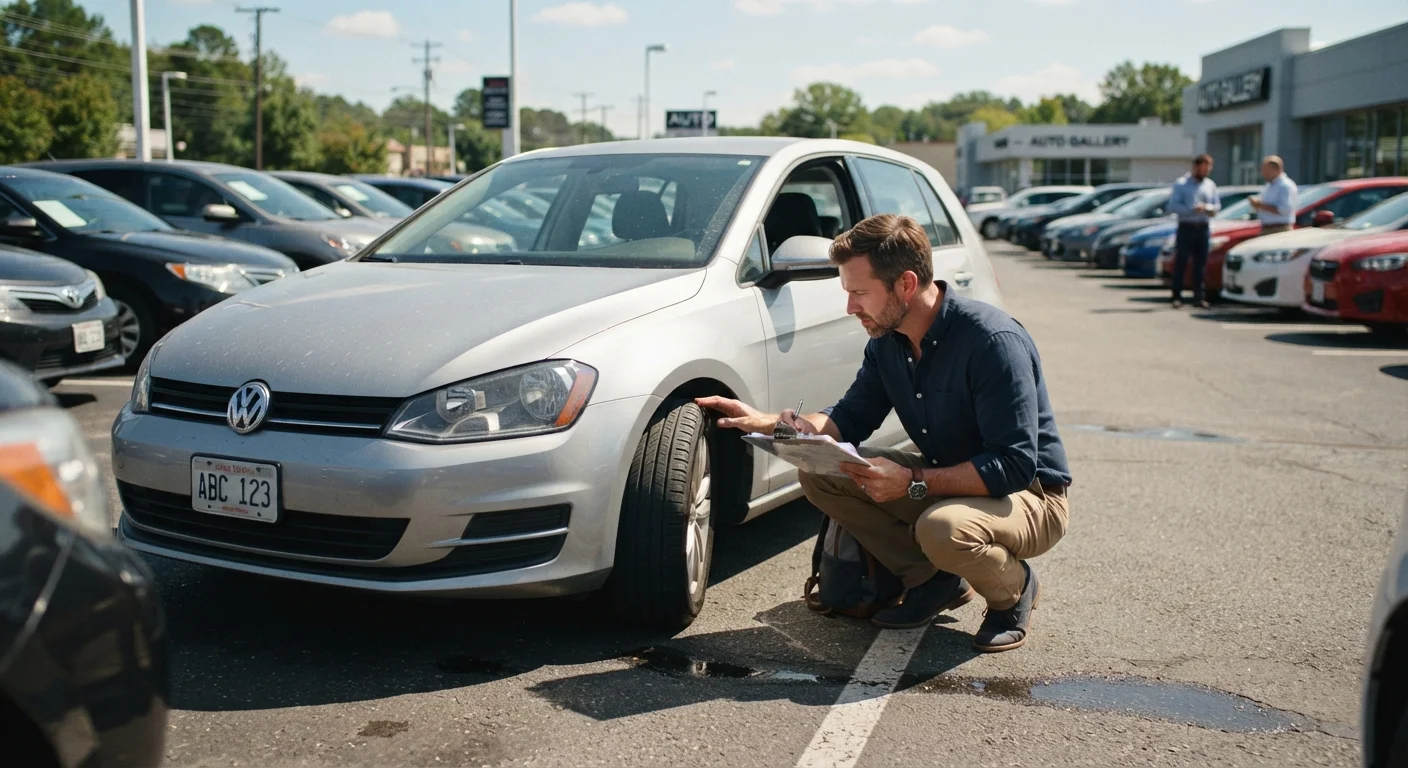
For private sales especially, pay an independent mechanic to inspect the vehicle before signing anything. Expect to pay $100–$200 for a thorough inspection; that cost is trivial against a repair bill you didn't anticipate. A qualified technician will check structural integrity, fluid condition, brake wear, tire health, and scan for active diagnostic trouble codes. Never rely solely on a seller's verbal assurances or a dealer's in-house inspection.
Independent Inspection Is Non-Negotiable
A vehicle history report will not catch mechanical problems, deferred maintenance, or structural damage that was never reported to an insurer. Only a hands-on inspection by a qualified mechanic you hire independently can surface these issues. The cost of skipping an inspection is routinely measured in hundreds or thousands of dollars in repairs discovered shortly after purchase.
During your own walk-around, check panel gaps for consistency (a sign of prior body repair), look for mismatched paint shading, inspect the interior for water staining, and test every electronic feature. Walk away from any seller who refuses an independent inspection.
Negotiating the Price
Effective negotiation is rooted in documented market data. Before making an offer, compile recent sale prices for comparable vehicles — same year, trim, mileage range, and condition — in your local market. This gives you a defensible anchor rather than guessing.
Lead with the out-the-door (OTD) price rather than monthly payments. Dealers who shift the conversation to monthly figures can adjust loan terms to obscure the true purchase price. Negotiate the vehicle price, trade-in value, and financing as separate line items. For a complete breakdown of dealership negotiation tactics, the Complete Guide to Negotiating at a Dealership is a thorough companion resource.
Make your first offer below your true ceiling, not at it — you need room to move. If the seller counters at your actual ceiling, you have nowhere to go without overpaying.
Anchoring below your limit preserves negotiating room and signals that you are a serious, prepared buyer rather than someone who will accept the asking price without engagement.
Request a final itemized breakdown of every fee before you enter the finance office — not after. Surprises added at the signing table are much harder to reject once you are seated.
Dealer add-ons and documentation fees are frequently introduced late in the process when buyer fatigue and commitment bias make pushback less likely.
Financing a Used Car Purchase
Used car loans carry higher interest rates than new car loans because lenders view older vehicles as greater collateral risk. Rates vary significantly by credit score, loan term, and lender type — so comparison shopping matters. Get pre-approved through a credit union or bank before visiting a dealership; that approval sets a rate ceiling you can ask dealers to beat.
Avoid extending the loan term simply to reduce monthly payments. A 72- or 84-month loan on a used vehicle creates real risk: you may owe more than the car is worth (negative equity) well before it's paid off, and you'll pay substantially more in total interest. The Complete Car Financing Walkthrough covers credit, loan structures, and the F&I office in depth.
This section provides general financial information for educational purposes only and is not personalized financial or lending advice. Consult a qualified financial professional regarding your specific borrowing situation.
GAP Insurance on Used Cars
GAP insurance covers the difference between what you owe on a loan and what the car is worth if it's totaled or stolen. On older used vehicles with shorter loan terms, the gap between loan balance and market value is often smaller — making GAP coverage less necessary than on a new car. Evaluate whether the premium justifies the coverage given your specific loan-to-value ratio, and consult your insurance provider for guidance on your situation.
Closing the Deal and Transferring Ownership
Before signing anything, review the full purchase agreement line by line. Confirm the OTD price matches what was negotiated, and scrutinize any add-on products — extended warranties, paint protection, GAP insurance — which are often presented in the finance office. These are negotiable; decline anything you haven't independently researched.
Title and Registration
For private-party sales, confirm the seller's name matches the title exactly and that there are no liens listed. A lienholder release must accompany the title if the seller financed the car. Both buyer and seller typically sign the title; exact requirements vary by state, so confirm with your state's DMV before the transaction. You'll generally have a defined window — often 10–30 days depending on your state — to register the vehicle and pay applicable taxes and fees.
For first-time used car buyers who want a plain-language walkthrough of every stage from budget to paperwork, this ground-up guide covers the process step by step.
Never Skip the Title Check
Purchasing a vehicle with an unclear title — a lien that wasn't disclosed, a salvage designation, or a name mismatch — can leave you legally exposed and unable to register the car. Verify title status through your state's DMV database or a VIN history report before handing over any money. If a seller pressures you to skip this step, treat it as a serious red flag.