
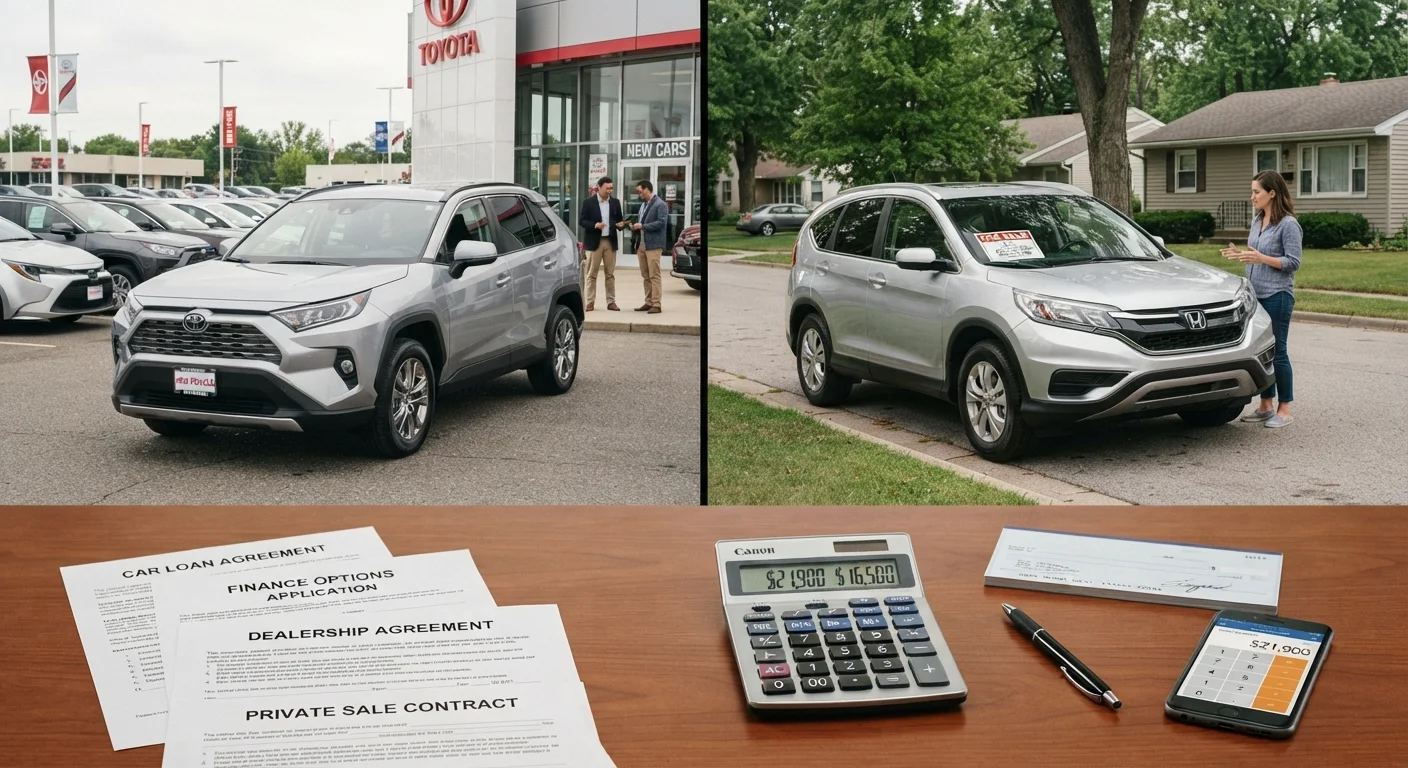
Why Lenders Treat New and Used Vehicles Differently
From a lender's perspective, a new car and a used car represent meaningfully different levels of collateral risk. A new vehicle has a known, verifiable market value backed by manufacturer pricing. A used vehicle's value is harder to pin down — it depends on mileage, condition, accident history, and local demand — making it a less predictable asset if the borrower defaults.
This difference in collateral confidence drives almost every downstream difference in loan structure: the interest rate offered, the maximum loan term, how much the lender will finance relative to the vehicle's value, and how selective lenders are about vehicle age. Understanding this logic helps you predict what a lender will offer before you ever walk into a financing office.
For a broader look at how these differences extend beyond financing, see our overview of new vs. used trade-offs covering cost, reliability, and value factors.
Interest Rates: The Most Visible Difference
Interest rates — expressed as the Annual Percentage Rate, or APR — are consistently lower on new car loans than on used car loans across the lending market. The gap can range from one to several percentage points depending on your credit tier, the lender type, and broader rate conditions.
1–4%
Typical APR gap: new vs. used
Federal Reserve consumer credit data consistently shows used auto loan rates running above new car rates across credit tiers.
~60 mo.
Common used car loan term cap
Many banks and credit unions limit used car loan terms to 60 months, versus 72–84 months frequently offered on new vehicles.
Two factors explain the spread. First, new cars carry less uncertainty about their value. Second, manufacturers frequently subsidize financing through captive finance arms, creating promotional rates unavailable on used vehicles. These subsidized rates are not the norm — they are manufacturer-funded incentives — so it's worth distinguishing them from the standard market rate you'd receive at a bank or credit union.
For context on how broader rate environments affect what you'll be quoted, understanding rate cycles can sharpen your timing decisions.
Loan Terms, LTV Limits, and Vehicle Eligibility Rules
New car loans routinely extend to 60, 72, or even 84 months. Used car loans are typically capped at shorter terms — commonly 48 to 60 months — and many lenders impose absolute cutoffs based on the vehicle's model year or odometer reading. A car more than 7–10 years old or with high mileage may be ineligible for standard financing at some institutions entirely.
| New Car Loan | Used Car Loan | |
|---|---|---|
| Typical APR range | Generally lower; subsidized rates possible | Generally higher; no manufacturer subsidy |
| Maximum loan term | Up to 72–84 months common | Often capped at 48–60 months |
| Loan-to-value (LTV) limit | Up to 100%+ of MSRP possible | Often 80–90% of appraised value |
| Vehicle eligibility rules | Any new model year | Age/mileage caps apply by lender |
| Collateral risk to lender | Lower — value is transparent | Higher — value varies by condition |
| Manufacturer incentive rates | Available on qualifying models | Not available |
Loan-to-value (LTV) ratios — the share of the vehicle's value a lender will finance — are also tighter on used vehicles. Where a new car buyer might finance up to 100% (or even slightly above) of the sticker price, used car buyers often encounter caps of 80–90% of the vehicle's appraised or book value. If the vehicle's asking price exceeds its appraised value, the buyer is responsible for the gap out of pocket.
Comparing finance options across both categories in detail can help you anticipate what each lender type will and won't offer.
Watch for Negative Equity on Long Terms
Stretching a used car loan to its maximum term can leave you owing more than the vehicle is worth for much of the loan's life — a position known as being 'underwater' or having negative equity. If the car is totaled or you need to sell early, you may owe the lender more than you receive. A larger down payment or shorter term reduces this risk.
Structuring Used Car Financing to Your Advantage
Because used car loans carry higher rates and tighter LTV limits, the financing structure you bring to the table matters more. A larger down payment accomplishes two things: it reduces the loan principal (lowering total interest paid) and improves your LTV ratio, which can make lenders more flexible on rate and term.
Shopping lenders independently before visiting a dealership gives you a baseline offer — a pre-approval — that you can compare against dealer-arranged financing. Credit unions frequently offer competitive used car rates and may have looser vehicle-age restrictions than banks. Examining how the numbers actually differ between new and used loans can help you benchmark what a fair offer looks like.
Once you hold a used car loan, refinancing is worth revisiting if your credit improves or market rates drop — provided the vehicle still meets the lender's age and mileage criteria at that point.
Get Pre-Approved Before You Shop
Securing a pre-approval from a bank or credit union before visiting any dealership gives you a concrete rate benchmark. Dealer-arranged financing may beat it — but you won't know without something to compare it against. Pre-approval also clarifies your actual budget before you fall in love with a specific vehicle.
This article is for general informational purposes only and does not constitute personalized financial or lending advice. Loan terms, rates, and eligibility vary by lender, credit profile, and vehicle. Consult a qualified financial professional for guidance specific to your situation.