
Why These Terms Appear on Your Paperwork
Dealership pricing documents routinely include terms that buyers have never encountered before — and some that are designed to appear routine even when they represent negotiable margin. Knowing what each line item means, and whether it has any flexibility, puts you in a fundamentally stronger position before any conversation begins.
This glossary focuses on the terms most likely to affect your final cost: what they are, why they exist, and how to think about them at the negotiating table. For a broader reference covering fees and charges across the full buying and registration process, see Sales Tax, Documentation Fees, and Dealer Charges.
Dealer Holdback
A percentage of the vehicle's MSRP (typically 1–3%) that the manufacturer reimburses to the dealer after a sale. It is built into the pricing structure and is not visible on the window sticker, meaning the dealer retains profit even when selling at invoice price.
Market Adjustment
An amount added above MSRP by the dealer, often during periods of high demand or limited inventory. It is sometimes labeled ADM (Additional Dealer Markup) and reflects the dealer's assessment of what the market will bear — not a manufacturer-mandated charge.
Documentation Fee (Doc Fee)
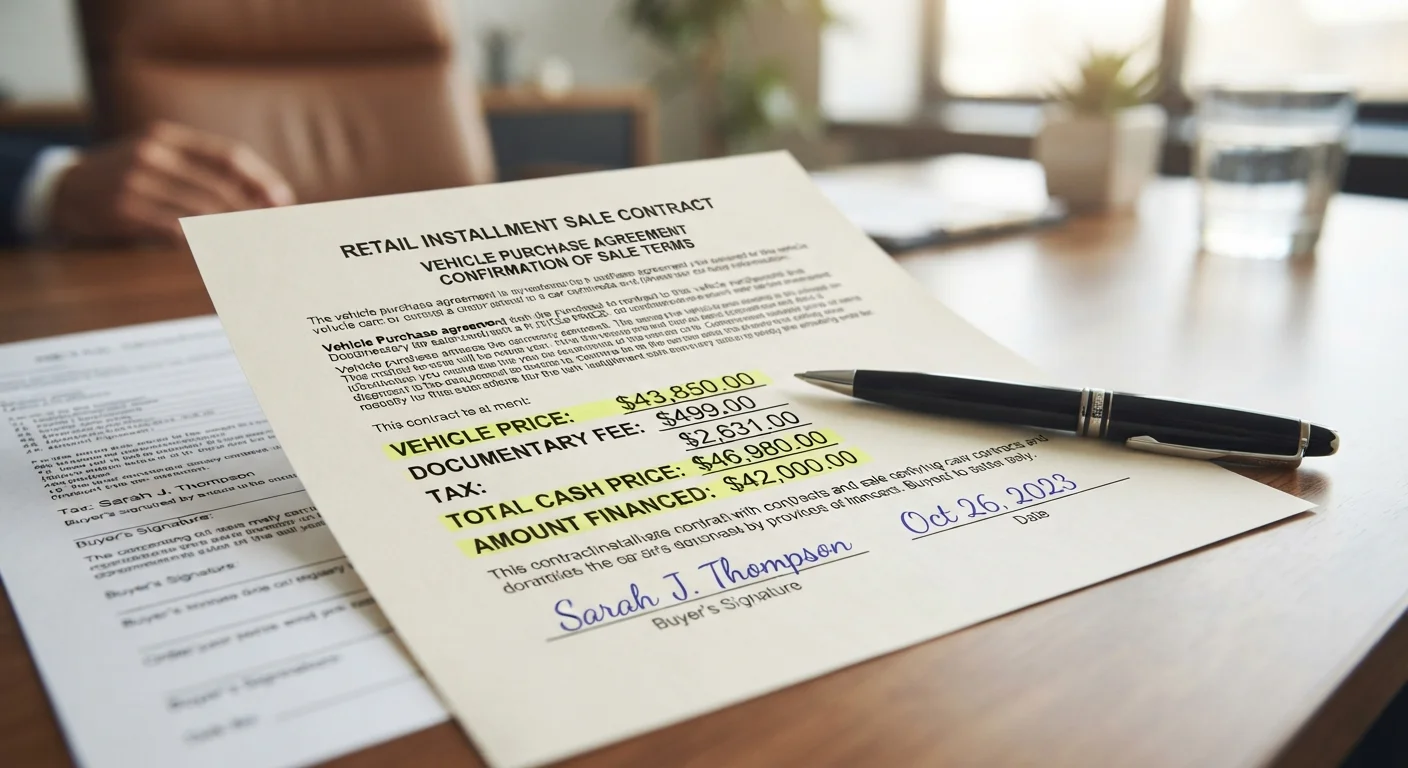
A charge for processing the paperwork associated with a vehicle sale, including title, registration, and financing documents. Doc fee amounts vary widely by state, with some states capping the maximum a dealer can charge.
Invoice Price
The price a dealer pays the manufacturer for a vehicle, as shown on the manufacturer's invoice. It is not the dealer's true cost because holdback, dealer cash, and other incentives reduce the effective amount the dealer owes.
MSRP
Manufacturer's Suggested Retail Price — the price printed on the window sticker and recommended by the automaker. Dealers are not legally required to sell at MSRP; they may sell above or below it depending on market conditions.
Dealer Cash
A manufacturer-to-dealer incentive paid behind the scenes to encourage sales of certain models or trims. Buyers generally cannot see this figure, but it further reduces the dealer's effective cost below invoice price.
Destination Charge
A fixed fee set by the manufacturer covering the cost of shipping the vehicle from the factory to the dealer. It is listed on the window sticker and is non-negotiable — all buyers pay the same amount for a given model.
Floor Plan Assistance
A manufacturer subsidy that helps dealers cover the interest costs of financing their vehicle inventory while cars sit on the lot. It reduces the dealer's actual carrying cost and is another reason invoice price overstates true dealer cost.
Out-the-Door Price
The total amount a buyer pays to drive a vehicle home, including the negotiated vehicle price, all dealer fees, sales tax, and government fees. Always negotiate on out-the-door price, not just the vehicle's selling price.
Dealer Prep Fee
A charge ostensibly covering pre-delivery inspection and cleaning of the vehicle before handover. This is often a margin-padding fee since pre-delivery service is standard dealer practice already compensated by the manufacturer.
Which Terms Are Negotiable — and Which Aren't
Not every line item on a dealer quote carries the same flexibility. Understanding the difference prevents you from wasting negotiating energy on fixed costs while overlooking the ones where pushback is both reasonable and expected.
| Typical Holdback Range | 1%–3% of MSRP (Common industry range; varies by manufacturer) |
| Doc Fee Variability | Ranges from under $100 to over $800 by state (Varies widely; some states cap the maximum) |
| Market Adjustment Negotiability | Negotiable — not manufacturer-mandated |
| Destination Charge Negotiability | Not negotiable — set by manufacturer |
| Out-the-Door Price | The only number that reflects your true total cost |
Generally Not Negotiable
- Destination charge: Set by the manufacturer and identical for all buyers of a given model. Asking a dealer to waive it will not succeed.
- Sales tax and government fees: Calculated by state and local law. No dealer has authority to reduce these.
Potentially Negotiable
- Market adjustment / ADM: This is added at the dealer's discretion. During periods of normal inventory, buyers often negotiate it down or out entirely. Even in high-demand periods, it is worth asking — or simply shopping another dealer.
- Dealer prep fee: Frequently a margin item rather than a genuine cost. Manufacturers typically compensate dealers separately for pre-delivery inspections.
- Doc fee: In states without a legal cap, doc fees vary by dealership and some room for negotiation or offsetting elsewhere in the deal may exist. In capped states, the fee is fixed.
Invoice Price Is Not Dealer Cost
Many buyers treat invoice price as the dealer's break-even point and aim to negotiate close to it. In practice, holdback, dealer cash, floor plan assistance, and volume bonuses all reduce what the dealer actually pays. Understanding this gap helps you calibrate realistic expectations when making an offer. For a deeper look at this dynamic, see Dealer Holdback and Invoice Price: The Gap Behind the Sticker.
For a full breakdown of which charges you can realistically push back on, Dealership Fees Decoded walks through each category in detail. And for context on how destination charges and prep costs compare, see Destination Charges, Doc Fees, and Prep Costs.
The most reliable negotiating move is always to ask for and compare the out-the-door price across multiple dealers. This single number captures everything — vehicle price, fees, and taxes — and is the only figure that allows an apples-to-apples comparison. For broader strategies, explore the Negotiation Tactics hub and Car Pricing Basics.
This article provides general educational information about automotive pricing and dealership fees. It is not financial, legal, or consumer advice tailored to your individual situation. Fee regulations vary by state; consult your state's consumer protection agency or a qualified adviser for guidance specific to your circumstances.