
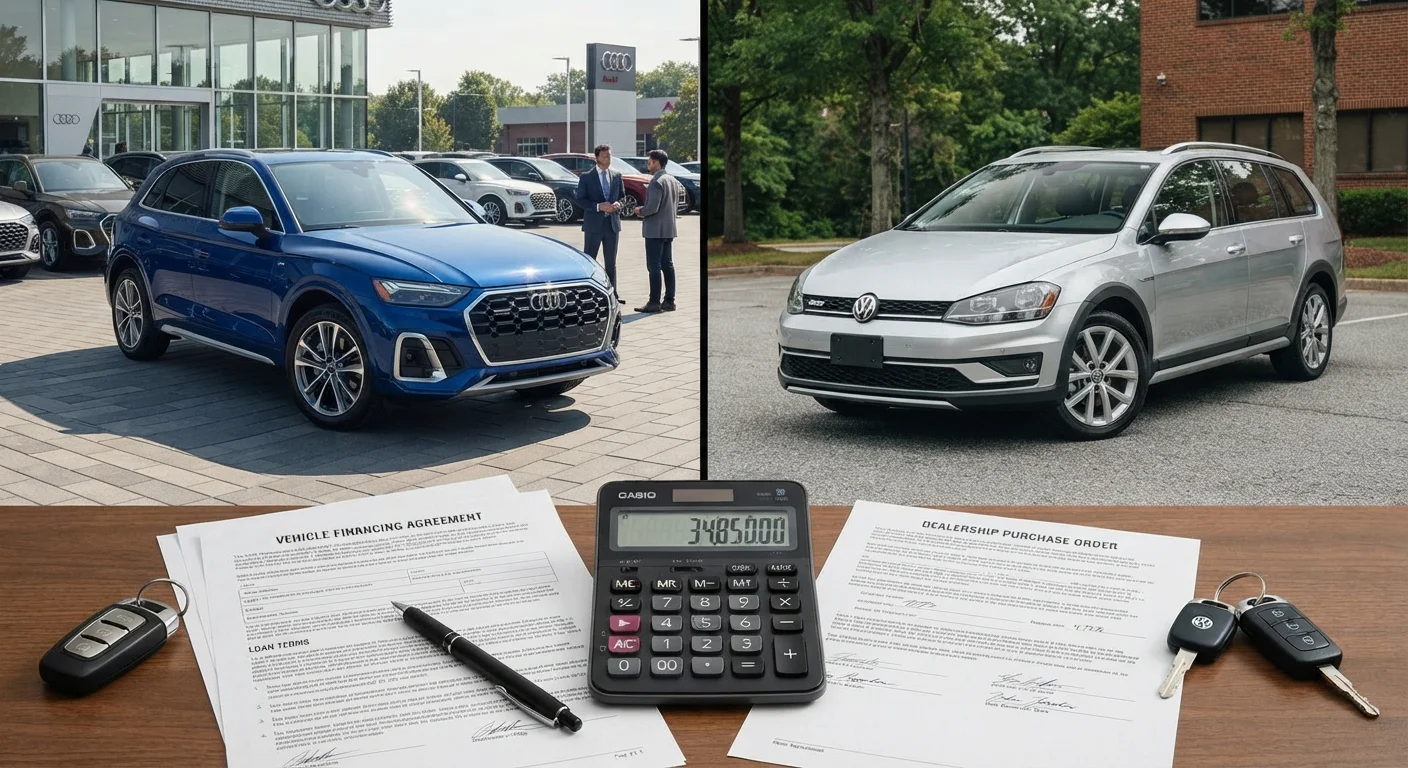
Why Financing Terms Differ Between New and Used Vehicles
Auto loans are secured loans — the vehicle itself serves as collateral. Because of this, lenders care deeply about the asset's value, reliability, and how quickly it might depreciate. New cars present a known, predictable collateral profile: standard pricing, manufacturer warranties, and a straightforward valuation process. Used vehicles introduce more variability — differing mileage, condition, age, and market demand — which lenders account for in their terms.
This fundamental difference in collateral risk explains most of the structural gaps between new and used car financing. For a broader look at how purchase price and depreciation interact, see our clear-eyed financial comparison of new vs. used cars.
| New Car Financing | Used Car Financing | |
|---|---|---|
| Typical interest rates | Lower — reduced collateral risk | Higher — varies by vehicle age |
| Maximum loan term | Up to 72–84 months | Often capped at 48–72 months |
| Loan-to-value ratio | Up to 100%+ in some cases | Often lower; larger down payment may be required |
| Vehicle age/mileage limits | Not applicable | Lenders may exclude older or high-mileage vehicles |
| Manufacturer incentive rates | Available through captive lenders | Not available |
| Credit score flexibility | Generally more flexible | May require stronger credit for older vehicles |
Interest Rates: What to Expect on Each Loan Type
Interest rates on new car loans are typically lower than those on used car loans, often by one to several percentage points, depending on the lender and the borrower's credit profile. Lenders view new vehicles as lower risk because their value is easier to establish and they carry manufacturer warranties that protect the collateral.
Used car rates vary more widely. A late-model certified pre-owned vehicle may attract rates close to new-car levels, while an older vehicle — especially one over five to seven years old — will generally carry a meaningfully higher rate. Some lenders also set cutoffs: they may decline to finance vehicles beyond a certain age or mileage threshold entirely.
1–3%+
Typical rate gap: new vs. used loans
Federal Reserve consumer credit data consistently shows used car loan rates running higher than new car rates, with the spread widening for older vehicles.
48–72 mo
Common used car loan term ceiling
Many lenders restrict maximum repayment periods on used vehicles, particularly those over five years old, to limit long-term collateral risk.
Manufacturer-sponsored financing programs (often called APR incentive offers) are another factor exclusive to new vehicles. These promotional rates, available through a brand's captive finance arm, can be significantly below market — but they typically require strong credit and may come with constraints on loan term length.
Loan Terms, LTV Limits, and Down Payment Differences
New car loans commonly offer repayment terms of up to 72 or even 84 months. Used car loans typically max out at 60 to 72 months — and shorter terms become more common as a vehicle's age increases. A lender may limit a ten-year-old vehicle to a 48-month term regardless of the buyer's credit standing.
Loan-to-value (LTV) ratios also differ. With a new car, lenders may finance up to 100% or slightly above the vehicle's value. For used cars, lenders often cap financing at a lower percentage of the vehicle's assessed value — meaning a larger out-of-pocket down payment may be required to close the gap. This is partly because used car values are harder to pin down precisely and depreciation risk varies by vehicle history.
Get Pre-Approved Before You Shop
Securing a pre-approval from a bank or credit union before visiting a dealership gives you a concrete rate benchmark to compare against any financing offered at the finance desk. This applies to both new and used vehicle purchases. Knowing your approved rate in advance puts you in a stronger negotiating position and helps you evaluate the true cost of any loan package presented to you.
Understanding how secured auto loans work can clarify why lenders set these LTV boundaries and what happens if a vehicle's value drops below the outstanding loan balance.
Credit Requirements and Lender Appetite
Lenders generally extend more favorable terms — and are more willing to approve applicants with mid-range credit scores — on new car loans. The reasoning is consistent: the collateral is standardized and easier to value or resell if necessary. Used car loans, particularly for older or higher-mileage vehicles, may require a stronger credit profile or a larger down payment to compensate for perceived risk.
It's worth noting that dealer financing and direct lending (banks, credit unions, online lenders) may apply these criteria differently. Understanding how dealer financing and bank loans each work can help you compare your options before committing to a financing source.
If you're weighing whether to negotiate before or after selecting a vehicle type, our guide on negotiating new vs. used car purchases explains how the dynamics shift depending on the lot you're on.
This article provides general financial information for educational purposes only and is not personalized financial or lending advice. Loan terms, rates, and eligibility vary by lender, vehicle, and individual financial profile. Consult a qualified financial professional before making borrowing decisions.