
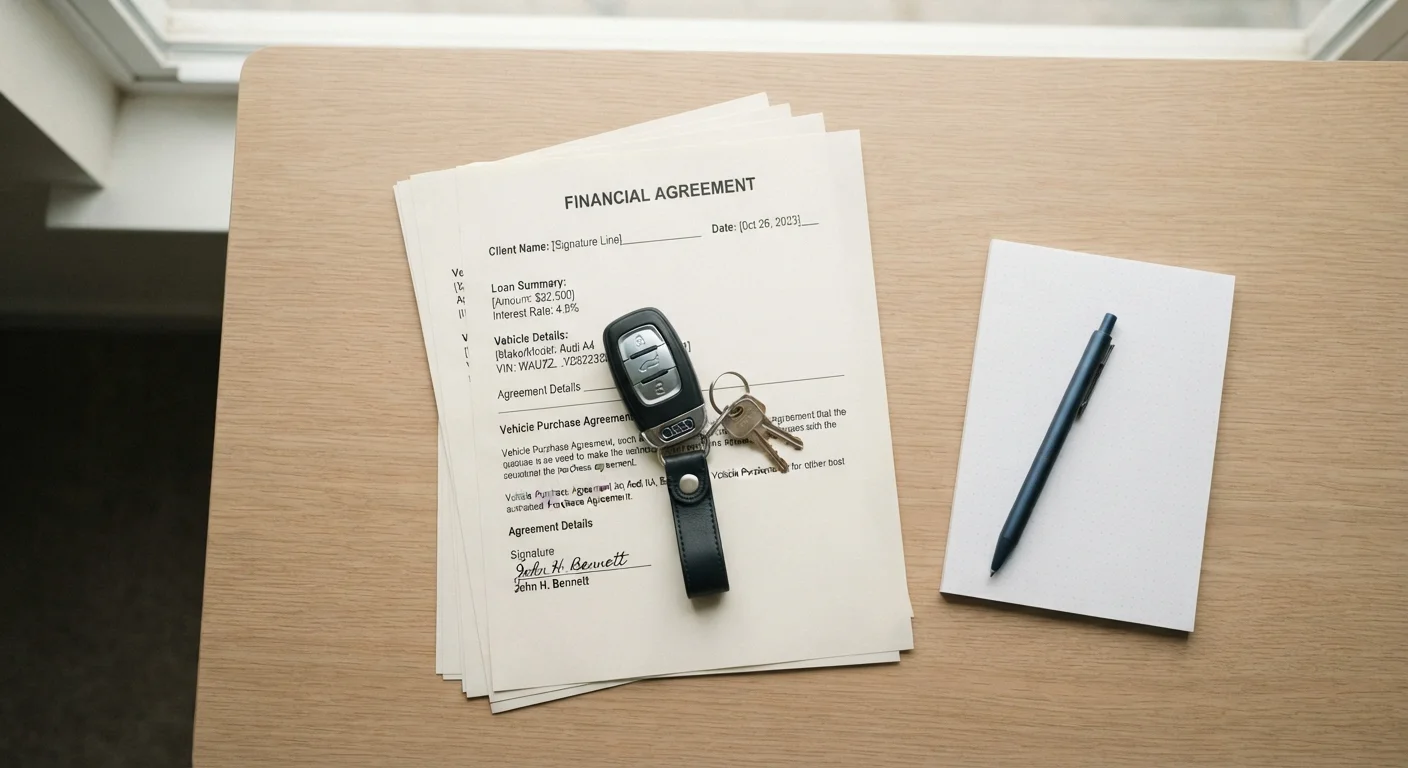
More Than a Deposit: What a Down Payment Really Is
Many buyers treat a down payment as a formality — a required hurdle before the lender hands over the money. In reality, it's one of the most consequential financial decisions in the car buying process. The amount you put down doesn't just satisfy a lender's requirement; it restructures the entire loan in your favor.
When you make a down payment, you're reducing the principal — the loan balance on which interest accrues. A lower principal means less interest accumulates each month, which lowers your monthly payment and shrinks your total cost over the life of the loan. These two effects reinforce each other throughout the repayment period.
For a deeper look at how loan structure interacts with these numbers, see our guide on how loan terms shape what you really pay.
Think of It as Buying Down Your Risk
Every dollar you put down is a dollar that never accrues interest, and it's a dollar of equity you hold in the vehicle from day one. Even a modest down payment — say, 10% — can meaningfully reduce your total interest cost and protect you against early depreciation. Calculate the difference in total interest before deciding how much to put down.
Equity, Depreciation, and the Risk of Starting Behind
New vehicles typically lose a significant portion of their value in the first year of ownership — sometimes more than 15–20%. If you finance a vehicle with little or no money down, your loan balance can easily exceed the car's market value shortly after purchase. This condition is commonly called being underwater or having negative equity.
Negative equity creates real financial exposure. If the vehicle is totaled or needs to be sold before the loan matures, you'd owe more than you'd receive — meaning you'd pay out of pocket to close the gap. A meaningful down payment builds immediate equity, keeping your loan balance closer to or below what the car is worth at any given point.
15–20%
Typical first-year new car depreciation
Industry estimates consistently show new vehicles lose a substantial share of their value within the first 12 months, underscoring the equity risk of low-down-payment financing.
~20%
Commonly suggested minimum down payment
Financial educators frequently cite 20% as a guideline for new car purchases to help buyers stay ahead of depreciation and avoid negative equity.
Understanding how down payment size and depreciation interact is covered in detail in our article on what your down payment actually does to a car loan.
How Lenders View Your Down Payment
From a lender's perspective, a down payment is a signal of financial commitment and reduced risk. A borrower who puts money down has immediate stake in the vehicle, making them statistically less likely to default. This reduced risk can translate into better loan terms — though your credit history and income profile still carry the most weight in any lender's decision.
It's worth noting that the connection between down payment size and interest rate isn't automatic or guaranteed. Lenders weigh multiple factors simultaneously. Our article on down payments and their effect on rate and total cost explores this nuance in full.
Credit Score Still Dominates Rate Decisions
While a larger down payment can help your loan application, lenders primarily use your credit score, debt-to-income ratio, and income history to set your interest rate. A strong down payment with a weak credit profile may not produce the rate improvement you're hoping for. It's worth reviewing your credit report before applying so you understand where you stand.
Buyers exploring how different down payment amounts affect loan structure can also find a practical breakdown in our guide to how much you put down and why it changes everything.
Finding the Right Amount for Your Situation
There's no universal correct down payment percentage. The right amount is shaped by your loan term, interest rate, how long you plan to keep the vehicle, and what you can afford without compromising your financial stability. Putting a large sum down makes sense if it meaningfully reduces your total borrowing cost — but not if it depletes your emergency fund or creates cash flow problems.
Trade-in equity is another factor worth understanding. If you're trading in a vehicle with a positive balance, that value can offset your new purchase price in much the same way a cash payment would. The core principle remains the same: reduce the amount you're financing, and you reduce the cost of ownership.
For strategic guidance on timing and approach, explore our hub on financing strategies and the foundational concepts in loan basics.
This article provides general financial information for educational purposes and is not personalized financial or lending advice. Loan terms, rates, and eligibility vary by lender and individual circumstances. Consult a qualified financial professional before making borrowing decisions.