
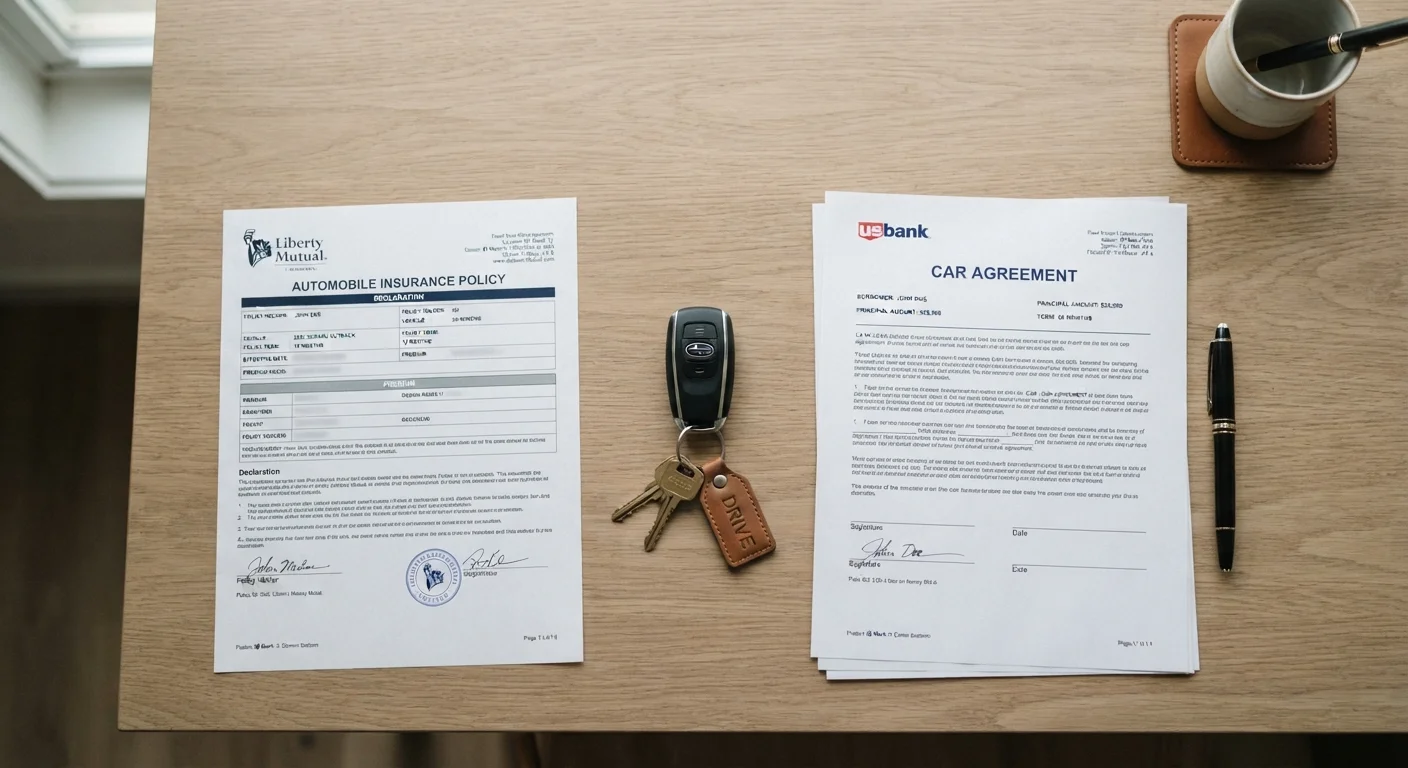
The Core Problem: Depreciation Outruns Your Loan
A new vehicle can lose a significant portion of its value within the first year of ownership. Auto loans, by contrast, pay down slowly — especially in the early months when most of your payment covers interest rather than principal. This mismatch creates a window where you owe more on the loan than the car is actually worth on the open market.
If your vehicle is totaled or stolen during that window, your standard auto insurance policy pays out the car's actual cash value (ACV) — what a comparable vehicle would sell for today. That figure can be considerably lower than your remaining loan balance, leaving you responsible for the shortfall out of pocket. Gap insurance exists to address exactly that situation.
Understanding how this risk arises connects directly to the structure of secured auto loans. See our guide to secured vs. unsecured auto financing for a closer look at how lenders attach their interest to the vehicle itself.
Gap Insurance Is Separate From Standard Coverage
Gap insurance does not replace comprehensive or collision coverage — it supplements them. Your primary auto policy must first determine and pay the actual cash value of the vehicle before gap coverage addresses any remaining loan balance. Without comprehensive or collision on your policy, gap coverage typically cannot be triggered.
When Gap Coverage Is Most and Least Relevant
Gap insurance is not equally valuable across all loan scenarios. Its relevance depends on how large the gap between your loan balance and vehicle value is likely to be — and how long that gap is likely to persist.
- Higher relevance: Low or no down payment, loan terms of 60 months or longer, vehicles that depreciate quickly, or situations where negative equity from a previous vehicle was rolled into a new loan.
- Lower relevance: A substantial down payment (often cited as 20% or more), a short loan term, or a vehicle that holds its value well relative to others in its class.
As your loan balance decreases and your equity grows, gap coverage becomes progressively less necessary. Many drivers choose to cancel it once they've confirmed their loan balance has dropped below the car's estimated market value.
For a broader framework on how vehicle value should influence your coverage decisions over time, see our article on how vehicle age and value affect what you should carry for insurance.
Check Your Loan Balance vs. Vehicle Value Periodically
Once a year, compare your loan's remaining balance to the vehicle's estimated market value using a reputable valuation resource. When your equity turns positive — meaning you owe less than the car is worth — you may no longer need gap coverage. Canceling it at that point can reduce your ongoing insurance costs.
How to Evaluate Gap Insurance as Part of Your Loan Decision
Gap coverage is available through several channels — your auto insurer, the dealership's finance office, or directly through a lender. Costs and terms differ meaningfully across these sources, so it pays to ask questions before agreeing to anything.
Key factors to evaluate include: what the policy explicitly covers (and excludes), whether your loan amount qualifies within the policy's limits, and whether the cost is added as a lump sum to your loan (which means you'd pay interest on it) or billed separately.
~20%
Average new car value lost in year one
Industry estimates commonly cite roughly 15–20% depreciation in the first year, though this varies by make, model, and market conditions.
72+ months
Common loan term that extends gap risk
Longer loan terms have become more prevalent in the US market, keeping balances elevated longer and extending the window in which gap coverage is relevant.
This is general educational information about how gap insurance works — not personalized advice. Coverage terms, exclusions, and eligibility vary by insurer and state. For guidance tailored to your situation, consult a licensed insurance professional or agent.
If you're financing a new vehicle in particular, the depreciation curve makes gap coverage especially worth understanding. Our article on gap insurance and new cars covers those specifics in detail. You can also explore the full range of ownership cost factors at our Insurance and Fees hub.
This article is for general informational purposes only and does not constitute personalized financial, insurance, or legal advice. Consult a licensed insurance agent or financial professional for guidance specific to your circumstances.