
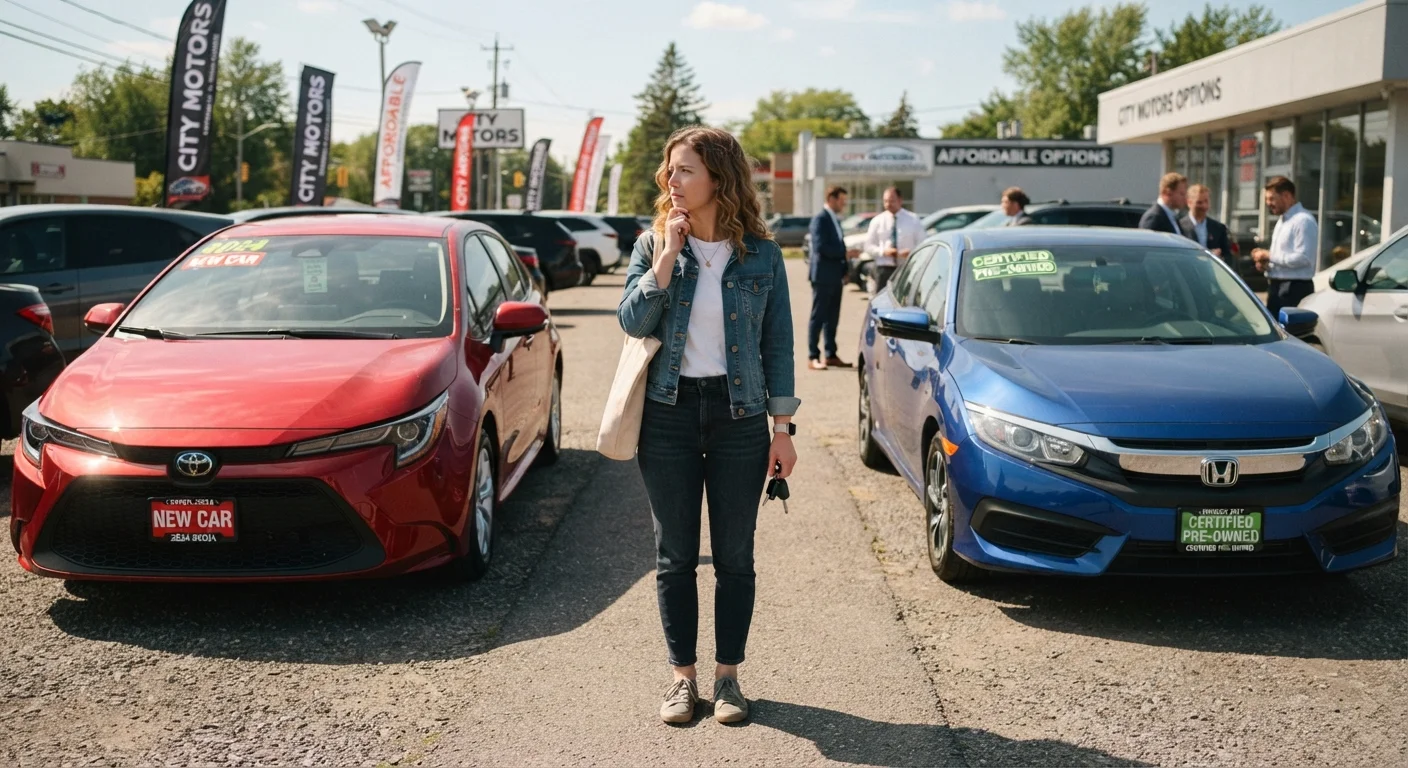
Why This Decision Matters More for First-Time Buyers
Choosing between a new and used vehicle is a significant financial decision for any buyer — but first-timers face a steeper set of trade-offs. You may be working with a smaller down payment, a shorter credit history, and less familiarity with negotiation. At the same time, this purchase will likely shape your finances for three to seven years.
The good news: the new vs. used question has a clear framework. Once you understand what each path actually costs — in total, not just at the dealer — you can make a decision grounded in your real situation rather than habit or marketing.
For a broader look at the core differences between these two paths, see New vs Used Cars: Understanding the Core Trade-Offs, which covers warranty, reliability, and value side by side.
Depreciation
The drop in a vehicle's market value over time. New cars lose value fastest in their first few years, while used cars have already absorbed a large portion of that loss.
Bumper-to-Bumper Warranty
A factory warranty that covers most vehicle components for a set period or mileage. It gives buyers protection against manufacturing defects during the coverage window.
Certified Pre-Owned (CPO)
A used car that has passed an automaker's inspection process and comes with an extended limited warranty. Coverage terms vary by manufacturer.
Powertrain Warranty
A warranty covering the engine, transmission, and drivetrain components — typically lasting longer than bumper-to-bumper coverage.
Loan Principal
The original amount of money borrowed to finance a vehicle purchase, before interest is added.
The Financial Picture: Upfront Costs vs. Long-Term Expenses
New cars carry a higher purchase price, and that gap flows through your entire loan: a larger principal means higher monthly payments and more interest paid over time. Depreciation — the loss in a vehicle's market value — is steepest in the first two to three years, which means a new-car buyer absorbs the sharpest value drop.
Used cars sidestep some of that depreciation curve, but they introduce other costs. Older vehicles may need repairs sooner, and financing rates on used cars are often higher than on new ones, partially offsetting the lower sticker price.
Factor In the Total Monthly Cost
When comparing new vs. used, add up loan payment, insurance premium, estimated fuel, and a maintenance reserve — not just the sticker price. A used car with a higher insurance rate or frequent repairs can end up costing more per month than a new one with a warranty. Building a realistic monthly total for each scenario gives you a clearer basis for comparison.
Insurance adds another layer. New vehicles typically require higher comprehensive and collision coverage because lenders insist on protecting their collateral. For younger first-time buyers already paying elevated premiums due to limited driving history, this can be a meaningful monthly expense.
For a detailed cost comparison that breaks down depreciation, financing, and insurance side by side, New vs Used Cars: A Clear-Eyed Financial Comparison is worth reading before you set a budget.
This article provides general financial information for educational purposes only and is not personalized financial advice. Consult a qualified financial professional before making decisions based on your individual circumstances.
Reliability, Warranties, and Peace of Mind
New cars come with a factory warranty — typically a bumper-to-bumper period of three years or 36,000 miles and a powertrain warranty that often extends further. For a first-time buyer still building an emergency fund, that coverage can prevent a single repair from becoming a financial setback.
Used cars don't come with that built-in cushion unless they're certified pre-owned (CPO) vehicles — used cars that have passed an automaker-defined inspection and carry an extended limited warranty. CPO programs vary significantly between manufacturers, so reading the actual terms matters before relying on the label.
Don't Assume CPO Means Full Coverage
Certified pre-owned programs differ widely between automakers in what they cover, how long coverage lasts, and what the deductible is. Always read the actual CPO terms rather than assuming it mirrors a new-car warranty. Ask the dealer for a written summary of exactly what is and isn't included before making a decision based on CPO status.
Beyond warranties, reliability depends heavily on the specific vehicle's history, mileage, and maintenance record — not just whether it's new or used. A well-maintained three-year-old vehicle can be more dependable than a poorly serviced new one after its warranty lapses.
Explore the full landscape of buying used cars or learn about buying new cars to understand what each ownership path actually looks like in practice.
How to Match Your Choice to Your Situation
Start with the numbers you know: your monthly take-home pay, existing debts, credit score, and available down payment. These constrain your options more than any preference about new vs. used. A buyer with limited savings and a short credit history may find that a reliable used vehicle is the only path that keeps total monthly costs manageable.
Consider your driving needs honestly. A buyer with a long daily commute may prioritize fuel efficiency and low maintenance cost. Someone who drives infrequently may find that a lower-cost used car fits perfectly without carrying the higher insurance and loan burden of a new purchase.
Once you've mapped your constraints, use structured questions to guide the final call. Key Questions to Settle Before Choosing New or Used walks through budget, risk tolerance, and financing factors that point toward one path or the other.
If you lean new, First-Time New Car Buyer: Building a Solid Foundation Before You Shop covers the terminology and process you'll need. If used feels right, Your First Used Car Purchase: A Ground-Up Guide to Getting It Right takes you through every stage from budget-setting to signing paperwork.
Key Questions to Settle Before Choosing New or Used
A structured set of questions covering budget, driving habits, and financing options to help you identify which vehicle type fits your situation.
New vs Used Cars: A Clear-Eyed Financial Comparison
A detailed breakdown of purchase price, depreciation, financing rates, insurance, and long-term ownership costs for both buying paths.