
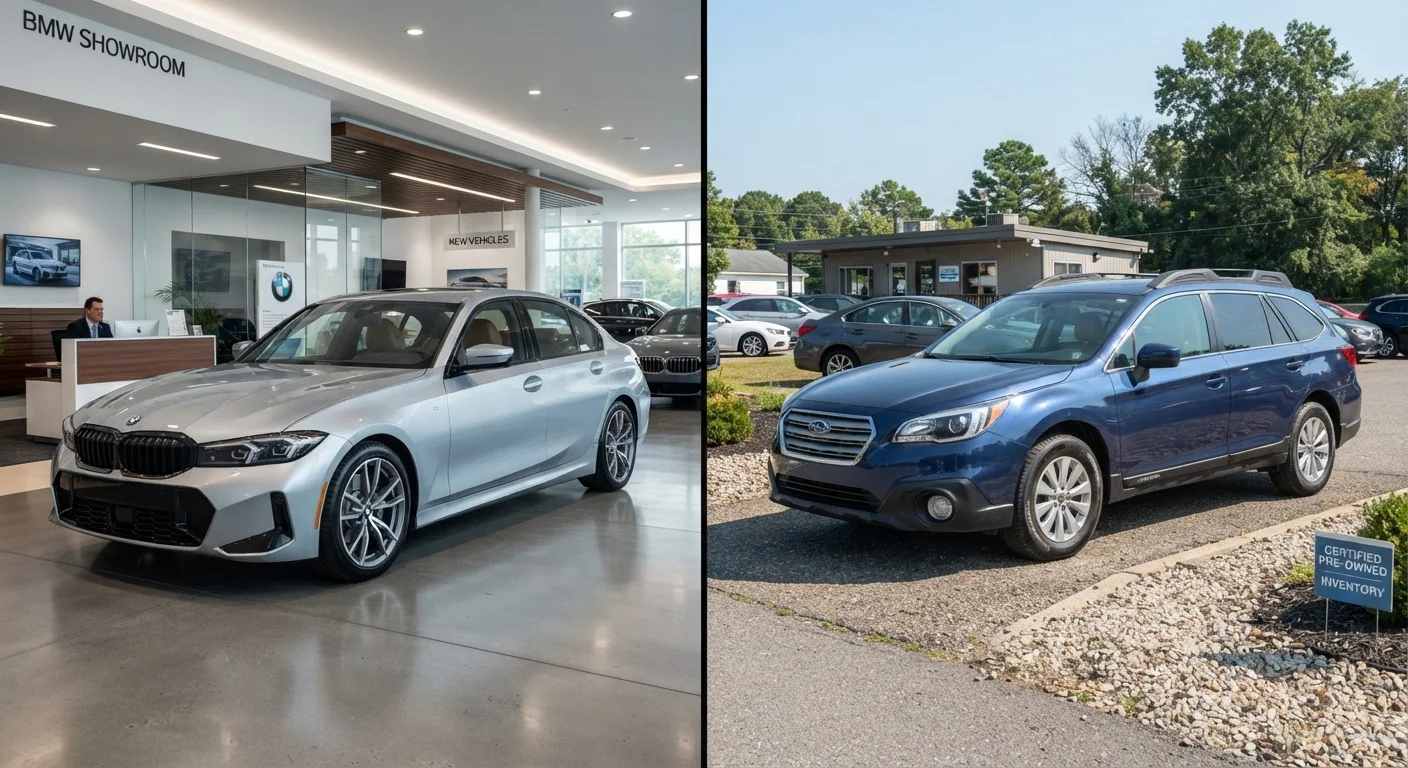
The Core Tension: Upfront Cost vs. Total Cost
The new-versus-used decision is ultimately a cost-allocation question. A used car almost always carries a lower purchase price, but that number is only one piece of the financial picture. Depreciation, loan interest, insurance premiums, and maintenance all factor into what you actually spend over the time you own the vehicle.
New cars depreciate sharply in their early years. A buyer who purchases a vehicle two or three years into its life can sidestep that steepest part of the value curve. However, higher interest rates on used auto loans can partially offset that advantage — sometimes significantly. For a structured breakdown of how these numbers interact, see our clear-eyed financial comparison of new and used vehicles.
~20%
Typical first-year depreciation on a new vehicle
Industry estimates suggest many new cars lose roughly 15–20% of their value within the first year of ownership, with the steepest drop occurring in the first few months.
1–3%
Average rate gap: new vs. used auto loans
Used car loans have historically carried higher interest rates than new car loans, with the spread varying by lender, credit profile, and broader rate environment.
3–7 yrs
Typical new car bumper-to-bumper warranty window
Most manufacturer bumper-to-bumper warranties run 3 years or 36,000 miles, while powertrain coverage commonly extends to 5 years or 60,000 miles — though terms vary by automaker.
The key is to compare vehicles on total cost of ownership over a realistic ownership period — not just the sticker price sitting on a window.
Warranty and Reliability: Where the Risk Lives
New cars come with a manufacturer's factory warranty — typically covering the powertrain and bumper-to-bumper components for defined mileage and time periods. That coverage provides a predictable repair environment: major failures in the warranty window cost the buyer little or nothing out of pocket.
Used cars present a more variable picture. A vehicle that is one year old with low mileage may still carry substantial factory warranty coverage. A five-year-old vehicle bought privately will almost certainly carry none. Some warranties are transferable to subsequent owners; many are not. Our guide on which manufacturer warranties transfer to used buyers explains the key distinctions to investigate before signing.
Check Warranty Status Before You Commit
Before finalizing any used car purchase, ask the seller for the original purchase date and verify what factory warranty — if any — remains and whether it transfers to a new owner. This information should be confirmed directly with the manufacturer or an authorized dealer, not assumed from listing descriptions. A gap in coverage can mean thousands of dollars of exposure.
Certified pre-owned (CPO) vehicles offer an intermediate option — a used car that has passed an inspection and carries an extended warranty backed by the manufacturer. For buyers who want warranty peace of mind without a new-car price, the CPO comparison is worth reading carefully.
Financing, Features, and the Practical Differences
Financing terms differ meaningfully between new and used vehicles. Lenders generally offer lower interest rates on new car loans because the collateral is more predictable — a new car's value is well-established, and its mechanical condition is not in question. Used car loans typically carry higher rates and sometimes shorter maximum terms, which affects both monthly payment size and total interest paid over the life of the loan. Our article on how financing differs for new and used cars walks through the mechanics in detail.
Feature availability also differs. New cars give buyers access to the latest safety systems, technology platforms, and powertrain options. Used cars may lack features — advanced driver assistance systems, updated infotainment hardware — that have since become standard. For buyers to whom current technology matters, this gap is real.
Finally, the buying process itself differs. Pricing transparency, negotiation dynamics, and available vehicle history vary substantially between new and used transactions. Understanding how negotiation differs between new and used helps buyers enter either market better prepared.
This article provides general educational information about vehicle purchasing considerations. It is not personalized financial or legal advice. Consult a qualified financial professional for guidance specific to your situation.