
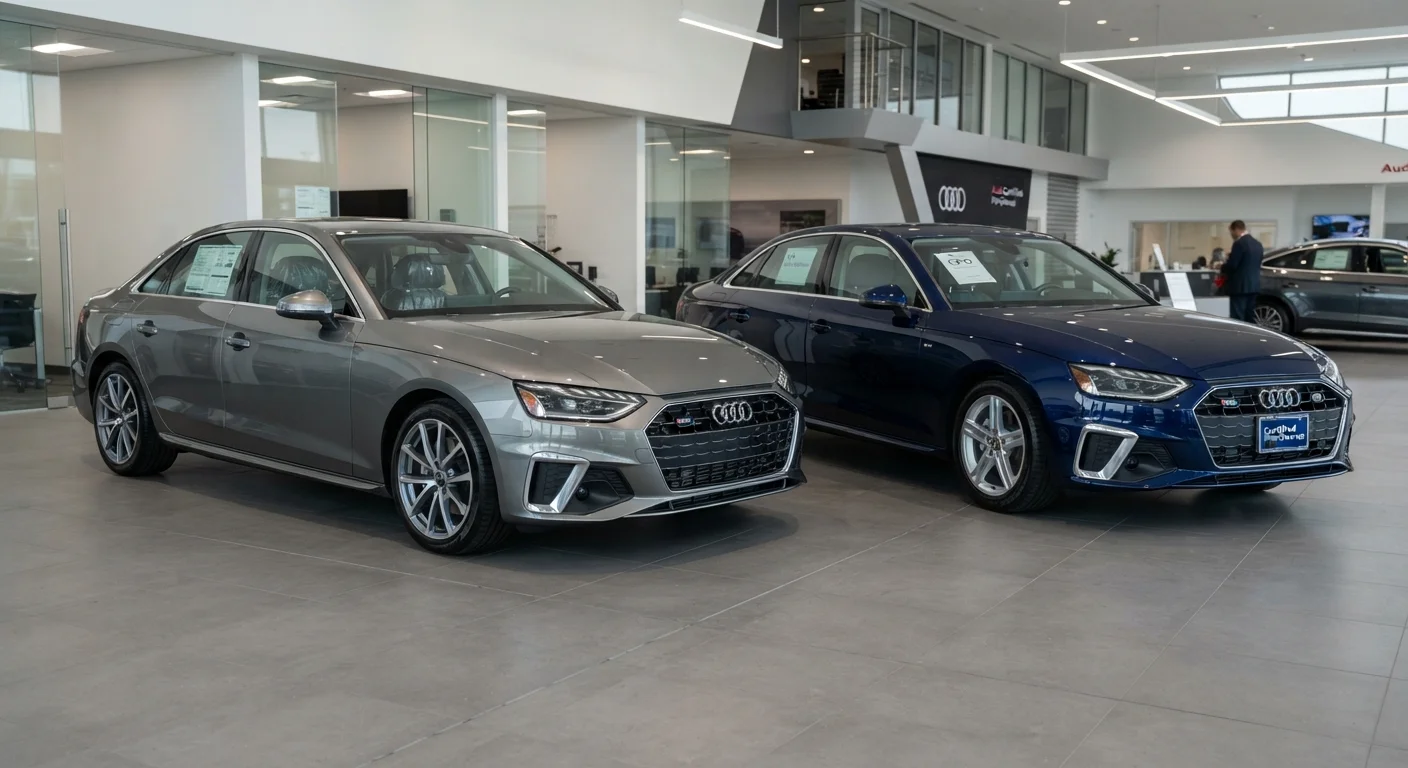
The Price Gap Is Real — But So Is the Depreciation Curve
The sticker difference between a new vehicle and a comparable CPO model of the same make can range from roughly 15% to 30%, depending on the model and its age. That gap exists for a specific reason: new cars depreciate fastest in their earliest years of ownership. Industry data consistently shows that a new vehicle can lose a substantial portion of its value within the first two to three years — meaning a CPO buyer effectively lets someone else absorb that cost.
However, the math isn't one-sided. New car buyers often access manufacturer-subsidized financing rates — sometimes below market — that can lower the effective cost of borrowing compared to CPO or standard used financing. Before assuming the CPO option is cheaper overall, calculate the total cost of ownership, not just the purchase price. That means factoring in interest paid, insurance premiums (which differ based on vehicle value), registration fees, and expected maintenance over your planned ownership period.
For a broader look at how these factors interact, see New vs Used Tradeoffs and our overview of core new vs. used trade-offs.
| Criterion | New Car | Certified Pre-Owned (CPO) |
|---|---|---|
| Purchase Price | Higher sticker price | 15–30% less than new equivalent |
| Depreciation Risk | Buyer absorbs steepest initial drop | Previous owner absorbed first-year loss |
| Warranty Coverage | Full factory warranty from day one | Extended manufacturer warranty (terms vary) |
| Financing Rates | Often manufacturer-subsidized (lower) | Typically higher than new car rates |
| Technology / Features | Current model-year tech standard | May lack latest ADAS or software features |
| Vehicle History | No prior ownership history | Inspected; history report typically included |
| Customization | Full trim, color, and option selection | Limited to available inventory |
Warranties and Protection: What Each Actually Covers
A new car comes with a factory warranty — typically a bumper-to-bumper term of three years or 36,000 miles, and a powertrain warranty extending five years or 60,000 miles, though these vary by manufacturer. Every component is covered from day one, with no uncertainty about prior usage.
CPO programs are manufacturer-run (or dealer-run in some cases) and vary considerably in scope. A manufacturer-backed CPO program generally extends the original factory warranty for a defined period after the remaining original coverage expires — but the specifics matter. Some programs offer comprehensive coverage; others are primarily powertrain-focused. It's worth reading the actual CPO agreement, not just the marketing summary, to understand deductibles, what's excluded, and how transferable the coverage is if you sell.
For a detailed breakdown of how factory, CPO, and extended warranties compare in practice, see Warranty Coverage When Buying New vs Used.
~20%
Typical first-year new car depreciation
Industry estimates commonly place new vehicle depreciation at roughly 15–20% in the first year alone, with further losses in years two and three.
100+ points
Typical CPO inspection checklist items
Most manufacturer-backed CPO programs require vehicles to pass inspections covering 100 or more mechanical and cosmetic checkpoints before certification.
3–7 years
Common CPO vehicle age range
Most manufacturer CPO programs restrict eligibility to vehicles within a defined age and mileage window, typically under five to seven years old.
Technology, Features, and the Generational Gap
Vehicle technology moves quickly. Safety systems — automatic emergency braking, lane-keeping assist, blind-spot monitoring — have evolved from optional add-ons to standard equipment on many new models. A CPO vehicle that's two or three model years old may predate certain safety standards or software-driven features that are now common on new vehicles of the same line.
That gap matters most for buyers who prioritize advanced driver-assistance systems (ADAS), over-the-air software updates, or current infotainment platforms. It matters less for buyers whose priority is reliable, basic transportation. Honest self-assessment here can save real money: not every buyer needs the newest technology stack.
What you actually get when you buy a brand-new car covers this in more detail, including which features tend to change most between model generations.
CPO Program Quality Varies Significantly
Not all CPO programs offer the same level of protection. Manufacturer-backed programs — administered by the automaker — generally provide stronger and more standardized warranty terms than dealer-certified alternatives. When evaluating a CPO vehicle, ask specifically whether the warranty is backed by the manufacturer or a third-party administrator, and request the full terms in writing before committing.
CPO vs. Standard Used: Knowing What the Label Means
Certified Pre-Owned is not a generic term — it's a specific program with defined standards, and those standards vary. A manufacturer-certified CPO vehicle has passed a multi-point inspection and comes with an extended warranty backed by the manufacturer. A dealer-certified vehicle may have looser inspection criteria and warranty coverage from a third party, not the automaker.
Before assuming a CPO badge equals new-car peace of mind, verify: Who backs the warranty? What's the inspection checklist? Is the vehicle's history report included? CPO vehicles also carry a price premium over standard used cars — so understanding what that premium actually buys is essential. See Certified Pre-Owned vs Standard Used: What the Label Actually Means and our companion piece on CPO pricing vs. standard used car pricing to calibrate whether the premium is justified for a specific vehicle.
This article provides general information for educational purposes and is not personalized financial or purchasing advice. Vehicle pricing, warranty terms, and financing rates vary by manufacturer, model year, region, and individual circumstances. Consult a licensed financial professional for guidance specific to your situation.