
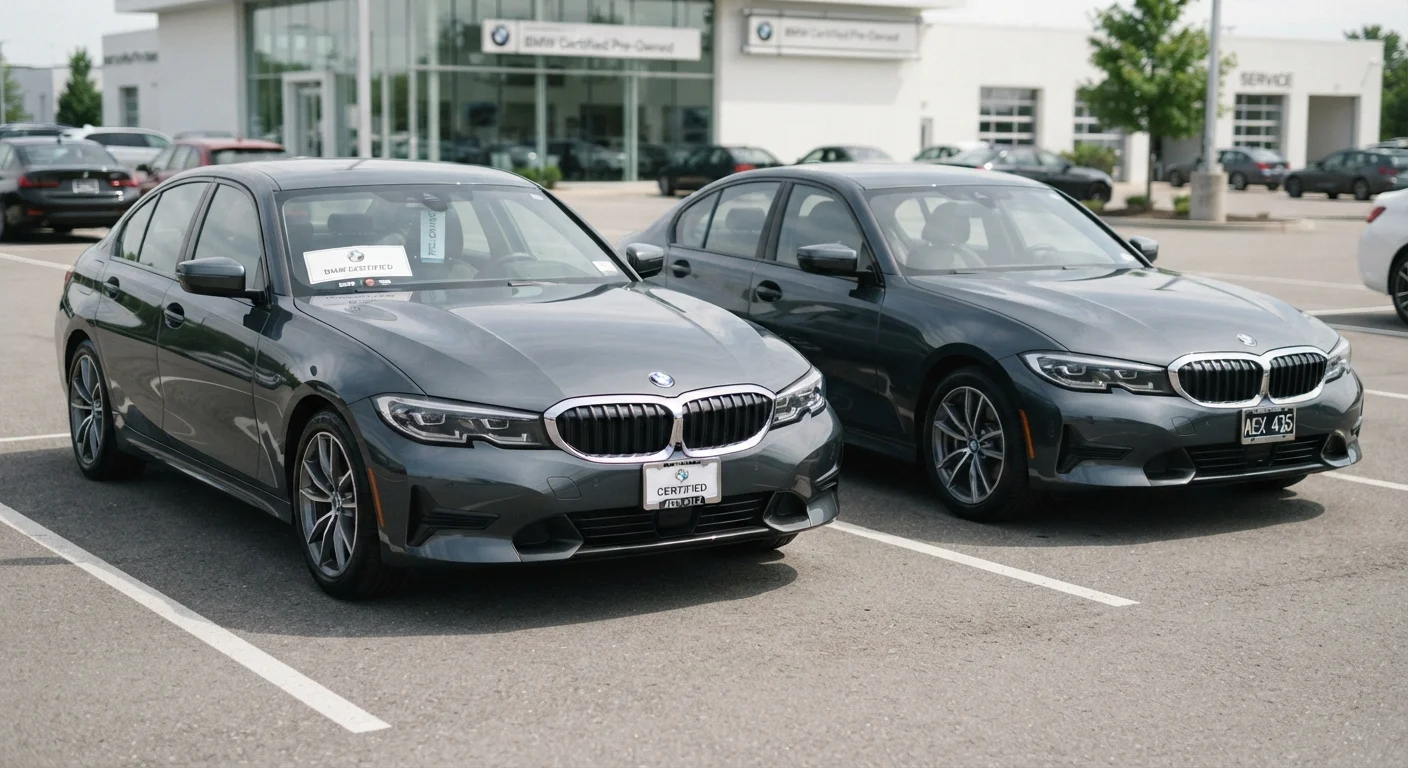
What CPO Certification Actually Requires
The term certified pre-owned is not a universal standard. When a manufacturer — say, a major automaker's official program — certifies a vehicle, that typically means the car has passed a multi-point inspection (commonly 100–200 inspection points), meets mileage and age thresholds, carries a clean title, and comes with an extended limited warranty backed by the manufacturer. Those warranties often include powertrain coverage for several years beyond the original factory warranty, and may add roadside assistance and a short-term bumper-to-bumper component.
The critical word is manufacturer-backed. Some dealerships sell cars labeled as "dealer certified" using in-house inspection criteria that can vary widely and carry no manufacturer warranty. If you're evaluating a CPO vehicle, confirm whether the certification is through the manufacturer's official program or the dealership's own process — the protections are very different. For a fuller picture of how CPO warranty coverage stacks up, see our warranty coverage breakdown.
| Criterion | Certified Pre-Owned | Standard Used Car |
|---|---|---|
| Inspection requirement | Manufacturer multi-point inspection | None required |
| Warranty coverage | Extended manufacturer warranty included | None (unless original warranty remains) |
| Vehicle age/mileage limits | Program caps apply (varies by brand) | No restrictions |
| Price vs. market | Premium over equivalent used | Market or negotiated rate |
| Financing rates | Often lower via manufacturer lenders | Standard used-car loan rates |
| Title/history check | Required for certification | Buyer's responsibility to obtain |
| Inventory selection | Limited to eligible vehicles | Broad — any make, age, mileage |
What You Get With a Standard Used Car
A standard used car comes with no mandated inspection history, no manufacturer warranty (unless original factory coverage is still active), and no certification of condition. It sells on the open market — from a private seller, an independent dealer, or a franchise lot — at whatever price the market will bear. That unstructured nature is both the risk and the opportunity.
The risk: you're relying on seller disclosure, visible condition, and your own due diligence. The opportunity: pricing is negotiable and the market is far larger, giving you more choices across mileage, trim, and model year. A pre-purchase inspection (PPI) by a qualified, independent mechanic — typically costing $100–$200 — is the most practical tool for closing the information gap. It won't replicate a full CPO inspection, but it surfaces mechanical red flags before you commit. For more on how the used car market compares to certified alternatives, this companion piece covers the protections side in detail.
$1,000–$3,500
Typical CPO premium over equivalent standard used
Industry pricing analyses consistently show CPO vehicles carrying this range of premium, though the gap varies by segment, brand, and current market conditions.
100–200
Inspection points in most manufacturer CPO programs
Major automaker CPO programs typically specify between 100 and 200 individual inspection criteria a vehicle must pass before receiving certification.
$100–$200
Typical cost of an independent pre-purchase inspection
A qualified independent mechanic's pre-purchase inspection is one of the most cost-effective risk-reduction tools available to used car buyers.
The Price Premium and Whether It's Worth It
CPO vehicles routinely command a premium over equivalent standard used cars. That gap reflects the cost of the inspection process, any reconditioning the vehicle undergoes, and the embedded warranty value. Whether that premium is worthwhile depends on a few variables: the size of the gap in your specific market, the age and mileage of the vehicle, and your own risk tolerance.
On older, simpler powertrains, the warranty component may cover less than on a newer turbocharged or hybrid system where repairs are more expensive. Conversely, if a CPO vehicle's warranty still has substantial time remaining, the effective value of that coverage can genuinely offset a portion of the premium — particularly for buyers who don't maintain a dedicated emergency fund for vehicle repairs. Our CPO pricing breakdown walks through how to calculate whether the premium makes sense for a specific vehicle. Also worth noting: the used car buying hub provides a broader framework for evaluating pre-owned purchases at any price point.
This article provides general information for educational purposes only and is not personalised financial or purchasing advice. Costs, warranty terms, and program availability vary by manufacturer and region. Consult a qualified mechanic and review all documentation carefully before any vehicle purchase.