
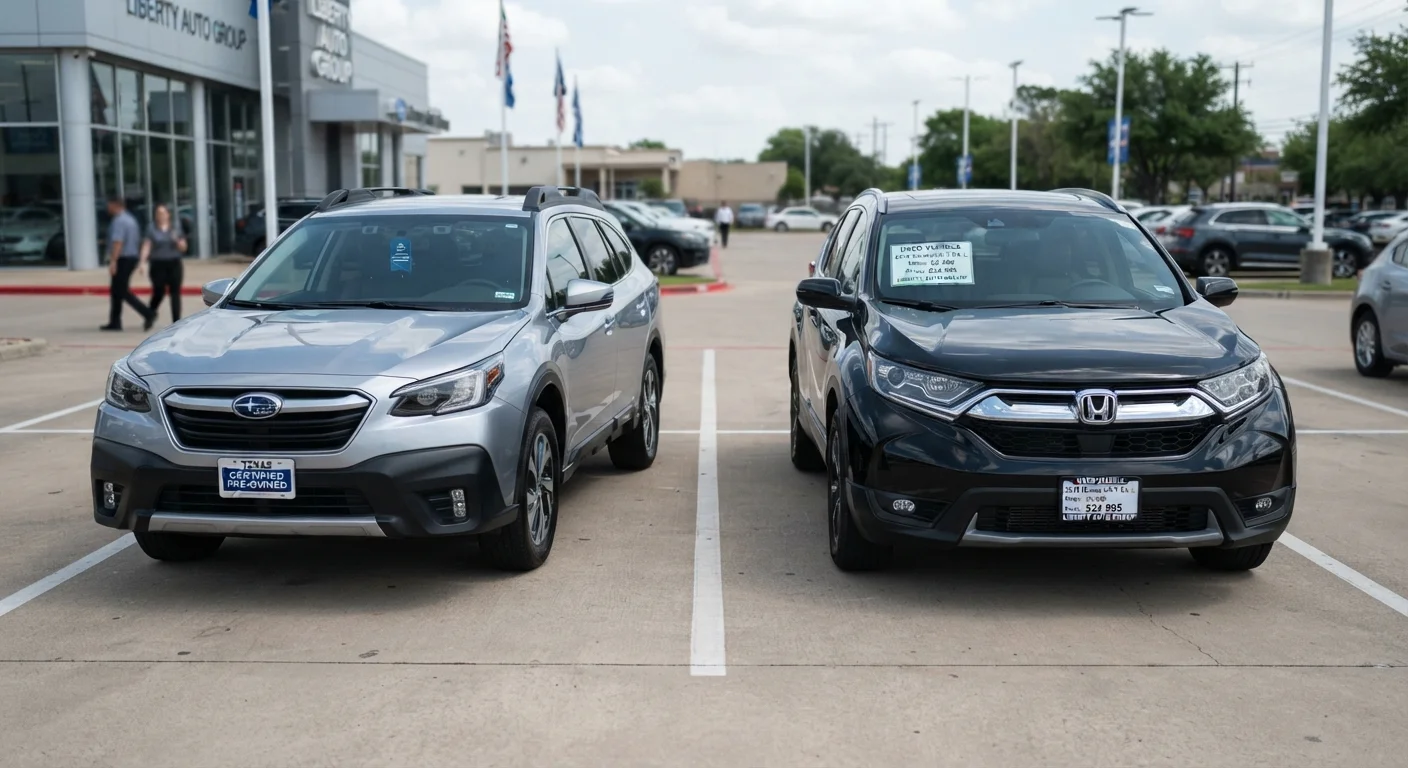
Where the CPO Price Premium Comes From
When a dealership lists a vehicle as Certified Pre-Owned (CPO), they're not just applying a badge — they're pricing in a bundle of services and guarantees the standard used car doesn't include. Understanding what's inside that bundle is the first step to judging whether it's worth paying for.
The core elements that drive CPO pricing above standard used-car levels are:
- Multi-point inspection: Manufacturer-specified checklists typically run 100–200 inspection points. Vehicles that fail must be reconditioned before earning CPO status — and reconditioning costs flow into the retail price.
- Manufacturer-backed warranty: Most CPO programs extend powertrain coverage and add a limited bumper-to-bumper term on top of any remaining factory warranty. The actuarial cost of that coverage is priced in.
- Vehicle history review: CPO programs require clean title and typically cap mileage (often under 80,000 miles) and model year age, restricting supply and supporting higher prices.
- Roadside assistance and trial benefits: Many programs fold in roadside assistance, loaner car provisions, or trial subscriptions — all of which add marginal cost.
For a full breakdown of what those warranty layers actually cover, see our warranty coverage comparison.
Ask for the Inspection Report
On any CPO vehicle, request the completed inspection checklist before negotiating price. It tells you exactly what was reconditioned — and what wasn't flagged. If a dealer can't produce it, that's a meaningful data point about how rigorously the program was applied to that specific car.
How the Numbers Compare in Practice
Industry data consistently shows CPO vehicles command a premium over non-certified equivalents of the same make, model, year, and trim. The gap typically falls between $1,000 and $3,500, though it can widen on luxury brands where manufacturer warranty extensions carry higher repair cost exposure.
That premium isn't fixed — it varies by:
- Brand segment: Luxury CPO programs often carry larger premiums because repair labor rates and parts costs are higher, making warranty coverage more valuable.
- Vehicle age and mileage: A three-year-old vehicle near the top of its CPO-eligible mileage range has less warranty runway remaining, which typically compresses the premium.
- Market demand: In tight used-car markets, both CPO and standard used prices rise, but the spread between them can narrow as standard used inventory also becomes scarce.
| Certified Pre-Owned | Standard Used | |
|---|---|---|
| Typical price premium | $1,000–$3,500 above comparable standard used | Baseline market price |
| Inspection standard | Manufacturer-specified, 100–200 points | Varies; dealer or none |
| Warranty coverage | Manufacturer-backed extension included | As-is or optional add-on |
| Financing rates | Often manufacturer-subsidized, lower APR | Standard used-car rates apply |
| Mileage/age eligibility | Typically under 80k miles, 5–6 years old | No restriction |
| Negotiation flexibility | Limited; program costs are largely fixed | More room to negotiate |
| Buyer risk level | Lower; manufacturer stands behind vehicle | Higher; buyer assumes more risk |
One factor buyers frequently overlook: CPO vehicles often qualify for manufacturer-subsidized financing rates that aren't available on standard used inventory. If the CPO financing rate is meaningfully lower, it can recover a portion of the sticker premium over the loan term — making direct sticker-price comparisons incomplete without running the full payment math.
For context on broader CPO program differences, this breakdown of what the CPO label actually means is a useful reference.
When the Premium Is — and Isn't — Worth It
The CPO premium is most defensible in specific situations, and least justifiable in others. Here's a direct framework:
Situations where CPO pricing tends to earn its cost
- The vehicle has complex electronics or advanced driver-assistance systems where out-of-pocket repair costs are high and difficult to predict.
- You're financing and the CPO loan rate is substantially lower than what you'd get on a standard used vehicle.
- The vehicle is near the upper mileage threshold of CPO eligibility, meaning it's a year or two from higher-risk ownership — and you want coverage during that window.
- You lack the time or access to arrange a thorough independent pre-purchase inspection.
Situations where standard used car pricing is the stronger choice
- The vehicle is older or higher-mileage and ineligible for CPO — the comparison becomes CPO vs. non-CPO on similar but not identical vehicles.
- You're buying in a lower price tier where the $1,500–$2,500 premium represents a large percentage of total purchase price.
- You can hire a qualified independent mechanic for a pre-purchase inspection (typically $100–$200) — this replicates some CPO assurance at a fraction of the cost.
- You plan to keep the vehicle beyond the CPO warranty term anyway, reducing the period of coverage overlap.
If you're weighing CPO against buying new, this comparison of new cars vs. CPO covers that trade-off in depth. For a full side-by-side look at program structures, see what sets CPO and standard used vehicles apart.
This article provides general educational information about vehicle pricing structures and is not personalized financial or purchasing advice. Pricing varies by region, vehicle, and market conditions. Consult a qualified professional for decisions specific to your circumstances.