
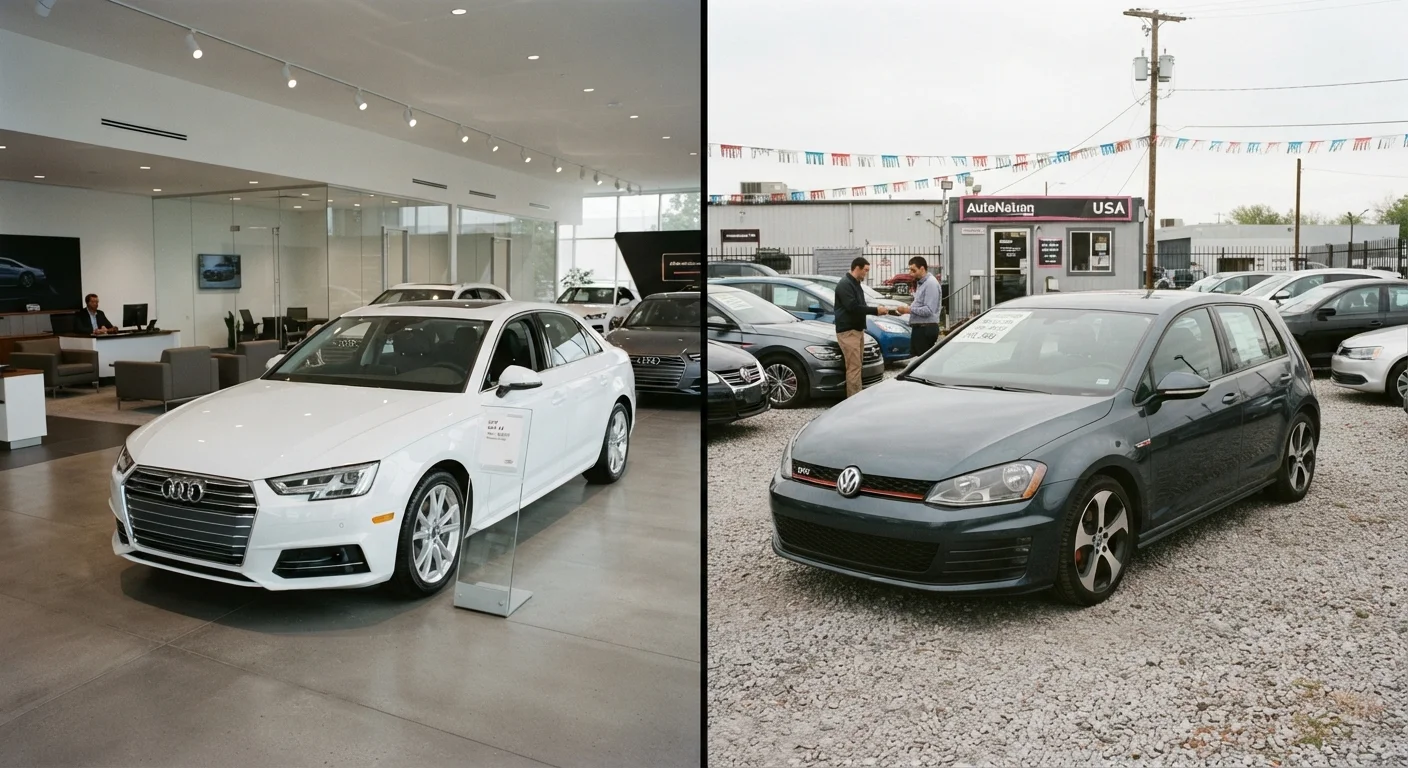
How Factory Warranties Work on New Cars
When you purchase a brand-new vehicle, it comes with a factory warranty — a promise from the manufacturer to repair certain defects at no cost to you for a defined period. Most new-car warranties include two core components:
- Bumper-to-bumper (comprehensive) coverage: Covers most components from the front to rear of the vehicle, typically for 3 years or 36,000 miles, whichever comes first.
- Powertrain coverage: Focuses on the engine, transmission, and drivetrain — usually lasting 5 years or 60,000 miles, though some manufacturers extend this to 10 years or 100,000 miles.
Additional coverage types — such as corrosion/rust-through warranties and federal emissions warranties — often layer on top of these. For a deeper breakdown of each warranty type and where the gaps tend to appear, see our factory warranty guide.
The key advantage of buying new: your warranty clock starts at zero, and you have the full term ahead of you.
Check Coverage Before You Sign
Warranty terms differ meaningfully from one manufacturer to another — and even between trim levels or vehicle categories within the same brand. Before finalizing a purchase, ask for the written warranty document (not just a salesperson's summary) and confirm what's covered, what's excluded, and how claims are filed. A few minutes of review can prevent costly surprises later.
Warranty Coverage for Certified Pre-Owned Vehicles
Certified pre-owned (CPO) programs sit between new and standard used. Manufacturers — not dealerships — set the certification criteria, which typically include a multi-point inspection and require the vehicle to fall within certain age and mileage limits.
CPO vehicles receive one of two types of warranty protection:
- Remaining factory warranty: If the original coverage hasn't expired, it transfers to the new owner.
- Extended CPO warranty: The manufacturer adds additional coverage beyond what's left on the original policy — often extending powertrain protection, and sometimes providing limited bumper-to-bumper coverage.
Because CPO warranties are backed by the manufacturer, they're generally honored at any franchised dealership for that brand — a meaningful advantage over third-party service contracts. However, CPO vehicles carry a price premium over standard used cars. Our article on what CPO certification actually means breaks down exactly what you're paying for. You can also compare the two vehicle types directly in our CPO vs. standard used overview.
| New Car | Certified Pre-Owned | Standard Used | |
|---|---|---|---|
| Bumper-to-bumper coverage | Full term (typically 3yr/36k mi) | Remaining or added by manufacturer | Likely expired or none |
| Powertrain coverage | Full term (typically 5yr/60k mi) | Remaining + CPO extension | Varies; often none |
| Backed by manufacturer | Yes | Yes | No (unless original coverage remains) |
| Pre-purchase inspection required | N/A — brand new | Yes, multi-point inspection | No requirement |
| Buyer's out-of-pocket repair risk | Lowest | Low to moderate | Highest |
| Extended contract availability | Yes | Yes (often bundled) | Yes, but costs more |
What Used Car Buyers Need to Know About Warranties
Standard used cars — those sold without CPO certification — present the most variable warranty picture. Three scenarios are common:
- Remaining factory coverage: If a vehicle is recent enough and low-mileage enough, some original warranty may still apply. Powertrain warranties with longer terms (5–10 years) are most likely to have remaining life.
- No coverage at all: Older or higher-mileage vehicles often have fully expired warranties, meaning all repair costs fall to the buyer.
- Partial transfer: Some manufacturers allow factory warranties to transfer to subsequent owners, sometimes with a small transfer fee; others restrict coverage to the original purchaser only.
Before buying a used vehicle, always request the VIN-specific warranty status from the manufacturer or a franchised dealer. Our detailed guide on which warranties transfer to used buyers explains the rules by coverage type and what gaps to watch for.
Dealer Warranties Are Not Factory Warranties
Some independent dealerships advertise their own limited warranties on used vehicles. These are not the same as manufacturer-backed coverage — they're typically shorter in duration, narrower in scope, and dependent on the dealer's own financial stability. Always clarify in writing who backs the warranty and what recourse you have if the dealer closes or disputes a claim.
Extended Service Contracts: Filling the Gaps
Extended service contracts — commonly marketed as "extended warranties" — are agreements, sold separately, that cover repairs after factory coverage expires or when none exists. They're available for new, CPO, and standard used vehicles alike, though eligibility and pricing vary.
Key points to understand before purchasing one:
- Source matters: Contracts sold by vehicle manufacturers or their finance arms (often called vehicle service contracts) differ from third-party plans. Manufacturer-backed contracts are typically honored at any franchised dealer of that brand.
- Coverage varies widely: Some contracts are exclusionary (covering everything except a listed set of parts); others are inclusionary (covering only a named list). Exclusionary contracts generally offer broader protection.
- Read the fine print: Deductibles, claim procedures, covered repair facilities, and cancellation terms differ significantly between contracts.
Extended service contracts are an added cost — factor them into your total ownership budget when comparing new vs. used. For context on the broader trade-offs between new and CPO vehicles, our new car vs. CPO comparison covers how warranty value fits into the overall decision.
This article provides general information about vehicle warranty coverage for educational purposes. Specific warranty terms, transferability rules, and service contract provisions vary by manufacturer and provider. Consult the manufacturer's official warranty documentation or a qualified automotive professional for guidance specific to the vehicle you are considering.