
Why This Checklist Exists
Used cars don't come with a clean financial slate. Every skipped oil change, worn bushing, and aging timing belt is a cost that will land in your lap once the keys change hands. This checklist helps you surface those costs before you sign anything — so you can either negotiate a fair price or walk away from a money pit with confidence.
Think of it as a structured way to answer one question: what will I need to spend in the next 12–24 months if I buy this vehicle? Combined with a structured mechanical walkthrough, this checklist gives you a complete picture of where the car actually stands.
Vehicle History Report Service
Reveals accident history, title status, odometer rollbacks, and previous ownership using the VIN.
OBD-II Scanner
Reads stored and pending engine fault codes that may not trigger a visible warning light.
Tread Depth Gauge
Gives an accurate measurement of remaining tire tread to determine how soon replacement is needed.
Flashlight or Inspection Light
Illuminates the engine bay, undercarriage, wheel wells, and interior corners for thorough visual inspection.
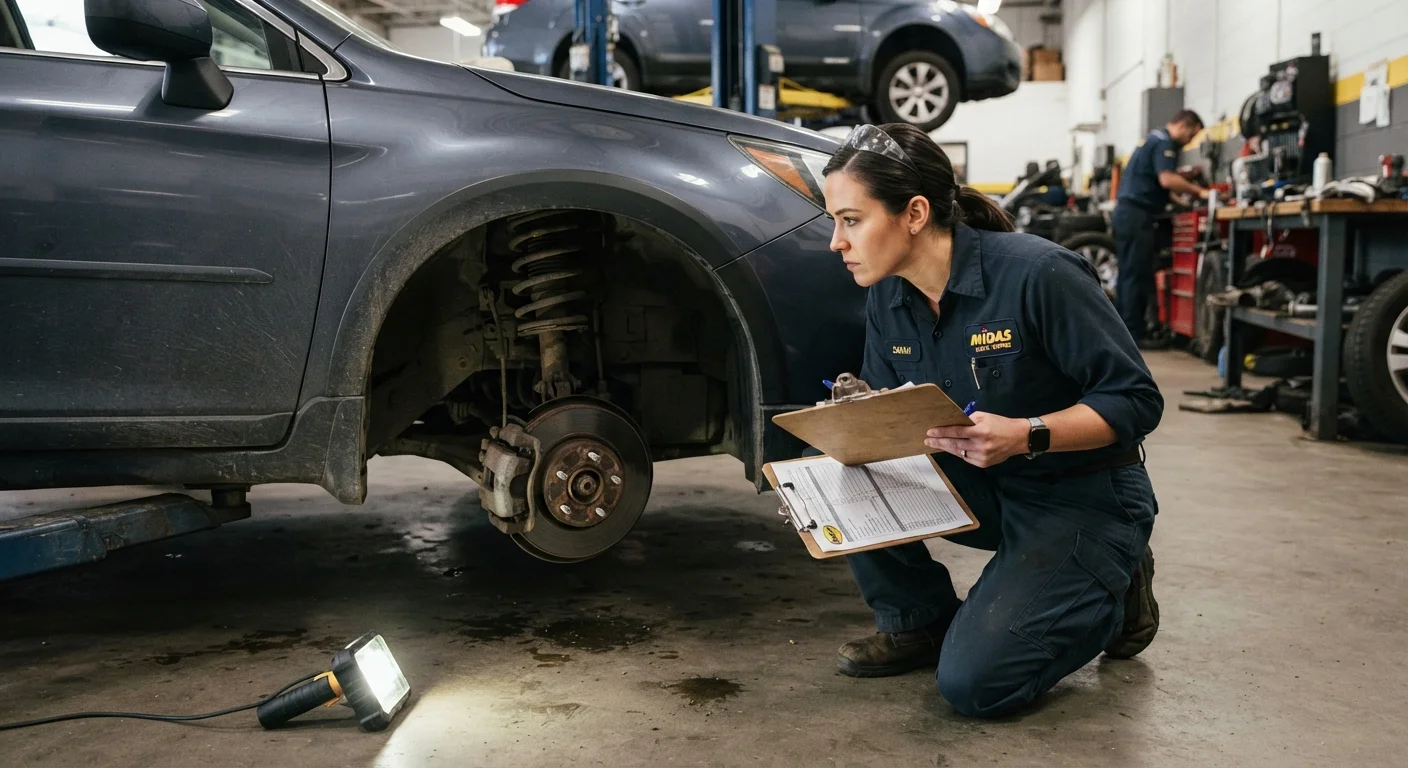
Independent Mechanic (PPI)
Performs a professional pre-purchase inspection on a lift, catching issues not visible during a casual walkthrough.
Notepad or Checklist App
Tracks flagged items, estimated repair costs, and questions to follow up on before negotiating.
How to Use This Checklist
Work through the groups in order. Start with documentation — if the paperwork doesn't add up, there's no point crawling under the car. Then move from the easiest visual checks to the items that require tools or a lift. Flag every item that raises a question, even if it seems minor; patterns matter more than individual findings.
For anything you can't personally assess — transmission behavior, suspension geometry, engine compression — book an independent pre-purchase inspection (PPI) with a qualified mechanic. This is especially important for vehicles outside their powertrain warranty. The full pre-purchase inspection guide explains exactly what a mechanic will look for and how to interpret their findings.
Never Skip the Independent Inspection
No matter how clean a car looks or how confident a seller sounds, an independent pre-purchase inspection by a qualified mechanic is the single highest-value step you can take. A typical PPI costs $100–$200 and routinely uncovers repair needs worth several times that amount. If a seller refuses to allow an independent inspection, walk away — that refusal tells you more than any test drive could.
Once you've completed this checklist, total up the estimated repair costs for every flagged item. That number becomes your negotiating baseline — or your reason to pass. For context on what recurring ownership costs follow the purchase, the Insurance & Fees hub breaks down what you'll spend beyond the sale price.
Documentation & History
Fluids & Filters
Tires & Brakes
Engine & Drivetrain
Body, Interior & Electrical
What to Do With Your Findings
A checklist isn't just a pass/fail test. Use your flagged items to build a realistic first-year ownership budget. Get repair estimates from a trusted shop before you finalize any price negotiation — vague seller assurances that something is "fine" don't hold up once you own the vehicle.
If the seller resists an independent inspection, treat that as a significant red flag in itself. Sellers with nothing to hide generally welcome third-party scrutiny. For a broader look at the mistakes that cost buyers the most, see our piece on common used car buying pitfalls. And if you're heading to a dealership next, prepare thoroughly before you arrive to avoid being rushed into a decision.
Cleared Codes Are a Known Seller Tactic
Some sellers clear stored fault codes before a showing so the check engine light doesn't appear. An OBD-II scanner will show 'readiness monitors not set' if codes were recently cleared, which is itself a red flag. Always scan for codes yourself or have your mechanic do it — don't rely on a clean dashboard as proof of a healthy engine.
This article provides general educational information about vehicle inspection. It is not a substitute for advice from a qualified mechanic or automotive professional. Repair costs and maintenance intervals vary by vehicle make, model, age, and condition. Always consult a licensed professional before making purchasing decisions.