
Why a Structured Inspection Matters
Buying a used car involves accepting some degree of uncertainty — but a well-organized inspection dramatically narrows the unknowns. Sellers aren't always forthcoming about a vehicle's history, and cosmetic touch-ups can obscure damage that will cost you later. A checklist-driven approach keeps your evaluation consistent and ensures nothing gets skipped in the excitement of the moment.
This guide walks you through three inspection layers — cosmetic condition, mechanical health, and documentation — that together give you a realistic picture of what you're buying. For broader context on the full purchase process, see our guide on navigating a used car purchase from start to finish.
Never Skip the Independent Mechanic
A seller-arranged or dealership inspection is not a substitute for your own independent mechanic. A qualified technician you hire yourself has no stake in the sale and will give you an unbiased assessment. The typical cost of a pre-purchase inspection is modest compared to the repair bills a missed problem can generate. If a seller refuses to allow an independent inspection, treat that as a significant red flag.
Before arriving for any inspection, review our pre-dealership preparation checklist so you arrive with the right information and leverage in hand.
Tools You'll Want On Hand
You don't need a mechanic's toolkit to do a solid initial inspection, but a few low-cost items make a meaningful difference. Gather these before heading out.
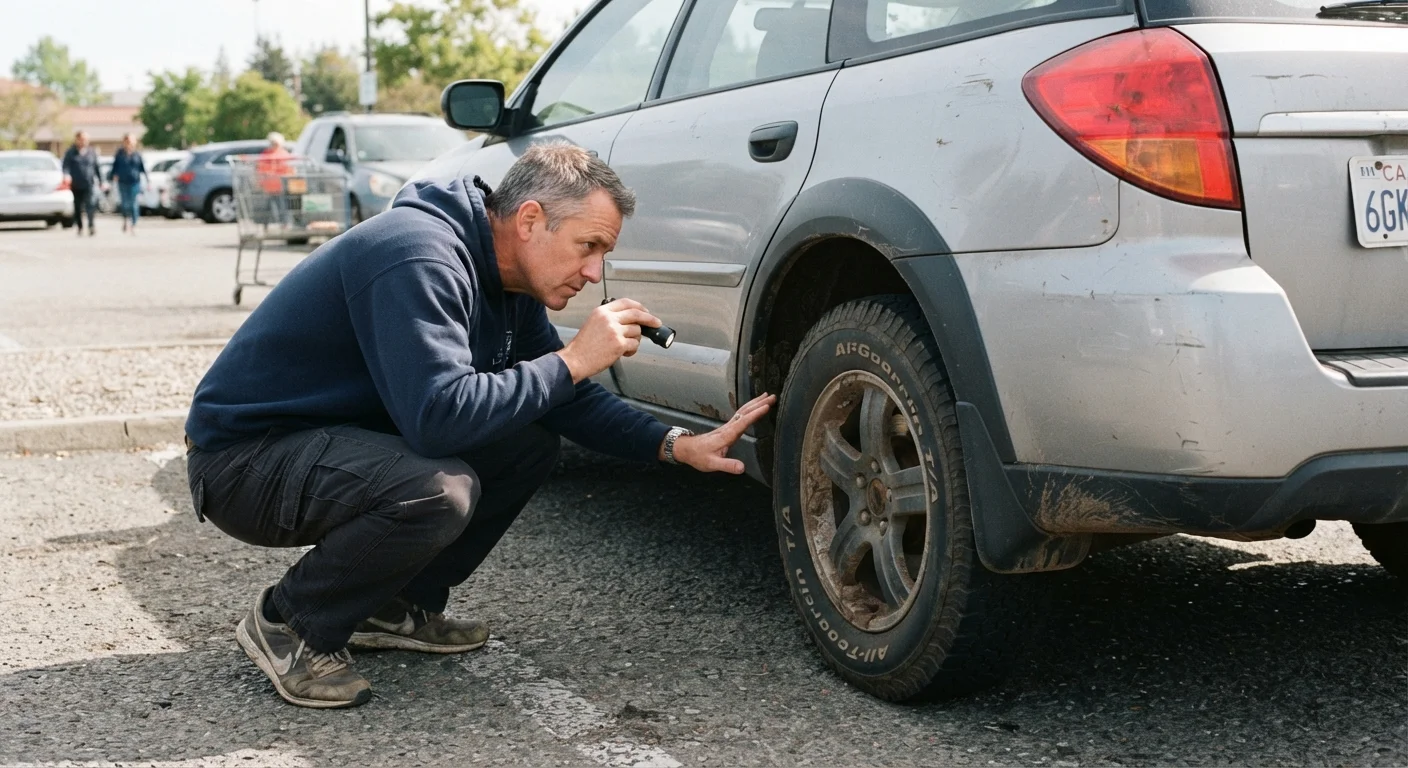
Flashlight or phone torch
Illuminate dark areas under the hood, beneath the vehicle, and inside door jambs.
Tire tread depth gauge
Measure remaining tread to estimate tire life and identify uneven wear patterns.
OBD-II scanner (code reader)
Read any stored diagnostic trouble codes that may not trigger a visible warning light.
Vehicle history report service
Pull accident history, title records, and odometer data using the vehicle's VIN.
Licensed independent mechanic
Conduct a professional pre-purchase inspection to identify mechanical issues beyond a visual check.
Notepad or inspection checklist printout
Record your findings systematically so nothing is forgotten between viewing and decision.
The Inspection Checklist
Work through the three groups below in order. Complete the exterior and interior review yourself first, then confirm your findings with a qualified mechanic before finalizing any purchase decision.
Exterior & Cosmetic Condition
Interior Condition
Mechanical Health
Documentation & History
Salvage and Rebuilt Titles Carry Lasting Risk
A vehicle with a salvage or rebuilt title has been declared a total loss at some point in its history. These vehicles may be roadworthy after repair, but they typically carry lower resale value and may be difficult or more expensive to insure. Some lenders will not finance them at all. Always confirm title status before investing time or money in further inspection.
Don't Rely on a Cold Inspection Alone
Inspecting a car that has already been warmed up by the seller can mask cold-start issues such as rough idling, hard starting, or smoke from the exhaust. Always ask to see the vehicle cold, or arrive early enough to observe a true cold start yourself.
Acting on What You Find
A clean inspection report is rare — most used vehicles show at least minor wear. The goal isn't perfection; it's knowing what you're agreeing to. Minor cosmetic flaws may justify a lower asking price. Mechanical concerns — especially anything flagged by an independent mechanic — are grounds for renegotiation or walking away.
For a deeper dive into protecting yourself through documentation and ownership verification, see due diligence standards every used car buyer should follow. And if you want help spotting deferred maintenance specifically, our maintenance red flags checklist covers those issues in detail.
This article provides general educational information for used car buyers and is not a substitute for advice from a licensed mechanic or qualified automotive professional. Vehicle conditions vary; always have a pre-owned vehicle inspected by a qualified technician before purchase.