
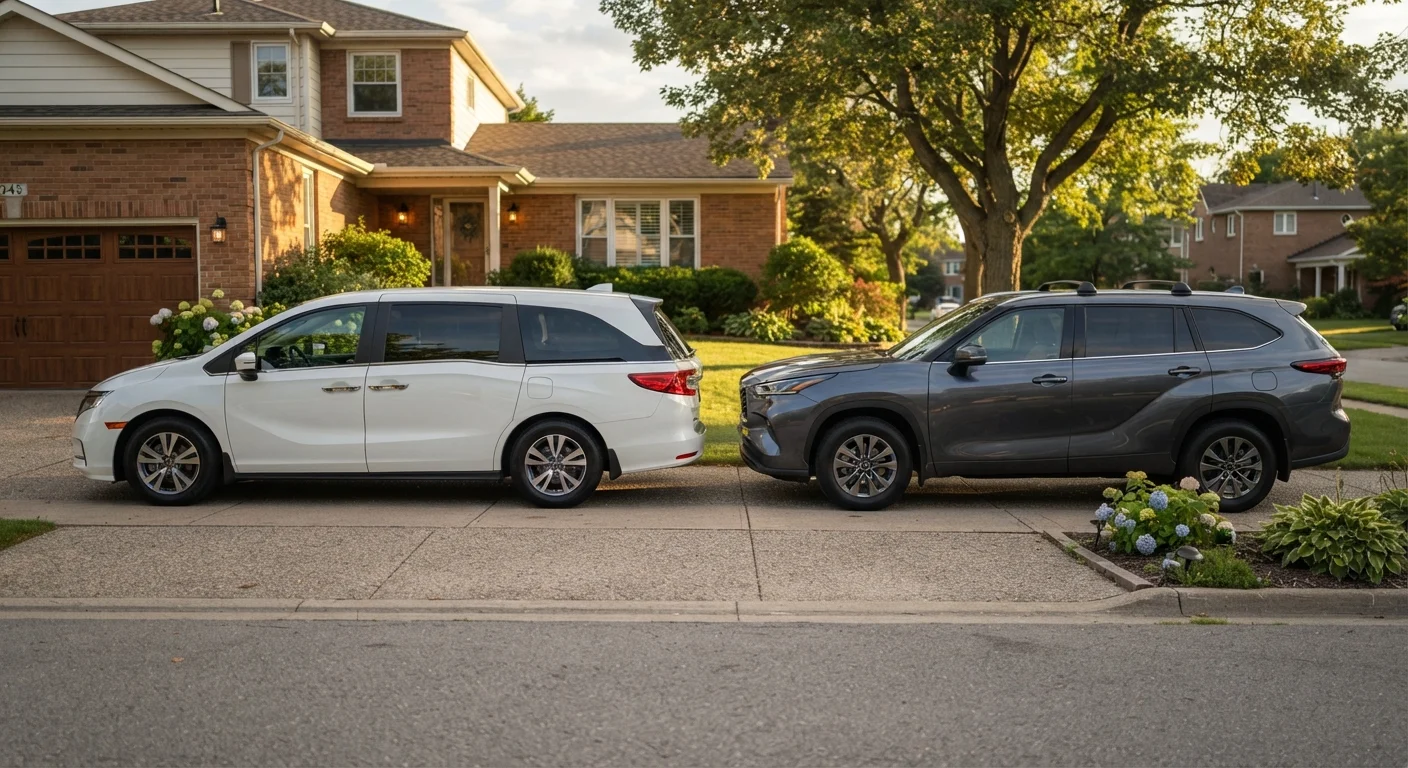
Same Seat Count, Very Different Vehicles
On a dealer lot, a minivan and a three-row SUV can look like two answers to the same question — carry more people. But the engineering philosophy behind each body style produces a very different ownership experience. Understanding those differences is what allows buyers to match a vehicle to the way they actually live.
For a broader look at how body styles are categorized, see our guide to major vehicle body styles. If you want to understand how the SUV side of this comparison is further segmented, SUV size segments explained covers midsize and full-size distinctions in detail.
| Criterion | Minivan | Three-Row SUV |
|---|---|---|
| Typical seating | 7–8 passengers | 7–8 passengers |
| Third-row livability | Generally wider, adult-friendly | Varies; cramped in many crossovers |
| Cargo floor | Flat-folding, flush seats | Usually requires seat removal |
| Door style | Sliding rear doors | Hinged rear doors |
| All-wheel drive | Limited availability | Widely available or standard |
| Towing capacity | Typically ~3,500 lbs | 5,000–8,500+ lbs depending on model |
| Fuel economy | Generally favorable | Lower, especially truck-based |
| Entry/exit ease | Low floor, wide opening | Higher step-in, narrower access |
Interior Space: Volume vs. Accessibility
Raw cargo volume often favors the minivan. The boxy, tall-roof design maximizes interior space relative to footprint, and most minivans feature second- and third-row seats that fold flush into the floor — creating a genuinely flat cargo floor without removing any hardware. Three-row SUVs vary considerably here: car-based crossover SUVs tend to have cramped third rows suitable mainly for children, while truck-based full-size SUVs offer more generous third-row room but at the expense of a very high step-in height.
Access is where the gap becomes most visible. Minivan sliding doors open wide without swinging into adjacent cars, and the low floor means passengers step in rather than climb. SUV rear doors are conventional hinged panels, and third-row access typically requires tilting the second row — a step that becomes repetitive when it happens multiple times a day.
~3 in.
Typical floor height advantage in minivans
Minivan load floors commonly sit several inches lower than those of equivalent three-row crossover SUVs, easing entry for children and older passengers.
8,500 lbs
Max tow rating for full-size truck-based SUVs
Truck-based, full-size three-row SUVs can tow significantly more than any current minivan, according to manufacturer specifications.
~2 MPG
Average fuel economy edge for minivans
EPA combined ratings for comparable minivans and midsize three-row SUVs typically show minivans returning slightly better overall efficiency.
Capability: Where the SUV Pulls Ahead
Three-row SUVs hold a clear advantage in two areas: towing and all-weather traction. Most minivans are rated to tow in the range of 3,500 lbs, which covers a small boat or lightweight camper. Midsize three-row crossover SUVs typically tow between 5,000 and 6,000 lbs, while truck-based full-size SUVs can exceed 8,000 lbs — a meaningful difference for buyers who regularly pull trailers.
All-wheel drive (AWD) is standard or widely available across the three-row SUV segment. In the current US minivan market, AWD availability is limited to a small number of configurations, making minivans less practical for buyers in regions with significant snow or unpaved roads. For buyers who need towing or AWD, the three-row SUV is the straightforward answer — but it's worth distinguishing car-based from truck-based platforms, as explained in our article on SUV vs. crossover differences.
Cost to Buy and Run
Minivans tend to undercut three-row SUVs on sticker price at similar trim levels, and operating costs generally follow the same pattern. Their lighter curb weight and aerodynamically efficient shape — despite looking boxy — typically yields better fuel economy than a same-segment, body-on-frame SUV. Insurance costs and depreciation curves vary by market conditions and model, so no blanket guarantee applies, but the general pattern favors the minivan for buyers prioritizing total cost of ownership.
Three-row SUVs span a wide price range depending on whether the platform is car-based or truck-based. Truck-based full-size SUVs carry premium prices and fuel costs to match. For buyers who don't need the towing or AWD capability those platforms deliver, they may be paying for capability that goes largely unused. For a deeper look at the van segment's own internal variety — including how minivans compare to full-size passenger vans — see van segments decoded.
Car-Based vs. Truck-Based SUVs: A Key Distinction
Not all three-row SUVs are built the same way. Car-based crossovers use a unibody platform shared with passenger cars, delivering a softer ride and better fuel economy but lower towing limits. Truck-based SUVs use a body-on-frame chassis, which enables higher tow ratings and ground clearance but adds weight, cost, and a firmer ride. Knowing which platform underlies a specific model helps set realistic expectations for how it will feel and perform.