
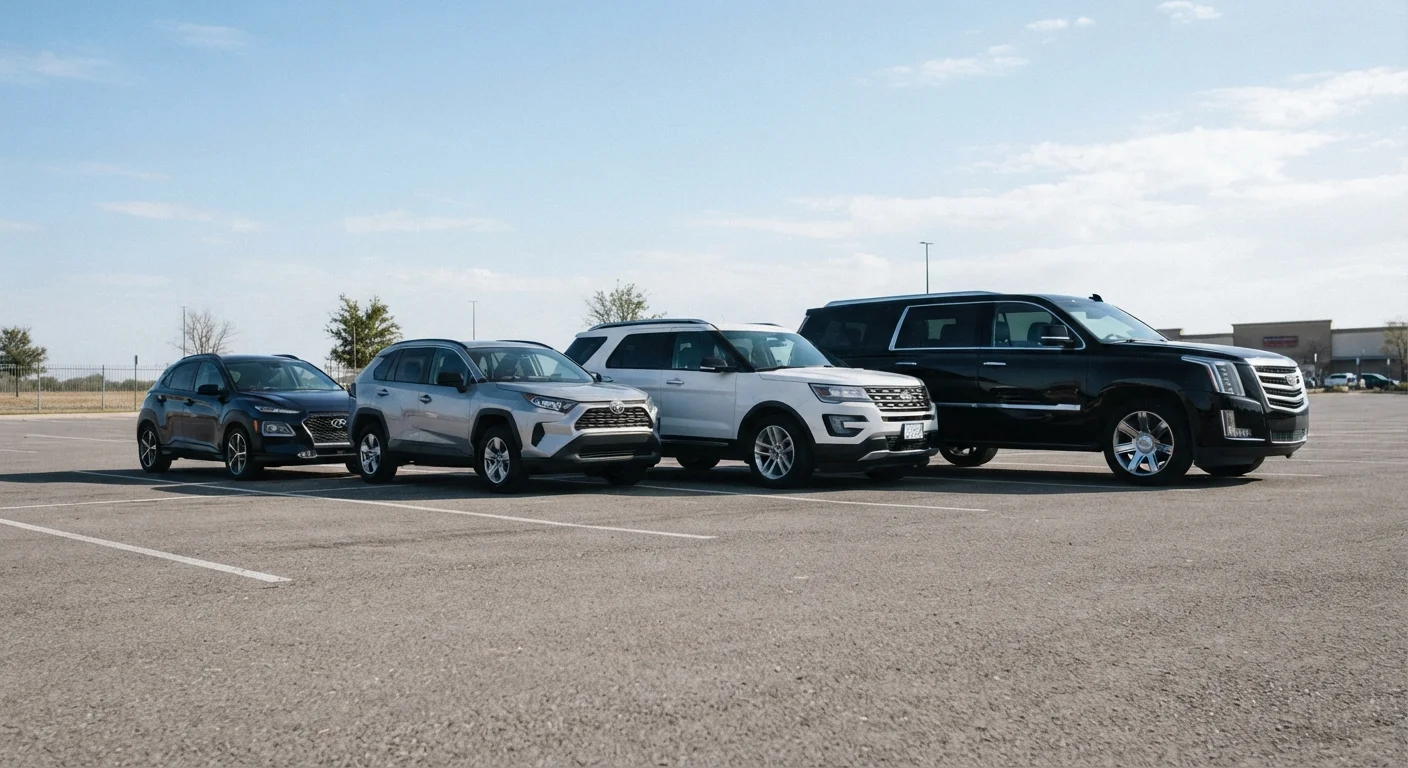
Why SUV Segments Exist
Walk into any dealership or browse any automotive listing site and you'll encounter dozens of SUVs with overlapping names and features. The four-tier sizing system — subcompact, compact, midsize, and full-size — exists to impose order on that complexity. It gives buyers a quick shorthand for the approximate space, capability, and cost range a vehicle falls into.
These segments aren't governed by a single official standard. The EPA's volume-based classification differs from how automotive media applies the labels, and individual automakers sometimes stretch definitions for marketing purposes. That said, the broad groupings remain a reliable starting point. For a deeper look at how the industry's sizing logic applies across all vehicle types, see The Auto Market's Sizing System, Explained.
Segment Labels Aren't Standardized
Different sources — the EPA, automakers, automotive media outlets, and consumer data firms — apply SUV segment labels using different criteria. A vehicle one publication calls a compact SUV may be listed as a midsize by another. When comparing vehicles across segments, use actual interior volume measurements and wheelbase dimensions as your reference points rather than relying solely on marketing classifications.
Subcompact SUVs: Urban Footprint, Crossover Convenience
Subcompact SUVs occupy the smallest slot in the segment ladder. They typically measure under 175 inches in overall length and offer seating for five — though rear-seat legroom is noticeably tighter than in larger classes. Total interior volume generally falls below 100 cubic feet by EPA measurement.
The appeal is practical: subcompacts are easier to park in dense urban environments, lighter on fuel, and tend to carry lower purchase prices than larger alternatives. Most are built on front-wheel-drive car platforms with optional all-wheel drive, making them crossovers in the mechanical sense. Towing capacity, when rated at all, is typically limited to 1,000–2,000 pounds. Buyers who prioritize efficiency and city usability over hauling and passenger space find this segment most relevant.
Compact SUVs: The U.S. Market's Sweet Spot
Compact SUVs consistently rank as the best-selling vehicle segment in the United States. They run roughly 175–190 inches long, seat five comfortably, and offer cargo volumes between 25 and 40 cubic feet behind the rear seats — enough for a family's weekend luggage or a full grocery run.
Towing ratings typically range from 1,500 to 3,500 pounds, sufficient for a small boat or light camper trailer. Fuel economy in this class is generally competitive with midsize sedans. The compact SUV sits at a practical crossroads: large enough to handle real family duties, small enough to remain manageable in suburban traffic and standard parking structures.
#1
Best-selling vehicle segment in the U.S.
Compact SUVs have ranked as the top-selling vehicle segment in the United States for several consecutive years, according to automotive sales data compiled by industry analysts.
~4 inches
Average length growth per segment over two decades
Industry tracking data suggests vehicles within named segments have grown an average of several inches in overall length over the past 20 years, a phenomenon automotive analysts call segment creep.
7–9
Typical passenger capacity in full-size SUVs
Full-size SUVs with three-row seating commonly accommodate seven to nine occupants depending on seating configuration, per manufacturer specifications.
Segment creep — the long-term trend of vehicles growing larger within their named class — has pushed today's compact SUVs to dimensions that would have qualified as midsize a decade ago. How Segment Creep Is Redrawing the Auto Market explores this pattern in detail.
Midsize SUVs: Family Versatility and Real Towing
Midsize SUVs stretch to roughly 190–205 inches in overall length and are where the segment meaningfully upgrades both passenger capacity and towing potential. Many midsize models offer an available third row, though legroom in that row varies considerably by vehicle — in most two-row configurations they seat five very comfortably, with ample second-row space.
Towing capacity in this class commonly runs 3,500–5,000 pounds, enough for a mid-size travel trailer or a boat in the 20-foot range. Cargo space behind the third row is often modest, so buyers choosing a three-row midsize should test real-world loading scenarios before committing. The midsize class is where buyers who have outgrown a compact but aren't ready for a full-size typically land.
Test the Third Row Before You Commit
If you're considering a midsize SUV specifically for its third-row availability, sit in that seat yourself before purchasing. Third-row dimensions vary widely among midsize models — what fits a ten-year-old comfortably may be unusable for an adult on a road trip. Bring the actual passengers who'll use that row to the test drive.
Full-Size SUVs: Maximum Space on a Truck Foundation
Full-size SUVs exceed 205 inches in length and are almost universally built on body-on-frame truck platforms — the same structural architecture used by full-size pickup trucks. This construction supports towing ratings often between 7,500 and 9,000 pounds and enables genuine payload capacity, while also delivering three-row interiors where the third row has usable adult legroom rather than just a technical seat count.
The trade-offs are real: fuel economy lags behind smaller segments, these vehicles demand more width for parking, and purchase prices are substantially higher. For buyers who regularly transport large groups, tow heavy loads, or need maximum cargo volume after all seats are occupied, full-size SUVs serve purposes that smaller segments simply cannot match. Buyers weighing a full-size SUV against a large van should also consult Van Segments Decoded to understand where the use cases diverge.
Matching the Segment to Your Actual Needs
Choosing the right segment starts with honest answers to three questions: How many passengers do you carry regularly? How much cargo do you need on a typical trip — not just your largest trip? And do you tow, and if so, what does that load actually weigh?
Buyers who routinely carry five or fewer adults and no trailer will find the compact segment covers the vast majority of their needs. Those with three-row requirements should evaluate whether the third row in a midsize genuinely works for the people who'll sit there, or whether a full-size is necessary. The Vehicle Segments Reference Guide provides a concise lookup across all classes with typical dimensions to support that comparison.
One common mistake is sizing up based on infrequent extreme scenarios — the one camping trip per year or the occasional airport run with seven people. Renting or borrowing a larger vehicle for rare occasions is often a more practical strategy than carrying the operating costs of a full-size SUV every day.
This article provides general educational information about vehicle classifications and is not a substitute for hands-on evaluation or professional guidance when making a vehicle purchase decision.