
Why Size Labels Exist in the First Place
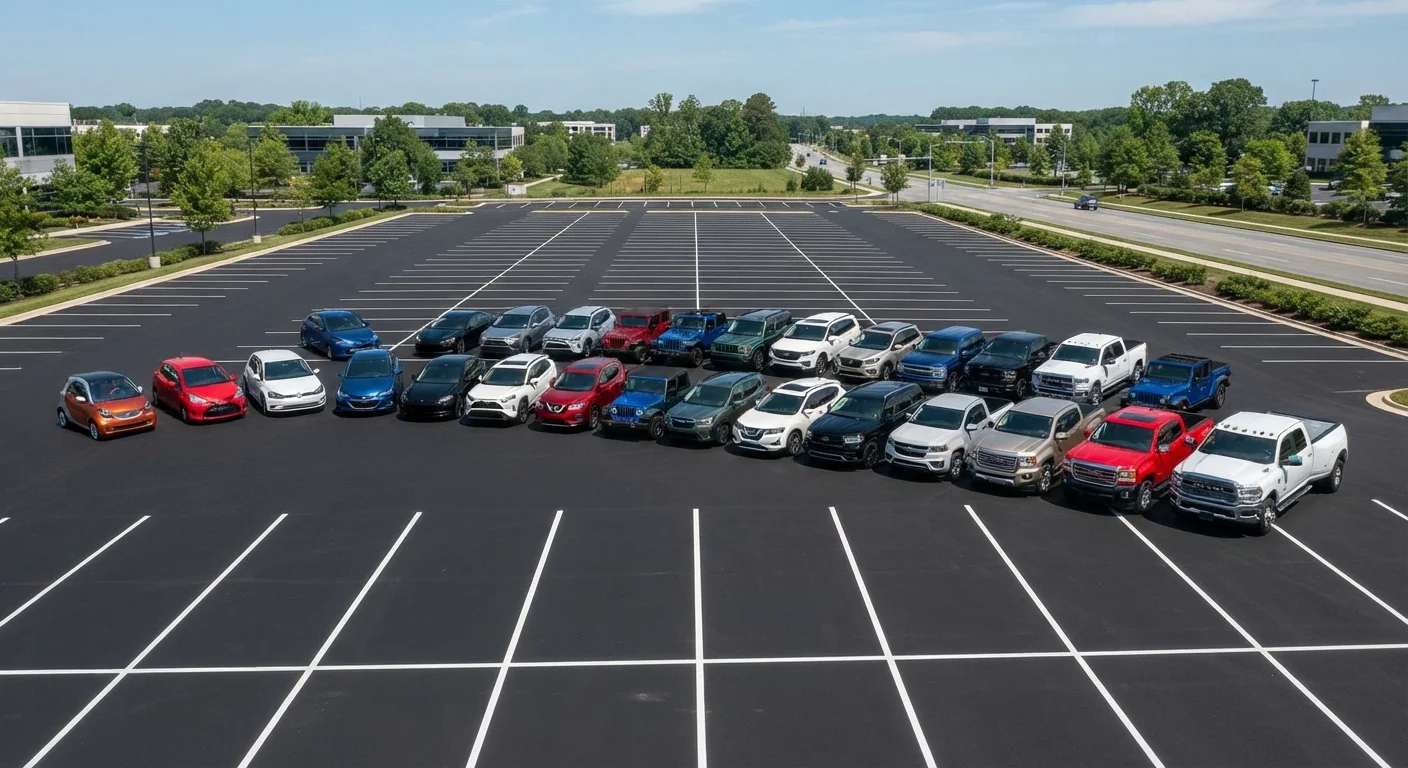
When you walk into a dealership or browse a car-buying site, you're immediately sorting through a marketplace that spans everything from city-friendly hatchbacks to three-row SUVs. Size classifications exist to bring order to that range — giving buyers, analysts, and regulators a shared language for comparing vehicles that serve genuinely different purposes.
In the U.S., two parallel systems shape how vehicles get labeled. The EPA's passenger car classification assigns size based on measured interior volume. The industry's market segmentation — used by automakers, media, and research firms — applies a looser framework that also weighs exterior dimensions, wheelbase, and commercial positioning. These two systems often align, but they don't always match exactly, which is one reason shoppers sometimes find the labels confusing.
Understanding both systems helps you read a vehicle listing more critically and avoid mismatches between what a label implies and what the vehicle actually delivers. For a deeper look at how measurements translate into real differences, see how those numbers translate into real-world differences.
How the EPA Classifies Passenger Cars
The EPA's system applies specifically to passenger cars — sedans, coupes, wagons, and hatchbacks. It uses a single metric: total interior volume, which combines the cubic footage of the passenger compartment and the cargo area.
120+ cu ft
EPA interior volume for large/full-size cars
According to EPA fuel economy and vehicle classification guidelines, passenger cars at or above 120 cubic feet of combined interior volume are classified as 'large' — the top tier for sedans and wagons.
~40%
U.S. new vehicle sales from SUV/crossover segment
Industry sales data consistently shows that SUVs and crossovers account for a large plurality of all new U.S. vehicle sales, underscoring why SUV size classes matter more than ever to the average buyer.
- Minicompact: Under 85 cubic feet
- Subcompact: 85–99.9 cubic feet
- Compact: 100–109.9 cubic feet
- Midsize: 110–119.9 cubic feet
- Large (Full-Size): 120 cubic feet or more
This volume-based approach gives the EPA a consistent, measurable way to compare fuel economy across similar vehicles — because larger vehicles generally require more energy to move. It also explains why a tall, boxy hatchback might be classified as a midsize car even if it looks smaller than a sleek, low-profile sedan. Interior space, not exterior styling, is the deciding factor.
How the Industry Segments SUVs and Trucks
Passenger car rules don't apply cleanly to SUVs, crossovers, and pickup trucks. These vehicles use a different sizing framework, largely based on wheelbase (the distance between front and rear axles) and overall exterior dimensions. The four tiers you'll commonly encounter are: subcompact, compact, midsize, and full-size.
Full-size pickups and body-on-frame SUVs sit at the top of this hierarchy, typically built on truck platforms with longer wheelbases and higher towing and payload capacities. Midsize SUVs offer three-row seating options or generous cargo bays on shorter platforms. Compact SUVs dominate U.S. sales volumes, offering a balance of urban usability and passenger space. Subcompact SUVs prioritize fuel efficiency and a small footprint.
For a detailed breakdown of each SUV tier, see how SUVs are segmented by size class.
Check the EPA Label, Not Just the Marketing Name
When comparing vehicles, look up the EPA's official fuel economy label, which includes the vehicle's class designation. This gives you a standardized, measurement-based reference point that's independent of how a manufacturer chooses to market the vehicle's size. The EPA's fueleconomy.gov tool is a reliable starting resource.
Why Labels and Reality Sometimes Diverge
One of the most consistent sources of buyer confusion is that vehicle size classes have not grown with the vehicles themselves. Automakers compete within established categories, which means a vehicle's segment label reflects its relative market position — not a fixed physical standard.
A compact SUV sold today may have more interior volume than a midsize SUV from 15 years ago. Similarly, today's midsize sedans are frequently longer and wider than full-size sedans of earlier decades. The labels are anchors within a competitive set, not rulers against an absolute scale.
This is particularly relevant when shopping across model years or comparing a new vehicle to a used one. The used car market adds further complexity, since older vehicles carry size-class labels that may mean something different in today's terms. For a fuller look at where industry definitions part ways with buyer assumptions, see vehicle segments: what the industry means vs. what buyers assume.
Luxury Tier vs. Size Class: Not the Same Thing
A vehicle's size class and its luxury positioning are separate dimensions. A full-size luxury sedan and a full-size mainstream sedan may occupy the same EPA size class while sitting in entirely different market tiers. When manufacturers or media refer to a 'near-luxury compact,' they are layering two distinct classification systems — size and price/feature positioning — that should be evaluated independently.
What Size Class Means for Your Purchase Decision
Size class isn't just a label — it's a proxy for a cluster of practical trade-offs that affect daily ownership. Larger vehicles generally offer more passenger and cargo room, but they cost more to fuel, insure, and park. Smaller vehicles are more maneuverable and typically more efficient, but they may compromise on comfort for longer trips or hauling needs.
When evaluating size class, consider these practical factors:
- Parking and maneuverability: Subcompact and compact vehicles are easier to park in dense urban environments.
- Fuel economy: Smaller classifications typically achieve higher mpg, though powertrain type matters significantly.
- Passenger and cargo needs: Full-size and midsize vehicles provide more flexibility for families or frequent haulers.
- Ownership costs: Insurance, tires, and fuel costs often scale with vehicle size.
Size class is a starting point for narrowing your options — but it works best when paired with a clear understanding of vehicle body styles, since a midsize sedan and a midsize SUV sit in the same tier but serve very different purposes.